Arthritis (osteoarthritis – OA) is the most common cause of chronic pain in dogs, older humans, cats and, as working and performance horses are living longer it is a growing problem recognised among equine vets too. 50% of horses over 15 were seen to have arthritis in a US study.
It is a disabling, non-curable, and progressive disease which initially focuses on moving joints but eventually affects the whole animal and is a major cause of euthanasia due to loss of quality of life.
(This is different from immune mediated arthritis or rheumatoid arthritis, which is where the body’s immune system attacks its own joints, or with septic arthritis, which is when there is an infection within the joint, although both of these conditions do ultimately lead to osteoarthritis.I will look at these and other joint problems in future posts. )
Most owners (especially those who have had a sporting career and carry the inevitable damage that goes with that) will recognise OA as a common creaky, achy condition we ourselves get in our knees, backs, and other joints over time. It is similar but it’s important to understand some of its complexities and why it can be so challenging to manage in horses. Osteoarthritis is an extremely complex disease that requires a dedicated owner collaborating well with their vet and rehabilitation therapist to control the pain, maximise the mobility and ensure a full and active life for their horse.
In basic terms, the progression of osteoarthritis can be summarised like this:
⁃ Degeneration of normal structures within a joint leads to
⁃ Pain that reduces the use of the joint and limb or back, which leads to
⁃ The surrounding muscles, ligaments and tendons becoming weakened which leads to
⁃ The body compensating elsewhere which in turn can cause more pain in other locations leading to
⁃ The brain becoming aware of the constant pain and magnifying it
It is a disease familiar in many other species, including humans; they have even found evidence of it in the bones of dinosaurs. UK charity Arthritis Research UK suggests that more than ten million people in Britain have painful arthritis, with one in five adults between 50 and 59 years old suffering. Often considered a disease of the elderly, its prevalence does increases with age, however it can affect horses of all ages.
WHAT IS ARTHRITIS?
The truth is that arthritis is still not fully understood, which is surprising considering it is a very familiar condition that will affect most of us at some points in our lives. Vast amounts of money are invested in research in the hope we can find better ways to detect it earlier, slow its progression and alleviate the pain it causes. Unfortunately, there’s currently no cure for arthritis—veterinarians can’t completely stop or reverse the condition’s effects. This means that owners, vets farriers, podiatrists and rehabilitation therapists need to manage the condition for the horse.
Every individual horse will experience pain differently and will therefore need an individual approach both to pain mitigation and therapeutic exercise to maintain movement.
A BIT MORE ON OA
Normal, painless joint function is essential for an athletic animal and for this to occur, each component of the joint structure must be healthy and working properly. Smooth movement of the opposing bone ends relative to each other and the surrounding structures is achieved by its complex structure: the special shape of the end of each bone, the covering of smooth cartilage over the end of each bone, the presence of synovial fluid (‘joint oil’) that lubricates the cartilage, all contained within the joint capsule that forms an elastic pouch that encloses the structures of the joint, and in some cases contains supporting ligaments.
Arthritis often develops following interference with normal structure and function. Damage to the cartilage and/or the bone through trauma (injury) or infection results in roughening of the smooth surfaces. Movement of the roughened bone ends and/or damaged cartilage results in inflammation, that produces mediator chemicals that damage the synovial fluid, all of which causes swelling of the joint, pain and restriction of movement. This initial response is called acute arthritis. Injury to the joint capsule and its ligaments can also trigger inflammation resulting in thickening of the capsule, reducing its elasticity and thinning of the joint fluid, reducing its lubricating ability.
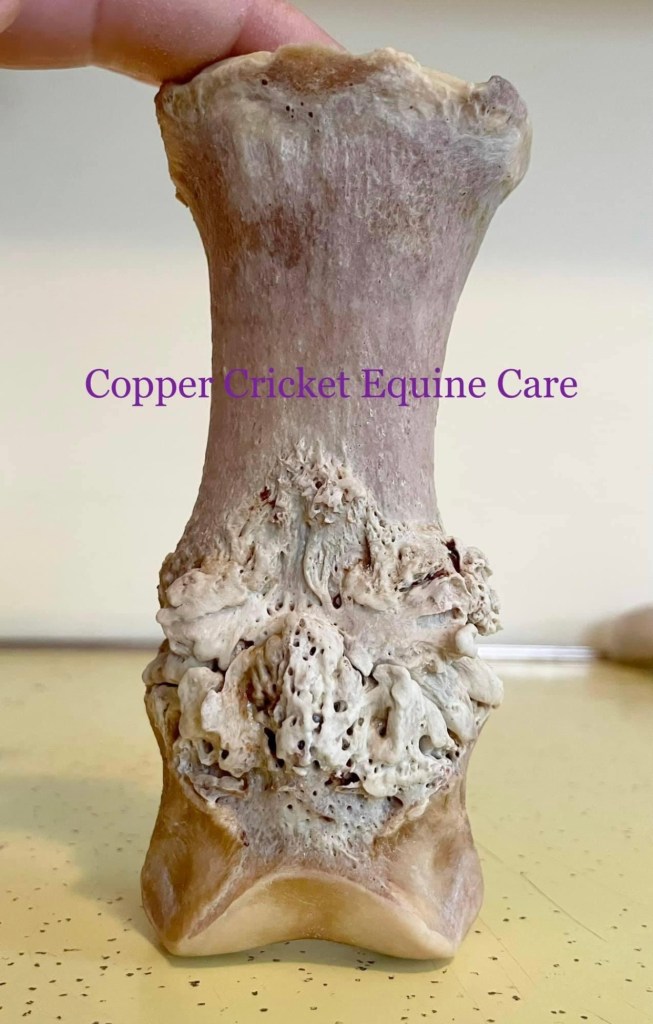
Over time, new bone is formed in response to surface damage. This new bone is rough and is not covered with protective cartilage, therefore interferes with joint movement and causes pain. These longer-term effects are called chronic arthritis.
Degenerative joint disease can result in the same long-term changes but in contrast to true arthritis, is usually not associated with pain or inflammation in the early stages. In DJD the joint structures respond to wear and tear by gradually changing shape and elasticity. Many horses with DJD move soundly. In others, these changes progress to a stage where the horse goes lame.
RECOGNISING ARTHRITIC SIGNS IN YOUR HORSE
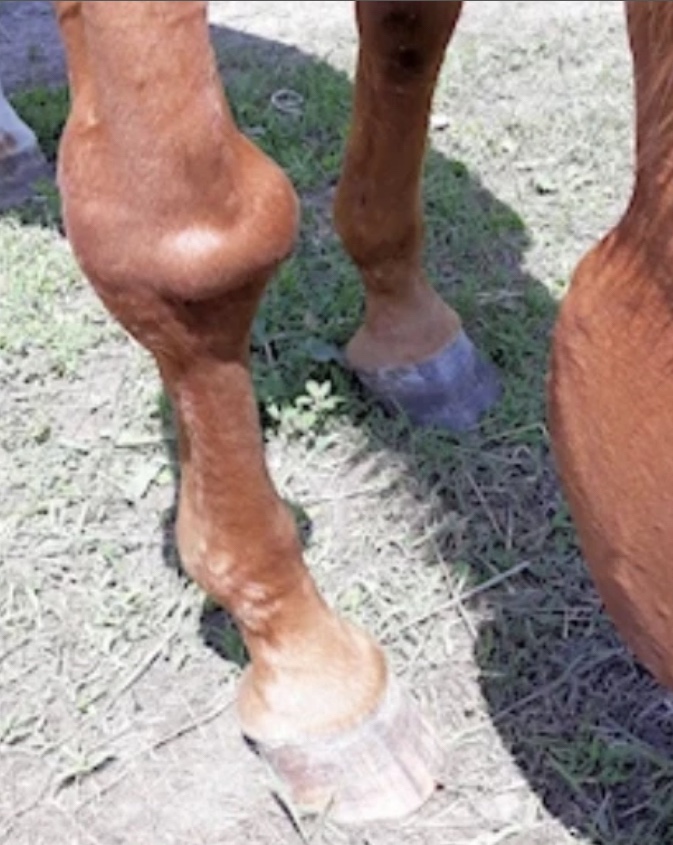
Classic OA signs include heat, swelling due to excess joint fluid, lameness/pain, stiffness, deformation caused by bony changes, and crepitus—that popping, grinding, and crackling sound and sensation in an affected joint.
For early OA, the older horse may appear to stiffen up if stabled overnight but then seem sound later in the day or (might act) ‘cheeky’ for the farrier when they are normally well-behaved, indicating they feel discomfort when flexing a limb or being asked to weight-bear just on one limb. But, of course, these clinical signs can also point to other musculoskeletal issues—from soft tissue injury to fracture, some of which have very different treatment and management protocols than OA. So the first action should be seeking a differential diagnosis from a veterinarian.
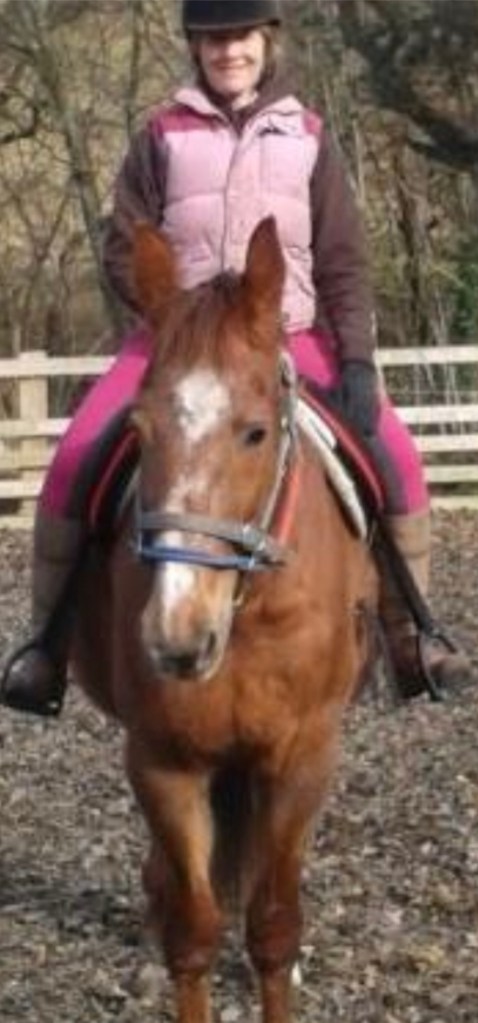
KEEP EXERCISING OR EVEN START BUT DO SO WITH CARE AND PLANNING
It might seem counterintuitive but, indeed, keeping an arthritic horse moving and exercising is in most cases preferable to letting him turn into a pasture puff.
Maintaining muscle mass around the affected joint helps to stabilize (it), preventing joint laxity (looseness) and abnormal loading, which can lead to additional soundness issues.
However, it’s important to exercise the arthritic horse in scenarios that will promote longevity, rather than place him at undue risk for more joint pain, based on the severity of his disease.
It is important that the exercise is tailored to the individual horse after consulting your vet.
Exercise can range from daily walks in hand to a gentle hack, but all should be accompanied by a warmup and cool down (ice is extremely useful in this regard and we are learning more and more in sports medicine of the useful properties of ice after training).
A slow and lengthy warm up at walk of at least 20 minutes is a very good place to start. Give your horse walk breaks as needed during training (please don’t assume he is just being difficult or lazy even in horses who have a history of work avoidance- for those of us who suffer from osteoarthritis abs other arthritic conditions we can promise there are just some days when you need more breaks),and encourage correct movement and balanced gaits.
Little; and slow; and correct is so much better than lots, fast or incorrect. If a horse has pain he will compensate and those compensations can build other problems.
Be sure he is moving well and comfortably before beginning more complex tasks.
The horse should be moving freely before moving on to higher level movements, like dressage or reining or jumping.
Other considerations to remember:
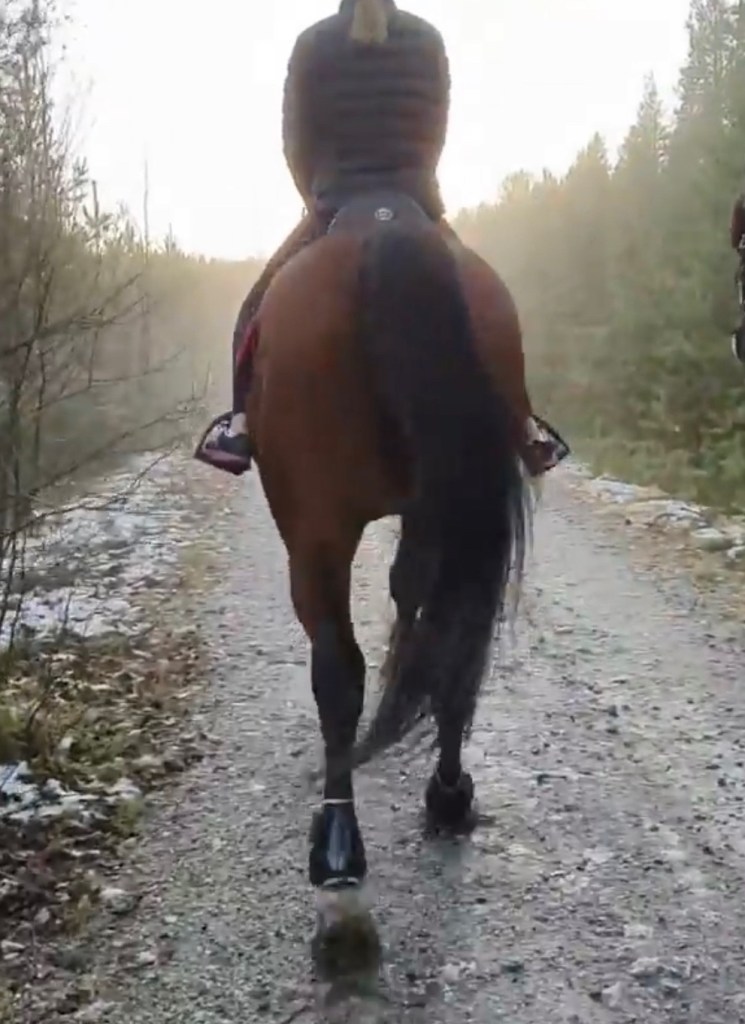
• For horses with OA, concussive road work is unhelpful, regardless of whether they are shod or unshod. Rather, as far as you can, confine most exercise to the softer footing typically found in grassy fields or well-maintained arenas. Also, avoid slick footing, which places horses at risk of slipping or falling. If you need to use asphalt roads, fit your horse with rubber boots and a rubber insert to cushion the effects.
• For some arthritic horses it might be necessary to limit exercise to flatter surfaces, because hills can place significant stress on joints but not for all. For some it may be a case of hopping off as the horse goes up (back leg issues) or down (front leg issues)
• Sharp turns and sudden starts and stops can be jarring for horses with OA, so be gradual in your requests during work. Bear in mind this when you are working on ground work and in hand exercises (including equine assisted therapy, which can, with care, be an excellent second career for a horse with OA).
• Consider alternative exercises suchc as water treadmill, swimming or dry treadmill where the rubber band cushions some of the joint stress! The horse gets to move without the concussion of landing on a limb which may be arthritic.
• Finally, keep realistic expectations about exercise levels, and remember that OA will progress over time.
• An arthritic horse may get to the point that it can no longer perform higher-level movements or jumping without discomfort, however he or she can often live a long and healthy life with a slightly altered career.
Once OA is more advanced, simply pottering about in a level, (even-footed) paddock is helpful for the aged horse and we must consider how we safely offer activity, stimulation and companionship to our flight/herd animal under the pensioner years.
What is the prognosis?
If acute arthritis is diagnosed and successfully treated early, a complete cure may occur, leaving no residual abnormality. If the inflammation does not respond to treatment and/or is complicated by infection or cartilage or joint injury, new bone may form and the joint may be permanently affected by chronic arthritis. If controllable by careful management and appropriate treatments, low-grade uncomplicated arthritis may not cause lameness with associated pain and restricted mobility.
Caution
It is important to realize that a horse can have arthritic changes that are visible on radiographs but may still move soundly and able to compete successfully. Also, it is possible for a horse to suffer from arthritis, involving the cartilage and joint fluid that will not produce demonstrable radiographic changes. Both scenarios can produce difficulties when a horse is being examined for purchase, i.e., ‘vetted’. If radiographs are taken as a requested routine part of a pre-purchase examination, the images must be carefully interpreted with reference to the findings of the clinical examination.
Note that veterinarians recommend that horses with OA are kept on the lighter side of normal to prevent stress to their joints.
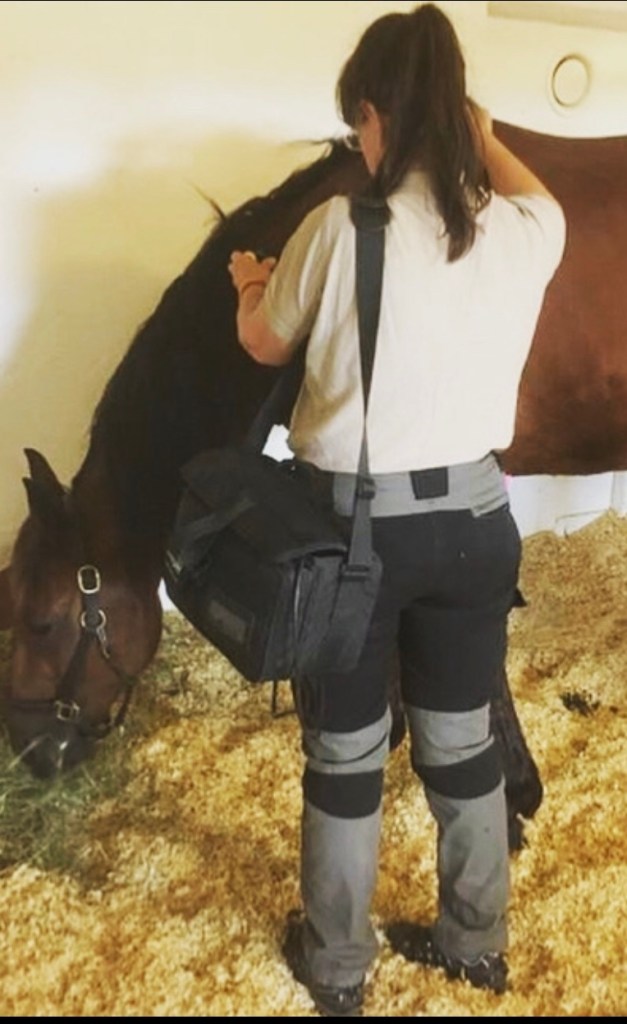
There are a number of devices and clothes to help your horse with arthritis continue to lead a good life as well as supplements and food which help and some things to be avoided. I will look at some of these in a later article.
#equinearthritis
#horsephysio
#utbildahästfysio
https://www.fysioterapiskolan.se/certifierad-hastfysioterapeut

 Happy Healthy Horses