Keeping your horse warm in winter
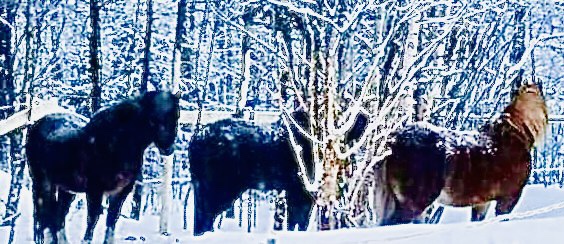
All warm-blooded mammals – that includes horses and humans, can tolerate a range of temperatures. Each species has a natural comfort zone – this is known as the ‘energy-neutral range’. Horses cope best in dry temperatures between -9 and +15C. Essentially that’s when there are no bugs, no heat and no mud!
Your horse has a number of ways that he deals with the cold. Some of them you may have noticed him doing such as:
• Turning his back to the cold and fanning out his dock hairs. His rump and back have thicker skin and hair, and less surface blood vessels, and can withstand the wind better.
• Huddling with other horses to conserve heat.
• Moving about.
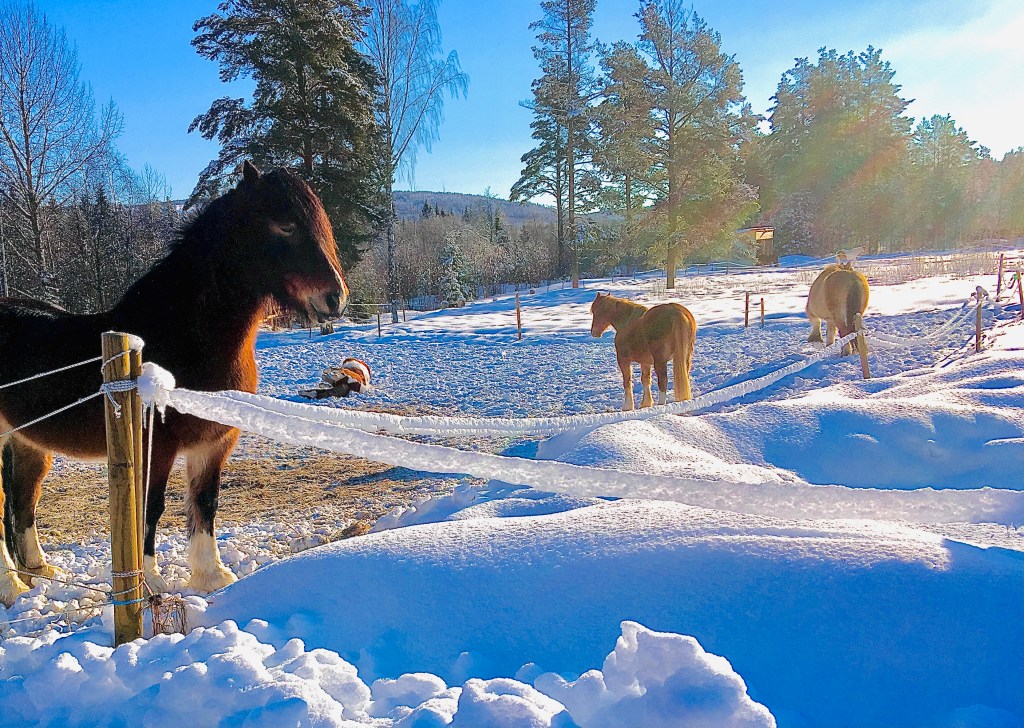
• Enjoying the winter sun.
• Seeking shelter – access to adequate shelter has been shown to reduce heat loss from wind chill by 20%. This can be a thick, high hedge, or a 3-sided field shelter.
There are also other clever ways that your horse is equipped to stay warm.
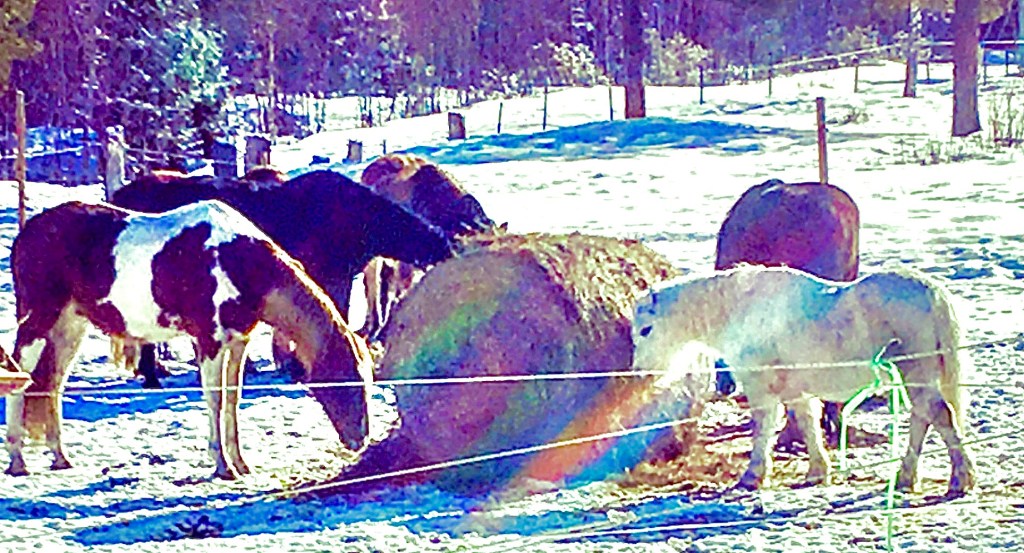
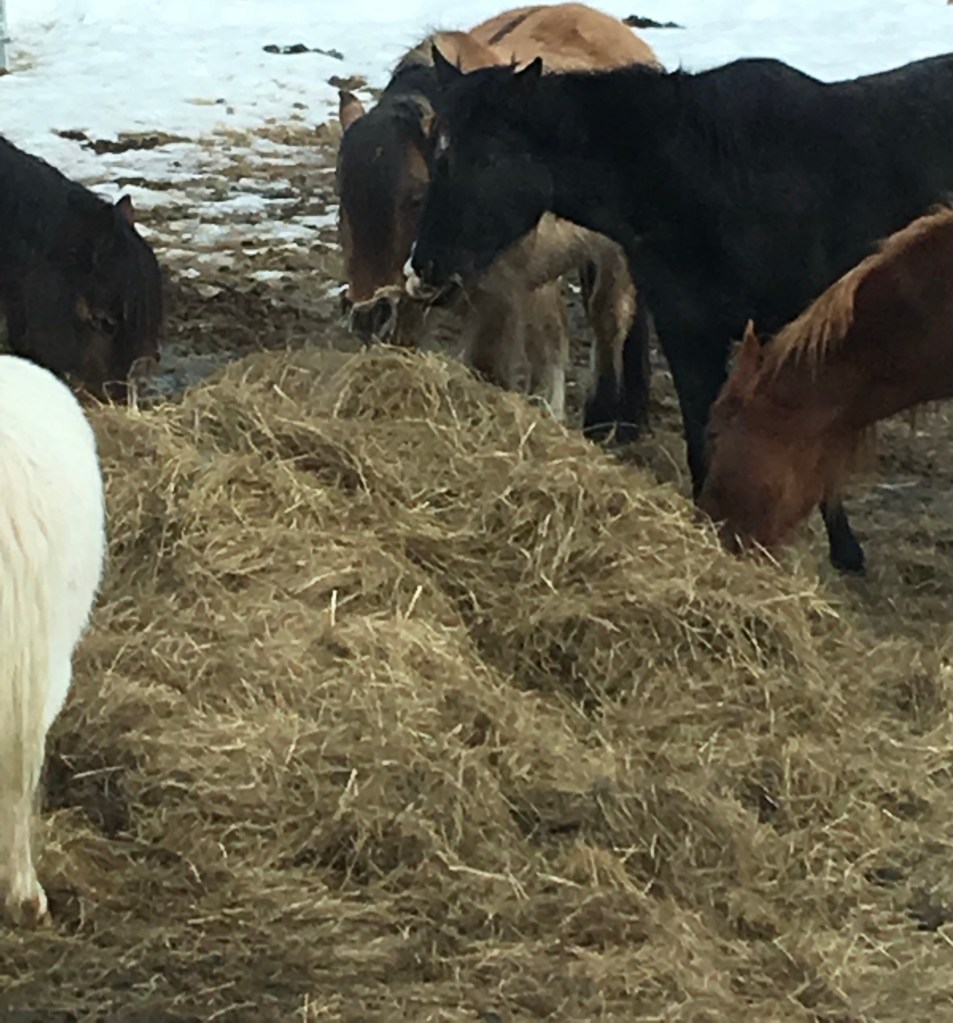
A large heavy digestive tract provides your horse with an efficient system of internal combustion! His hind gut contains millions of friendly bacteria and microorganisms which, can break down the insoluble carbohydrate and cellulose present in forage. Heat is a by-product of cellulose breakdown. One of the most natural, easy and efficient ways to help keep your horse warm in the winter is to ensure he has constant access to a fibrous diet and good quality hay.
The skin is made up of two layers. The top epidermis which has several waterproof stratified layers and below this is the hypodermis, a loose layer of connective tissue in which insulating subcutaneous fat is stored.
Growing a winter coat. This coarse hair is set at an angle with a fine layer of softer downy hair beneath. This traps pockets of air to create an insulating layer, retain heat and act as an effective windbreak. The downward tilt of the coat deflects falling raindrops and snowflakes before they reach the skin. If the autumn is exceptionally warm autumn or you rug your horse too soon this will reduce the length and thickness of his winter coat. Long warm autumns can caude more winter deaths (if the winter is sudden and exceptionally cold) in feral horses for example. Oils in his coat act as a protective barrier and prevent the skin from getting wet. This is why your horse should not be bathed or over groomed, particularly if he lives out 24/7.
Piloerection is the erection of the hair due to contraction of the tiny muscles that elevate the hair follicles above the rest of the skin and move the hair vertically, giving the appearance of hair ‘standing on end.’ This increases the hair depth and traps air next to the body creating an insulating layer.
Not all horses are made equal!
The shape of your horse will determine how efficiently he or she keeps warm. In the evolution of the horse the species emerged in broadly three areas, resulting in bodies and hair that matched the climate in which they developed. The modern horse, Equus caballus, became widespread from central Asia to most of Europe. Local types of horses, all breeds of this single species, undoubtedly developed, and three of these — Przewalski’s horse (E. ferus przewalskii or E. caballus przewalskii) from central Asia, the tarpan (now extinct) from eastern Europe and the Ukrainian steppes, and the forest horse of Northern Europe (which has been selectively bred and domesticated but would be a foundation for such breeds as the fjords and norrsvensk) — are generally credited as being the ancestral stock of the domestic horse, with selective breeding by their human masters, developing two main types we recognise today as hot area horses (Arabians, Turks, Thoroughbreds for example) and cold land horses (Icelandic, Shetland ponies, Mongolian horse for example).
Most of our riding horses are in fact a mix of hot and cold so that we have, for example, the speed of the Arabian with a thick coat in a Welsh section D cob.
So the first thing to assess when you look at your horse is how well adapted he or she is to the cold.
If you have a Shetland pony with thick eyebrows and whiskers, short legs and a small, low and very hairy body their entire body is designed for the ice cold winds, driving rain, ice and snow of the region in which their breed was developed, while your Shetland pony’s large thoroughbred companion will be shaking and shivering much earlier in the mild wind and rain of an early cold snap in autumn. Since all horses are not made equal, we need to assess our individual horse’s needs for protection in winter as just that…. Individual.
In general every horse has some bad weather protection in built;
The blunt shape of your horse’s muzzle is richly supplied with blood so that he can withstand bitter cold without freezing. Also, thick eyelashes protect his or her eyes from wind and cold temperatures.
The anatomy of the lower limbs are very well adapted for coping with the cold. As there are no muscles below the knee the cells in the leg require less blood circulation, meaning they lose less heat. Whilst your toes are one of the first appendages to get cold, this is not a problem for your horse.
Thermoregulation – when the air around your horse is colder than his or her body temperature, heat transfers from him/her to the environment and s/he gets colder. The chief command centre for thermoregulation is thought to be the hypothalamus – a small but life-critical structure deep in the base of the brain. This sends signals via the central nervous system to take action to reduce the heat loss. Your horse does this by:
• Burning extra calories which creates more internal body heat (but this requires an increased intake of dietary energy. Without this your horse will utilise his/her body energy reserves (fat) and lose weight. So if your horse doesn’t need to lose weight, you will have the job of calculating the increase in fodder – hay and haylage – that will keep your horse hot and happy in the coldest of weathers)!
• Exercise – This produces heat from energy burned by muscles and is one reason that horses seem to run around more when the weather is cold. And providing their feet are adapted to the underlay, it is great to use this ‘extra enthusiasm’ by setting up activities for them on a track system as it keeps your horses fit and ready for the exercise you need them to do for you, even when you can’t be with them (more of this in a later post on ‘keep your horse training for fitness even when you aren’t with them)
• Shivering causes muscle contractions which raises your horse’s core temperature. As he has very large areas of muscle, shivering is an effective way of combating cold. Don’t panic if s/hr is shivering but be concerned to make sure food, fun and shelter are available so s/he can get warm again
• Constriction of blood vessels. The uppermost layers of skin are covered with veins which circulate the blood close to the surface before returning it to the lungs. In hot weather, this is desirable, but when it’s cold heat loss must be minimised. This is achieved by blood being blocked from the veins close to the surface and rerouted into vessels which run deep under the skin, right next to arteries. This means the blood returning to the heart and lungs is warmed by the outgoing (countercurrent) arteries, preventing cold blood from penetrating the body.
• Conservation of energy and heat. Your horse can reduce the blood flow to extremities such as his ears, muzzle and legs. I was taught to check the ears for coldness and take measures if they felt really cool. This means knowing your horse’s normal ear ‘feel’ and interpreting whether it is different from usual while allowing for super hairy breeds to be difficult to determine without sticking your finger in their ear. (Note – get your horses used to having their ears felt before winter – this process is brilliant for all sorts of other desensitisation training and reduces problems with bridles, head collars and physiotherapists like me wanting to feel the pill area and TMJ!)
• Increasing Metabolism. This is achieved by sending nerve impulses to release neurotransmitters that raise blood pressure and heart rate stimulating the release of free fatty acids and the breakdown of glycogen. At the same time, the hypothalamus spurs the pituitary gland into action, ordering the release of large amounts of adrenocorticotropic hormone (ACTH) into the bloodstream. This triggers the production of cortisol, a steroid that increases the body’s heat generating fat, carbohydrates and protein.
So having established that our horses already have quite a few heat retaining and generating mechanisms of their own and that some are better prepared than others just by virtue of their breed, how can we help our horses stay warm on those days when we look out of the window and feel the duvet calling?
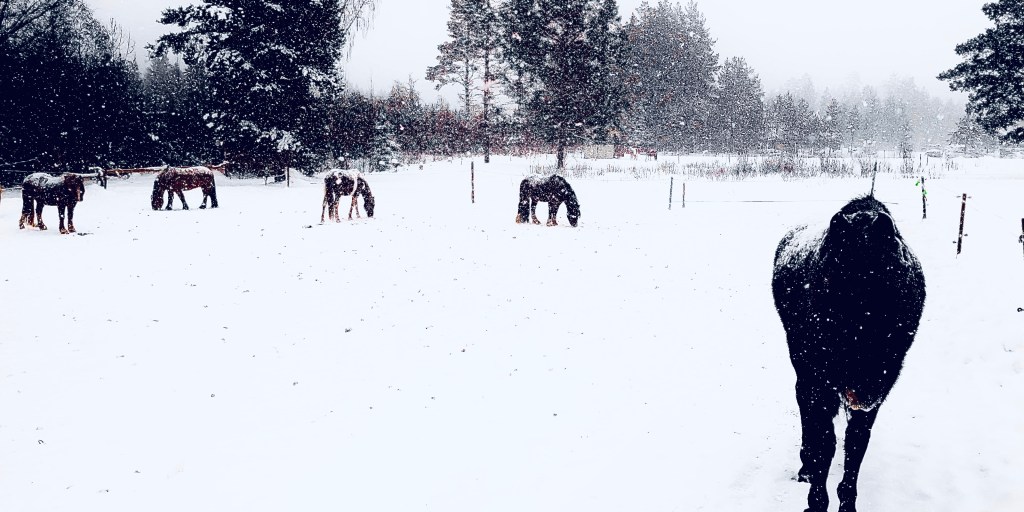
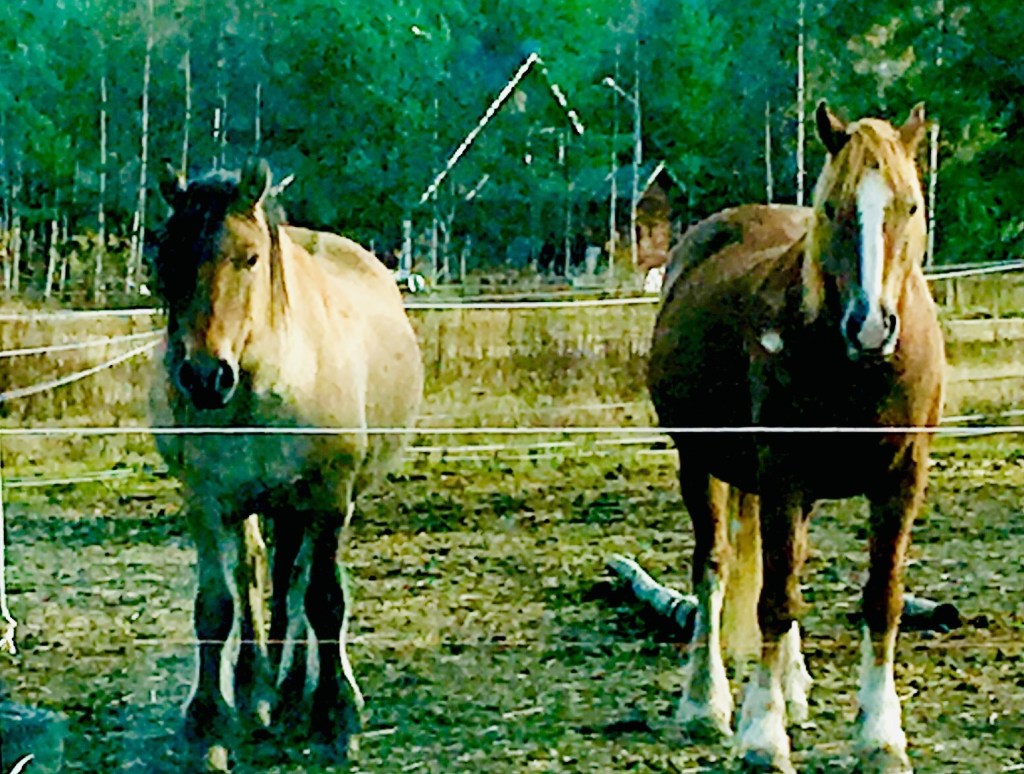
If all things were equal and you have a young, fit horse who doesn’t need his or her energy for anything other than keeping warm, you could decide to allow them a pretty natural winter; wild horses seek shelter from nature’s wind shields (trees, rocks, mountains, dips in the ground) and eat a lot of rougher food like leaves and twigs and bark in winter, moving together in a herd and even on occasion using their family group for protection. My own small group of horses usually choose their forest area over their large metal barn at night and I put food in both places. They are not clipped as they do not work in winter and they are unshod (which can offer an advantage to moving about for warmth in icy conditions over their shod companions unless those who are shod have extra hob nails to offer grip).
But the majority of owner riders or owner drivers need a horse that can and will work in winter months which carries the extra challenge to keeping warm of getting sweaty in their work. This means a need to manage the chilling and drying process and for the most part that means clipping your horse in one way or another.
Rugging a horse
The role of rugs
With such a huge choice of rugs available is it any wonder deciding which rug your horse needs is confusing. The most important thing to remember is that your horse doesn’t feel the cold like you do. Also, every horse is an individual and some will cope better with cold weather than others.
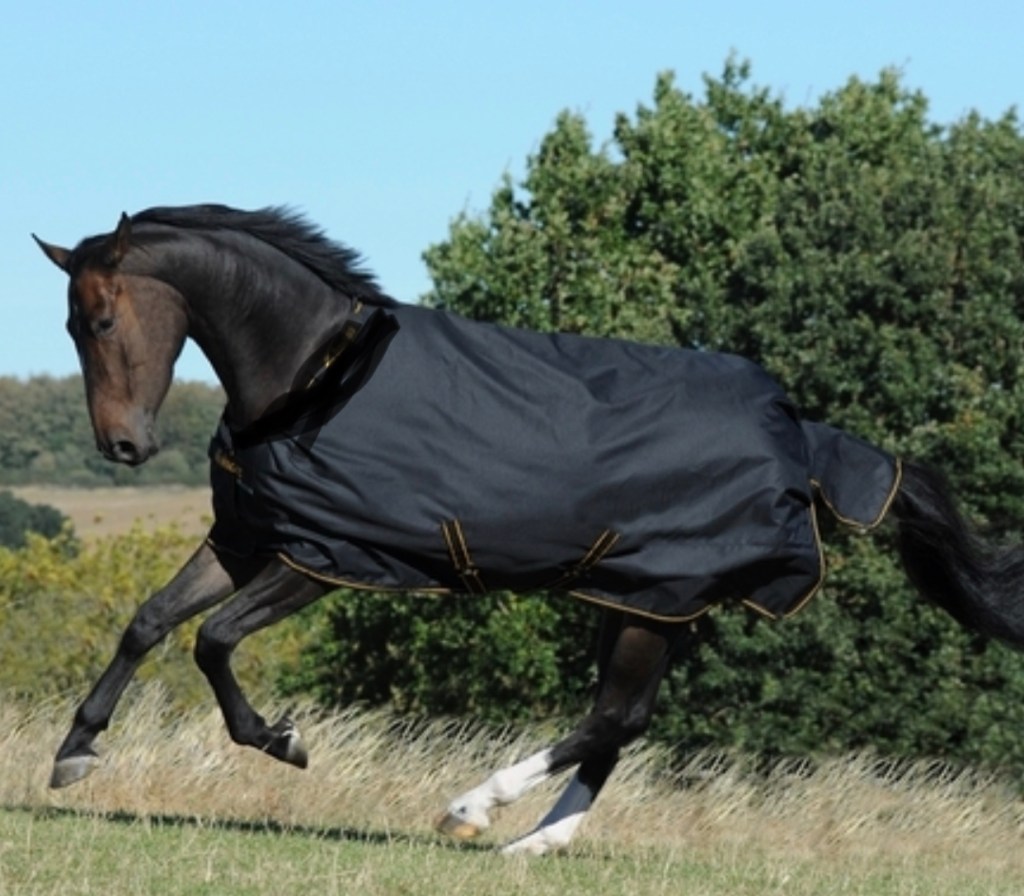
The majority of horses in work are rugged because they are clipped and that is the correct thing to do. There’s also the practical consideration of using a rug to keep your horse clean and dry – especially if you’re riding after work. What weight rug you use comes down to a number of factors:
• Start with a lightweight rug and only move to a heavier weight one when the temperature drops.
• If your horse is in poor condition, old or young he will be more sensitive to the cold and using a warmer rug may be necessary. A horse with a good body condition will be well insulated, retain heat for long periods and repel the cold.
• The weather also has a big influence of how warm your horse stays – wind, rain and cold temperature lead to the greatest heat loss.
• What type of clip your horse has will impact what weight rug your horse needs – the more hair you remove the heavier the weight of rug your horse will need to keep warm.
• If your horse doesn’t have access to shelter, he will need a thicker rug as the temperature drops.
• REMEMBER If your horse isn’t clipped, rugging flattens the hair and prevents piloerection. Which means that potentially your horse will be colder!
The exception to this would be when standing in driving rain without adequate shelter as it isn’t just all horses that are made equal, but also all paddocks! If in reality it is fairly tough to provide sufficient shelter in a rented field for example, you may have to ‘rug up‘ but please make sure you have two rugs of the same weight – this way you can swap them, allowing the horse always to have a warm and dry feeling on his back.
A further exception is old age, arthritis or other disorders. We must consider whether our horse’s body is capable of all the heat seeking, creating and preserving methods mentioned above. If you have an older horse, who no longer moves as much or as fast or one who has a compromised digestive system, you may need to provide extra protection, extra shelter, different food (hay pellets or cobs soaked can offer help to the dentally or gastrointestinally challenged) and even a blanket or rug. Or overnight stabling in a slightly warmer environment (taking care that it isn’t too warm so the adaptation between hot and cold shocks the horse’s system) or direct heat lamps in shelters so that the horse can choose to go under or avoid as they need.
Some extra points on rugs;
If you do rug your horse, check and remove them regularly. If possible, on sunny days allow your horse to have some time – about an hour without a rug on – allowing him access to the sun will boost his vitamin D levels.
Check your rug fit for your horse. It isn’t just about the correct length but also the style. If your horse wears a rug that restricts his or her shoulder or shortens the stride due to insufficient pleating and material at the front for a whole winter, you will effectively be training the muscles in their body to take a shorter stride – you will be potentially spoiling that lovely extension in trot that you worked so hard to achieve all summer! Worse, some rugs press in the withers and cause damage to the shoulder and back muscles. I have one or two horse clients who show a distinctly different set of winter and summer muscling and their training regimen is pretty similar in both seasons. In one we eventually tried a totally different rugging system and the shoulder problems went away nearly overnight.
Weight of rug is something to think about. There are some wonderful modern materials with ceramic or silver technology which allow under rugs to be warm but light, requiring a much lighter rain proof top. In my view as an orienteer, I prefer to layer up because it is more comfy for me to have several light layers than to try to move quickly in a thick michelin-man coat! I believe it is similar for our horses.
The other thing to consider in your rug is your clip. A fully clipped horse will need a higher level of heat support than a trace clip under a part of the belly. I will share more on clips in my next (shorter) post!
As with all aspects of horse care, we are likely to worry about our horses in winter, but I try to remember that just because I feel like this snowy cold day is one for the duvet, my horse has his own central heating, external duvet and shelter so he will be ok!
(Final note; please check your horses a little more often in the winter months and remember (bizarrely, but because extreme cold removes the moisture from pretty much everything) they are likely to drink more or at least the same as in the summer so check they have access too ice-free water at all times.
With thanks to Equido course notes, encyclopaedia Brittanica and an awful lot of horses and humans that have helped me on my journey to learn about horse-kind
 Happy Healthy Horses