What is the difference between turnout for your horse and being turned out for a period of limited contact with people and more contact with horses.
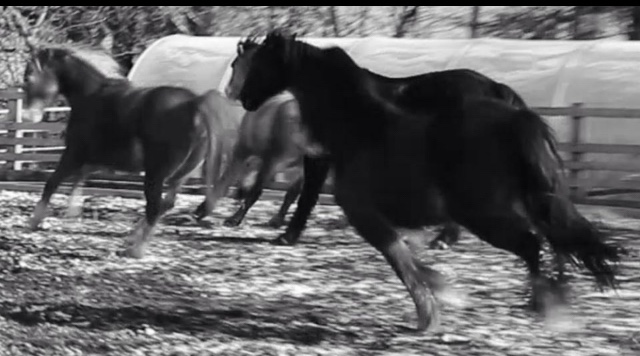
Turnout in this case can be defined as a period each day outside in a field or paddock with or without a group of horses.
Turned out would be a longer period (days,weeks or months) of being out with a stable group of horses (ie nobody comes in to work or goes out again after a period of being inside for work or rest).
It is well documented and acknowledged that horses need friends and a place to express their species specific behaviour. They have rights to water, food and an elements of socialisation in many countries’ legal systems. Horses as a species are flight animals and, as such, need others around them for guard duty so they can sleep, eat and relax. Horses naturally want to go and explore new grazing and have as much a psychological need for movement as a physical one. Feral horse groups are seen to cover long distances exploring the food and shelter available as well as running short distances away from predators. Horses are built to spend a considerable amount of their time grazing tough-to-eat grasses and browsing a little on woody shrubs to supply their gut with material for warmth and energy as well as their feet natural trimming and their teeth the same. Because we remove some of this natural behaviour in order to protect and work with our horses for our own purposes, we have a duty to offer them protection for their gut, feet and teeth as well as their psyche and social needs.
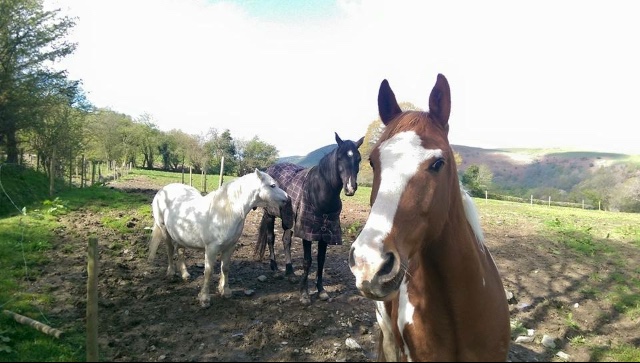
When I think of turned out verses turnout, I am wondering how we as horse lovers can offer our horses more of their natural behaviour. In the world of dog care and training, the concept of enrichment for the pet is well known and many owners have chewy toys or interactive toys that help the predator species engage their hunting and social brains so that they are calmer, happier and more content. This also helps their bodies. The effects of stress in humans and other animals is well documented as increased stress hormones are released which can lead to a number of health problems from arthritic flare ups, raised blood pressure to cancer. The compensatory responses to these stresses are known as stress responses. Based on the type, timing and severity of stress, it can exert various actions on the body (resulting in stress responses) ranging from alterations in homeostasis to life-threatening effects and death. In many cases, the pathophysiological complications of disease arise from stress and the subjects exposed to stress, e.g. individuals including animals, that work or live in stressful environments, have a higher likelihood of many disorders. Stress can be either a triggering or aggravating factor for many diseases and pathological conditions.
If we consider stress from the definition offered by the UK mental health charity ‘Mind,’ we read the following;
- Situations or events that put pressure on us– for example, times where we have lots to do and think about, or don’t have much control over what happens.
- Our reaction to being placed under pressure – the feelings we get when we have demands placed on us that we find difficult to cope with.
Do we ever put our horses under stress? By those definitions I believe we put our horses under daily stress.
Having little control over what happens is the life of most captive animals, so offering control in a safe manner becomes a goal to reduce stress for our horses. I don’t want my horses to be eaten by wolves or run over by logging lorries, so I have to keep them within fences, but is there a way I can increase their sense of control over their lives. Stress is also induced by being alone (see all the recent studies and articles on the effects of lockdowns and social isolating behaviours during the recent Covid pandemic) for us, as social animals. Being a herd animal is by its nature and definition being a social animal. Keeping horses locked up alone is psychologically stressful and we need to consider very carefully the effects our particular stable or stall and work arrangement may have on our equine family member.
Being worked and having short periods of turnout is better obviously than being trapped indoors, however, horses held in paddocks separated from other horses by fencing for example, cannot express their social behaviours and groom or even play with each other. It is a tough decision for the owner of a beloved and possibly extremely expensive animal to risk a kick or bite which could end a career or even a life, but simply seeing other horses is not as stress reducing as expressing all the behaviours of the species.
Turned out means a longer period in a larger place with more than one other horse. It carries risks but it offers huge gains for the horse, his body and his mind.
So how can we achieve this freedom and still have horses? I really like the interesting work of Jaime Jackson on the concept of Paddock Paradise. First developed to help horses make and maintain better hooves, Jackson, an American farrier looked at how wild horses move and behave and the effects on their bare hooves, relating it to barefoot domestic horses.
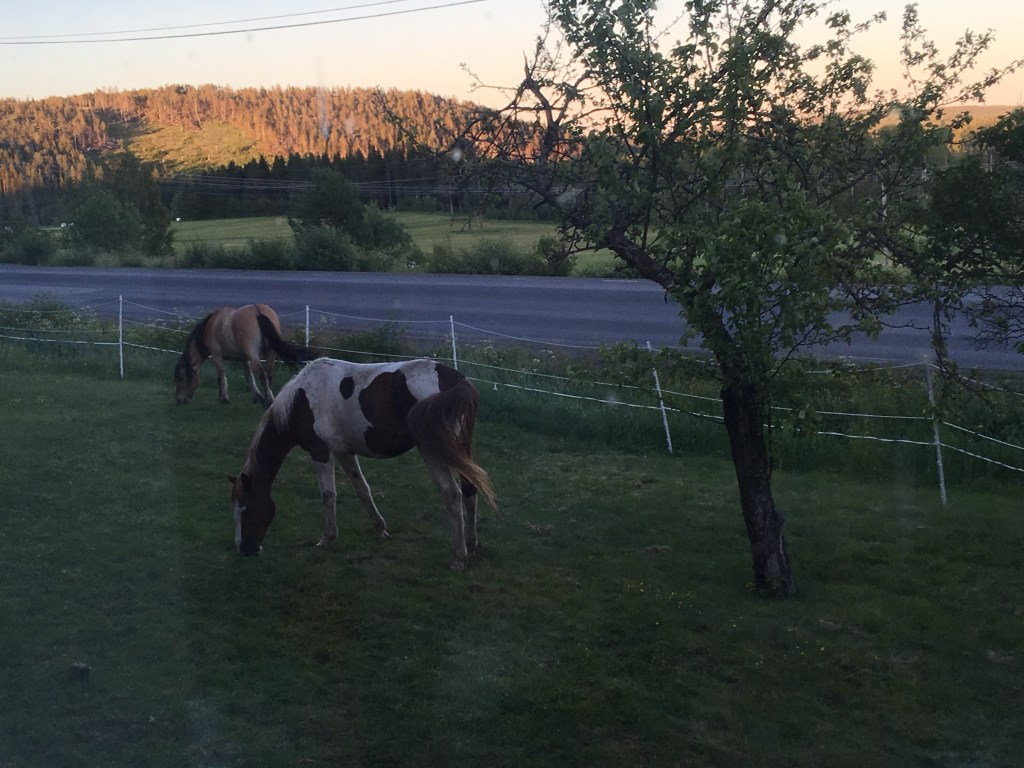
Paddock Paradise aims to offer the following within a domestic setting (ie the limitations we all have of land, fences, time and cost)
- provides a more stimulating environment for the horse which discourages vices
- encourages more movement which benefits overall health of the horse
- enables easier grazing management
- can allow the creation of obstacles and challenges which build the horse’s muscles as well as enriching the psyche
- can facilitate rehabilitation in a naturalised setting by the adaption of any track to the veterinary needs of the horse (eg limiting movement to flat areas or increased physical challenge in response to a rehab or post operative plan)
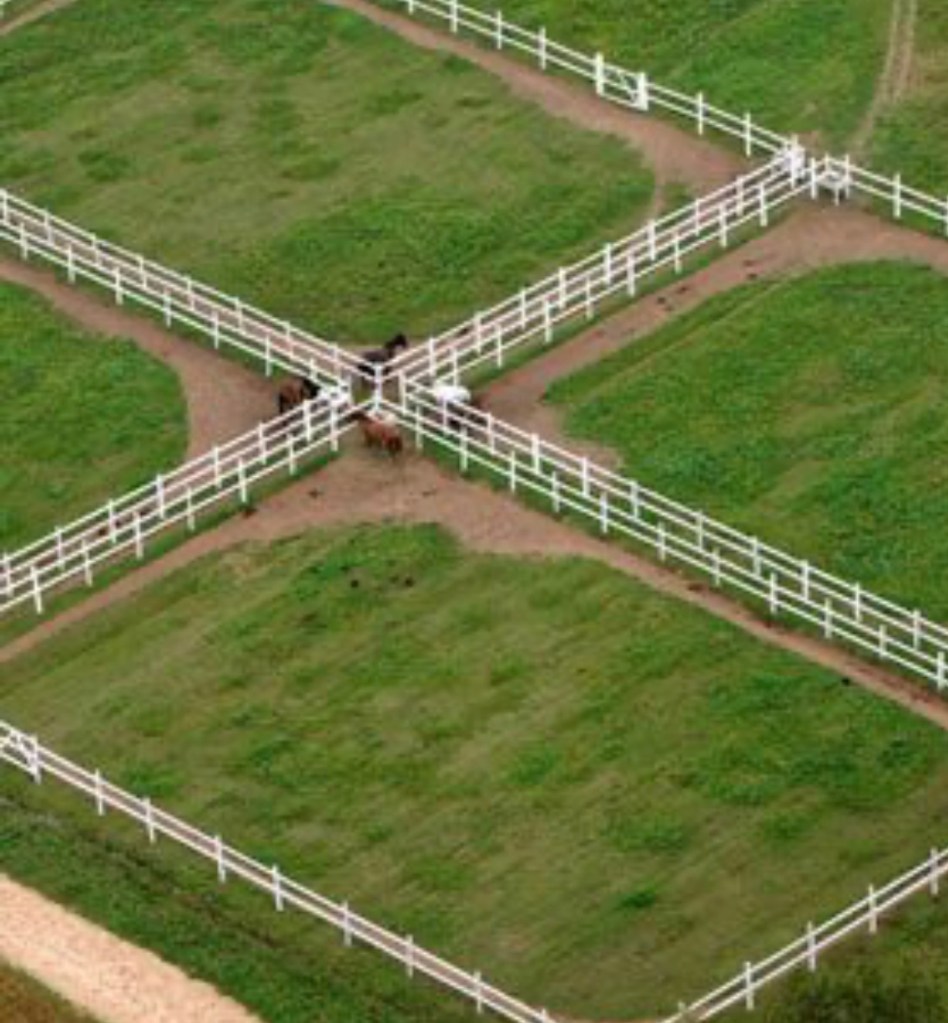
Jackson proposed that instead of housing horses in regular square or oblong fields where they tend to stand in one spot and eat, (and eat, and eat,) an additional “inside” fence is added to create a “track” system. This can be as fancy or as simple as your own imagination allows! It doesn’t have to be just a circle around the perimeter of a field but could be a labyrinth or serpentine- but by separating where food and eater is, the horses are facilitated to move more often to reach each.
The track width can vary – the narrower the track the more the horses will move. However care must be taken as too narrow may result in being cornered or trapped by more dominant horses while too wide may result in standing still and eating in one place!
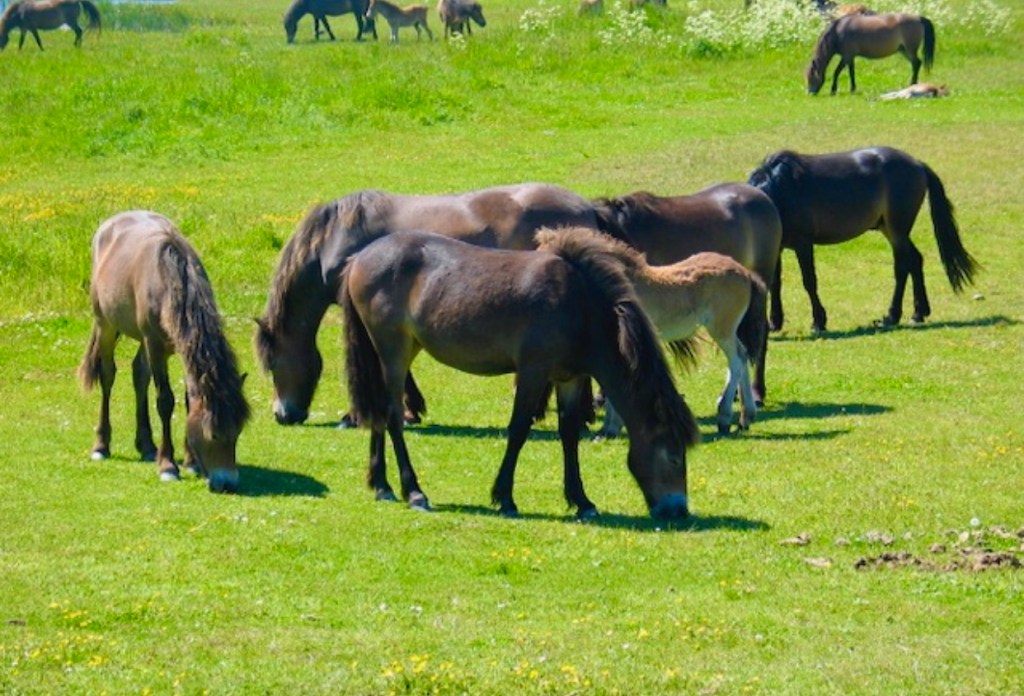
It may sound like a lot of work and expense but it can be done quite cheaply and quickly using electric fencing and is well worth the effort when one considers the reduction in stress, increase in exercise and greater natural behaviour. Healthy, happy horses tend to result in less expensive health needs and more opportunities for having fun with them!
At its most basic you are turning your horse out with another couple of equines or other herd animals on a race track with a bucket of water at one corner and some hay at another but the possibilities for this system are endless and limited only by your imagination.
With my own horses in winter I am a little limited as to space due to snow and the access j need to get food to the horses but nonetheless I have created a pathway that incorporates the woods, with some hay sometimes placed I trees and in the ground there, a sloping pathway with a cool ice and a stone area and a round pen. I added their large shelter (a barn big enough to incorporate all) with water in it and I move where they can find hay so that it isn’t as predictable as simply standing around a large bale (which, honestly, would be easier for me and I do give them on weeks where I know my timetable will leave me struggling to find the time to top up small hay feeders regularly enough. I mitigate this ‘laziness’ with a long walk between large hay bales and water.)
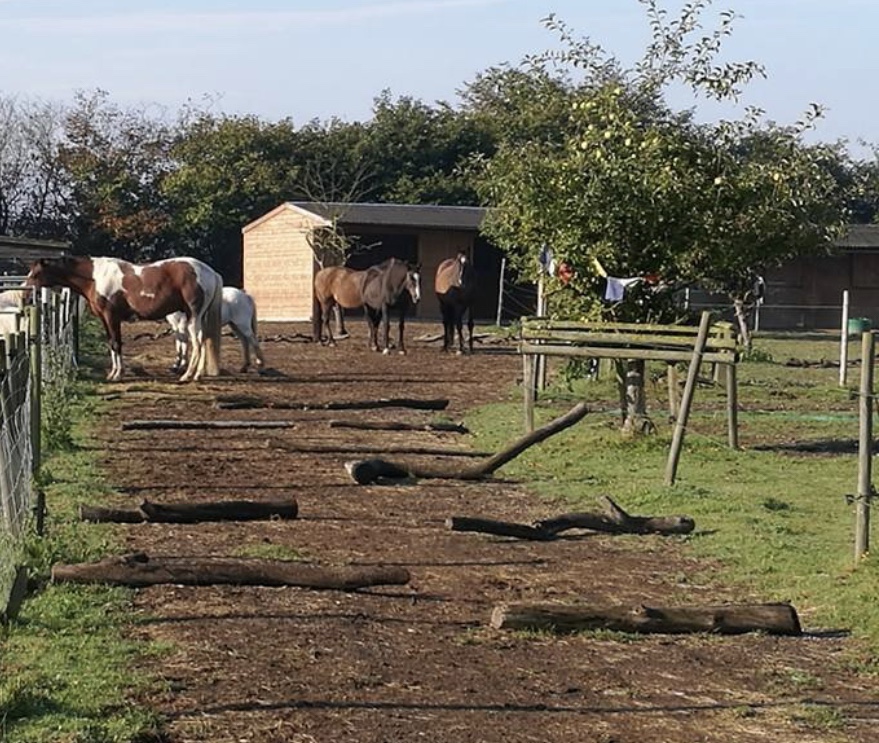
The next thing to consider is how long your horse is going to be outside with his or her friends. I know that when I build our stable block I want to ensure the horses can eat and drink away from competition but still have the option to see and touch neighbours, however I also know it will be important that the stables are used for short periods rather than as the major proportion of the horses’ time.
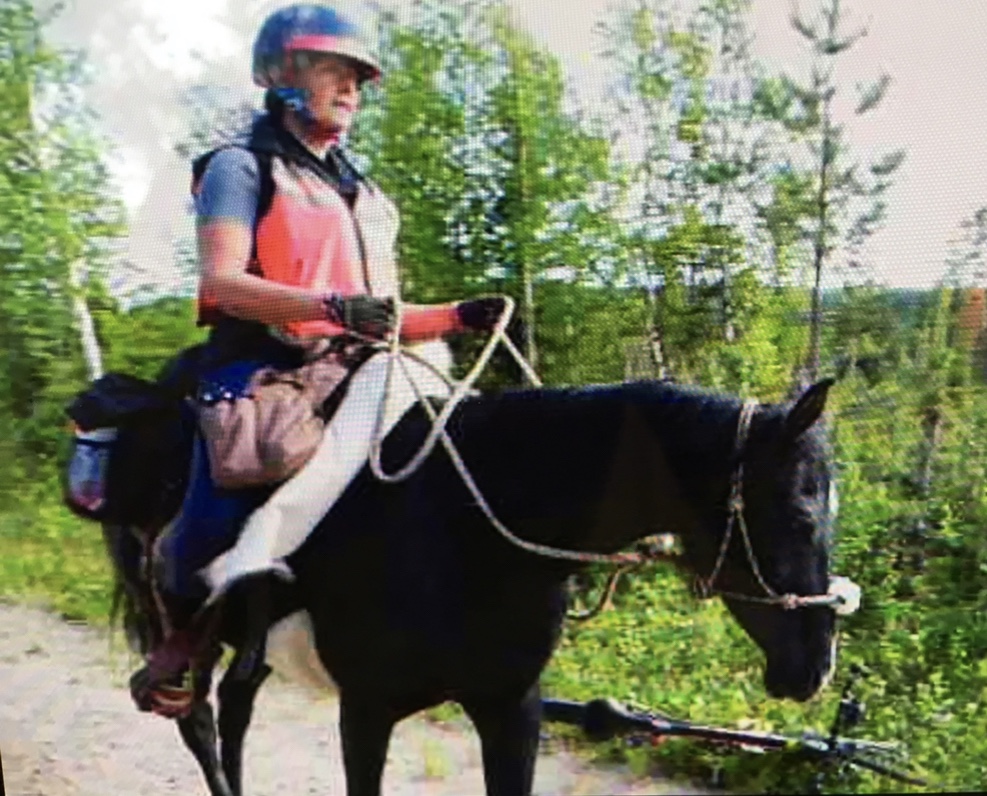
When I spent some time working on a Canadian ranch, many years ago I was surprised to learn that the majority of the ranch horses in the depths of the British Columbian winter were outside and running about with their friends over 100s of acres where they were at risk from predators and environmental injury. I was further challenged to rethink my view of horse care when I realised that the majority of those ‘wildings’ were extremely valuable rodeo and competition horses alongside the ranch horses who were absolutely vital to reach the cattle throughout the year. Each horse that worked was in for a period of the week, kept in lens and an open barn, except when fed and prepared for work. When it was time for a fresh horse, we would ride out in search of the herd (most groups of horses have fairly well worn routes) and swap horses out in one of the many narrow sports or corrals on the ranch. The horses were tough, sure footed and unbelievably fit, but incredibly willing to work with humans and keep me (a nutty Scotswoman with very little clue about how the world worked as far as the horse was concerned) safe. It strikes me this was a good way to keep horses. Until I read about Jackson’s Pasture Paradise years later, I couldn’t work out how I could keep my beloved horse and pony in a similar way without 100s of acres and pots of money to buy them!
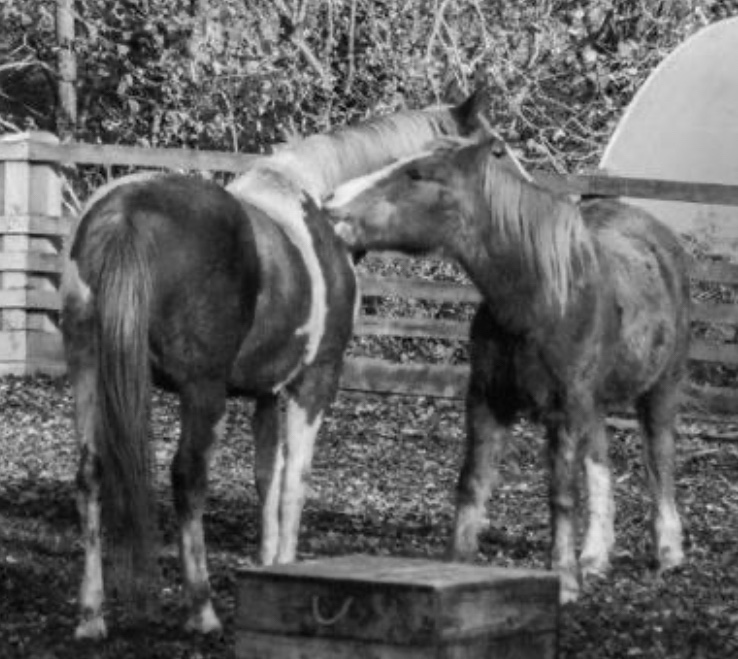
The advantage of a track is that you can adapt the underlay to your horse’s needs!
Want a jumper? Consider the muscles your horse requires to jump – hind quarters and strong back and begin to create challenges that will strengthen those muscles every time he walks to his water.
Need more stretch in the neck of your dressage horse? Create barriers in front of some of the food stations so he will stand with his neck muscles in extension for a part of the day.
Need to improve the shape and growth of your horse’s hooves? Create areas specific to hooves with river stone or gravel to round off and develop the hoof wall.
Discuss with your physio, vet, dentist, trainer, behaviouralist, barefoot trimmer, farrier the needs of your particular horse and how those needs might be supplied ‘along the way’ rather than just with the short time you are with them. The crib biter, weaver or wind sucker may be helped by a mind that is filled with new challenges – I have seen this work with horses in my care. The older horse will benefit from the regular motion the body needs but with a few softer underlays which may challenge balance while offering gentle support to the joints. There is just so much we can offer our horses and we can add to the ‘paradise’ year on year or week by week according to our imaginations, their needs and our purse strings!
I’d love to read about how you offer your horse enrichment and the chances to exert his or her natural behaviour!
 Happy Healthy Horses