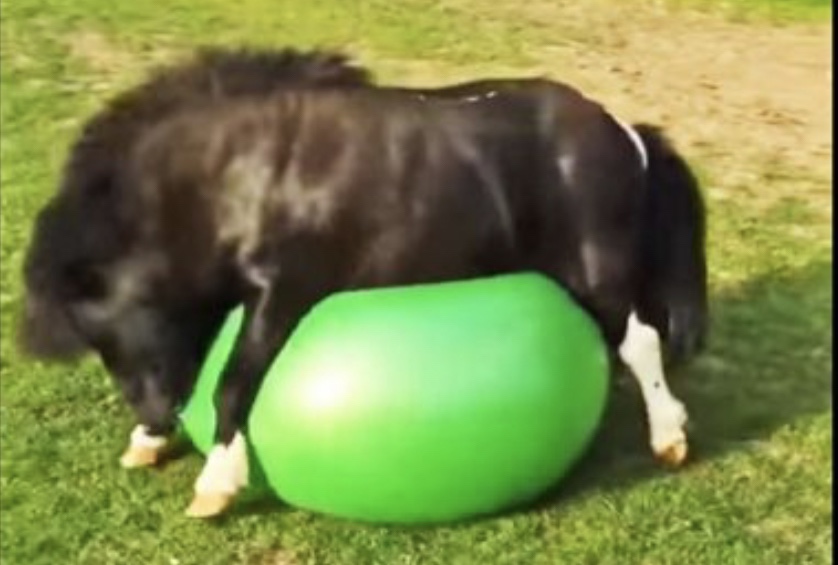
We can easily assume that horses know where their feet are, how to stand on them and use them for balance and propulsion. You don’t give much thought to how they sense the ground through their hooves; you simply assume that they do because, after all, within hours of birth, horses can stand and run.
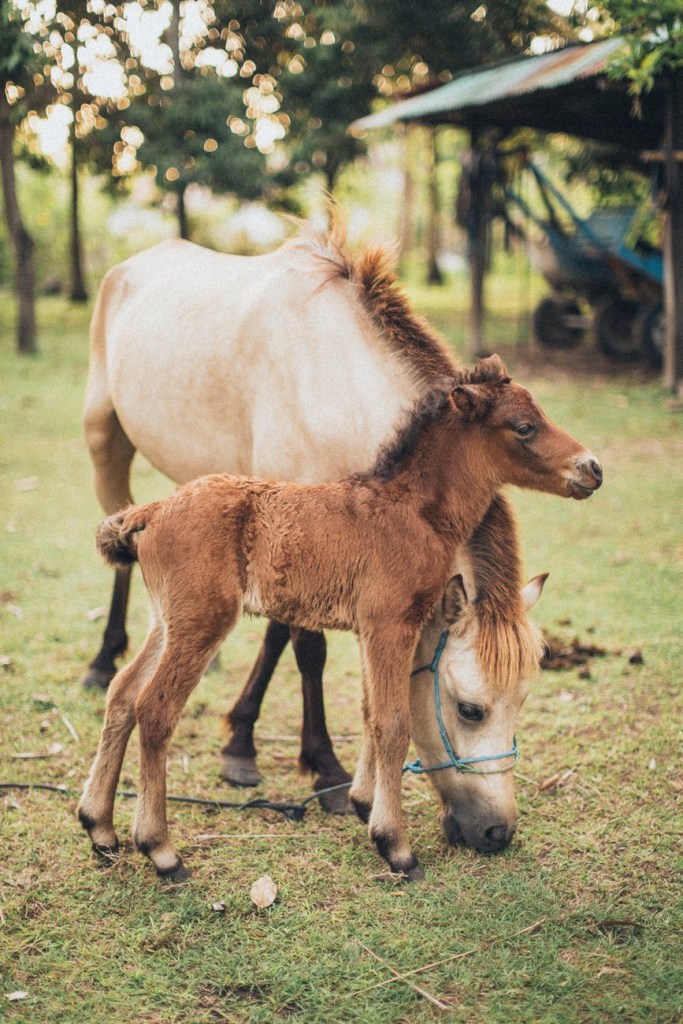
A horses’ quality of movement is directly affected by how they place their four small circles of surface area (4 feet) on the ground. Horses have habitual (unconscious) patterns of standing which research has shown they develop from the first day they start eating grass (there is usually a favoured foot which goes in front when eating and this one has a slightly different hoof wall shape until/if we choose to reshape for metal shoes and through barefoot trimming).
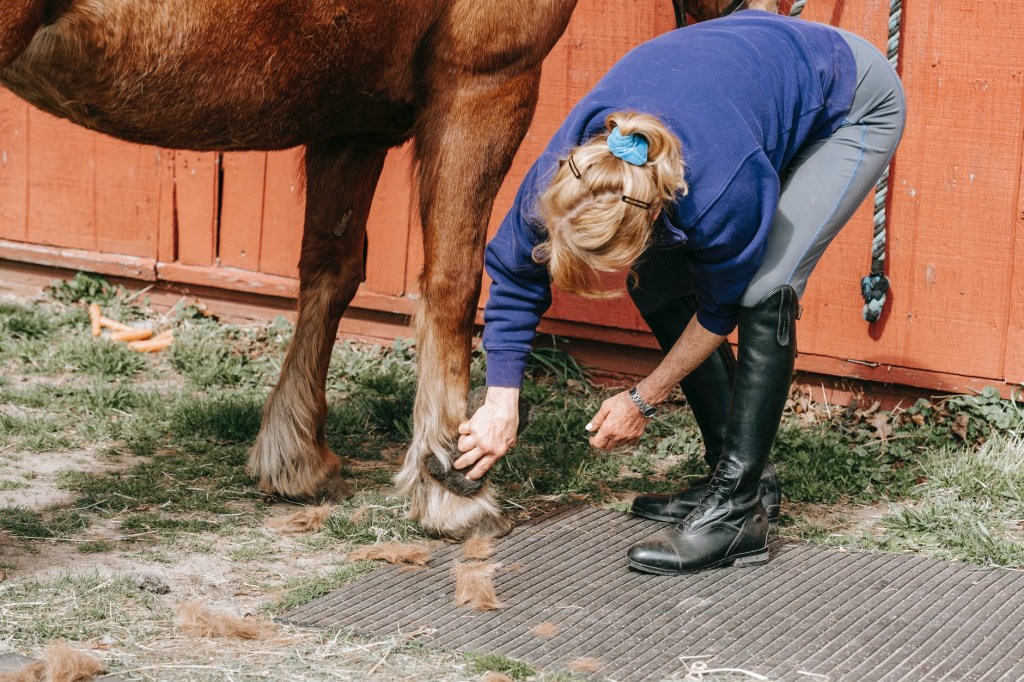
Similarly each horse develops their own pattern of moving without and then with a rider or harness and ‘kit.’ This new pattern of movement can create anxiety, instability, poor quality movement and what we typically think of as “resistance” as they attempt to remain upright especially in biomechanical relationship to their rider or the harness and vehicle/machinery they pull. It is the job of the first riders and trainers to prepare their horse for the mechanical stresses abs strains of their job. Sadly all trainers are not equal in terms of experience and skills in this area and so there are variable results for the horse.
Many classical trainers in fact train a large majority of movements from the ground and without the weight of a rider- this allows horses to develop independently in their proprioception and movement before adding the complexity of weight. Some systems (such as the Spanish riding school in Austria) build the horse’s ability through levels of rider and trainer, ensuring their riders have a balanced and independent seat before beginning. The majority of horses and ponies do not have the benefit of hundreds of years of training experience such as is available in some of the great military schools. When we buy our own ‘finished’ riding horse, we cannot guarantee how he or she has laid down their muscles and depending on their experience and where they have lived, they can have very specific proprioceptive problems.
My old riding horse Joe came with an amazing ability to go very fast across fields and jump fences but he had little idea how to negotiate steep hills. When he moved to my farm in Wales, he not only had to take me for rides up and down steep hills but also to stand and eat on slopes. For the first few weeks we noticed he had a lot of bumps and strains until one day I saw him effectively fall off the hill he was standing in and roll down the field to the bottom where there was a flat area. He had lived on flat paddocks, worked as a racehorse on race tracks which were usually flat with a few big fences (which he cleared with ease) and he had tried and been successful with low level show jumping in his retirement from racing. What he had not down was climb hills and he had never stood side on to a hill to eat. He learned and he stopped falling off the hill within a matter of four weeks but his difficulties demonstrates how proprioception is an essential part of safe movement.
By contrast our highland pony lived wild for the first few years of his life on the craggy and uneven ground of the common grazings on the Isle of Skye. He is one of the most sure footed horses I have ever encountered. He has a remarkable ability to get in and out of places and to know what needs to be jumped and what can simply be kicked out of the way! (An ability that wasn’t always helpful to the young girls that tried to take him over a series of flimsy jumps in their riding lessons!)
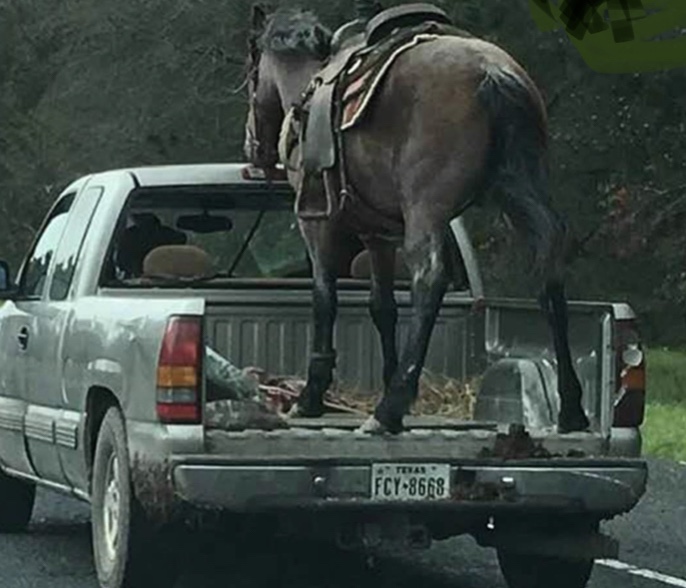
Meggy was a pony who refused to go in her owner’s rather lovely lorry. She had been transported prior to sale with ease in a cattle trailer with a long and relatively low ramp but in a cattle trailer that was all metal and really noisy. Yet she had gone on with ease. The beautiful, comfy and quiet lorry was a different matter. She viewed it with apparent suspicion and distaste, fighting with all her little frame to avoid putting a foot in the ramp. Simply forcing her resulted in rearing and digging her little feet into the ground or worse lying down on the bottom of the ramp. When I broke down the problem, she could go in all sorts of boxes, stalls and trailers. She could walk over bridges with relative ease and a little persuasion. So the biggest issue was the steepness of the ramp and her ability to work out how to negotiate it. By working on her balance and gradually increasing the ramps gradient (using other ramps up to the lorry ramp) eventually she learned how to organise her legs to get up and on the lorry which she then showed she loved!
What is proprioception? Imagine running upstairs with a basket full of washing where you cannot see your stairs or your feet. How do you know where to put your feet and how to hold your body? Small sensory balance nerves from joints, muscles and skin gove messages to your brain which keep you upright. When you learned to negotiate stairs as a child, you probably had to use your bottom, your vision, your hands in order to feel safe until you built the skills and the muscle memory for the job and at that point you flicked a switch over to automatic and relied just on proprioception alone to do the job.
A horse gets up on his feet pretty quickly as a foal so he can run from predators and keep up with the nomadic lifestyle of his species, but he does not learn how to use those same legs to do the things we humans require him to do nor to move while wearing the weights that shoes or boots create on his feet nor to hold his back and stomach in a way that protects his spinous processes and prevents problems like kissing spines that arise from not understanding how to carry the weight of tack and/or a rider. These things require training and the development of new neural pathways and new patterns of muscle memory. If some of these patterns are lacking, we as owners and bodyworkers or horse trainers can begin to fill in the gaps to create beautiful movement and to shield our horse’s bodies against injury.
How the horse’s foot meets the ground is how that horse meets the world. No matter the size of the horse, his relationship to gravity and the earth is dependent on the way the horse stands and lands on his hoof.
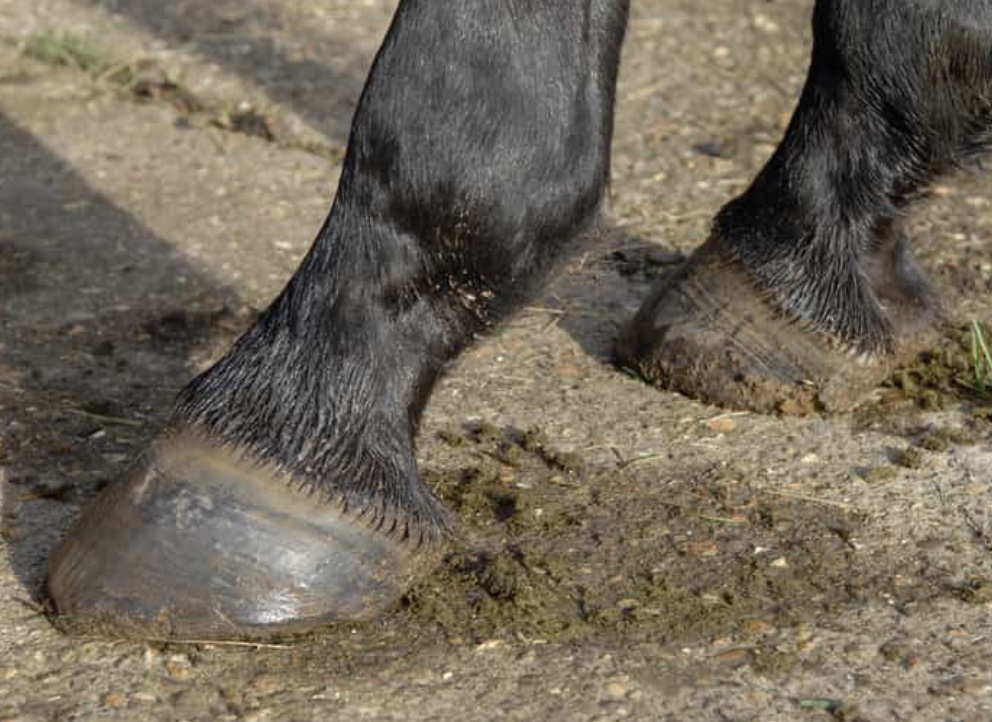
While many people recognize that good quality shoeing and trimming are essential parts of good horsemanship, in almost all cases training attempts to alter behavior and movement of the horse without addressing the fundamental way the horse’s foot meets the ground. Increasing numbers of anecdotal case studies suggest that, while it may be the case that the well- trimmed barefoot horse has a little better sense of what is going on under him in terms of protecting his feet, he can have just as many bad habits in his body in terms of carrying a rider or pulling a cart.
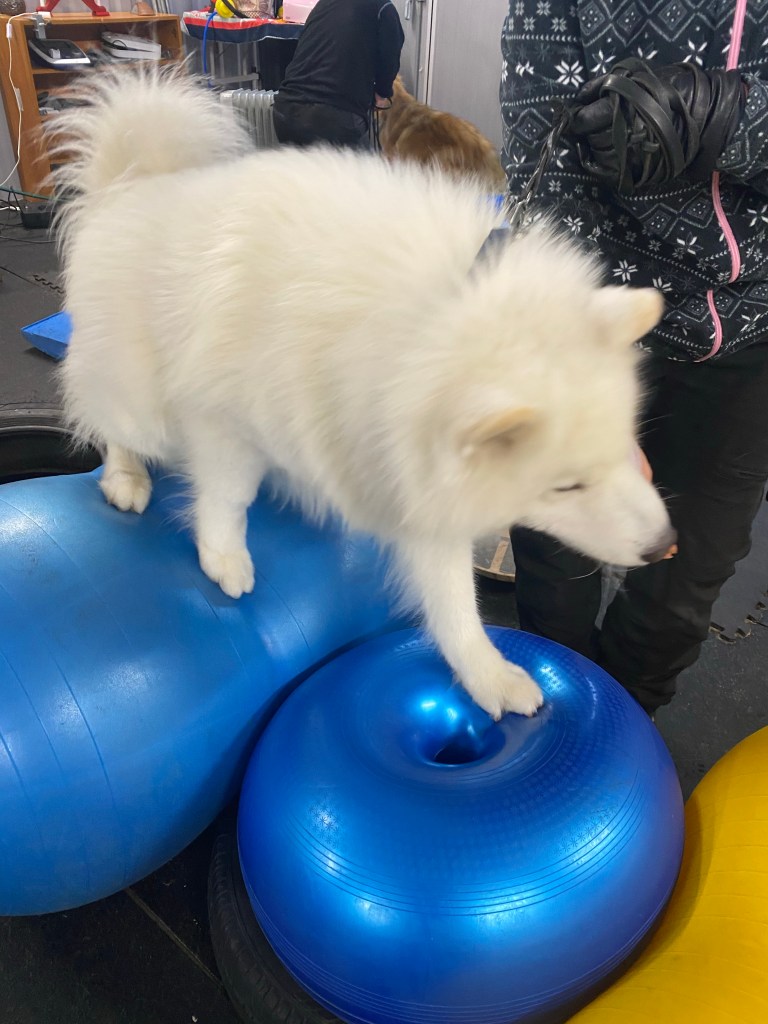
In the field of human and dog physical training we already have a bodywork and development mode that we know is extremely successful in building the core muscles and improving proprioception and results int terms of clinical and performance outcomes.

Within the equine barefoot trimming field we have been experimenting and demonstrating excellent results by using different surfaces and challenges with physical obstacles on paradise track systems and in horse walkers.
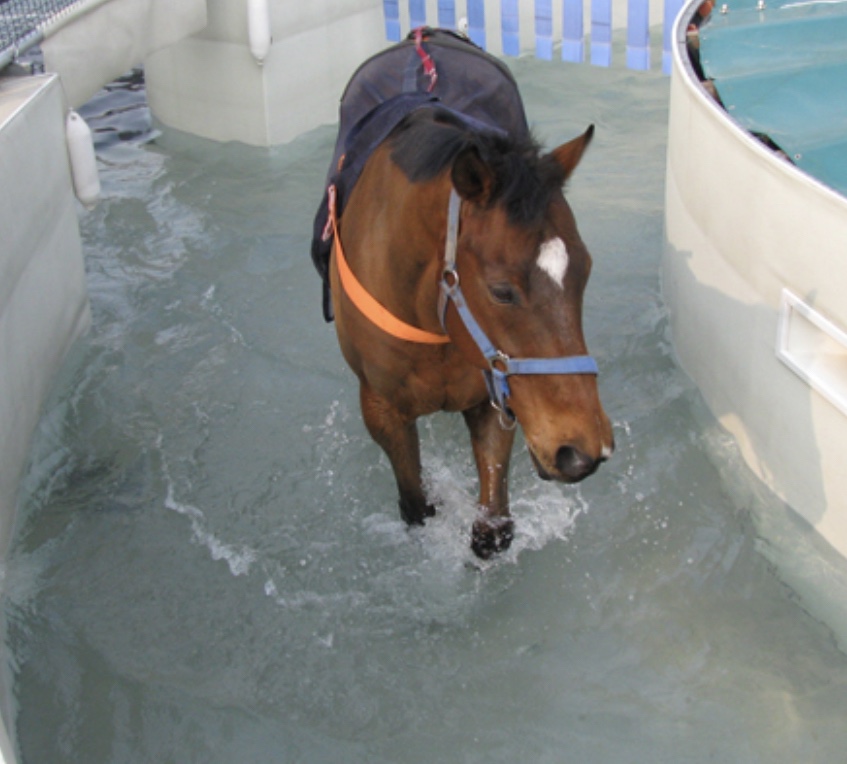
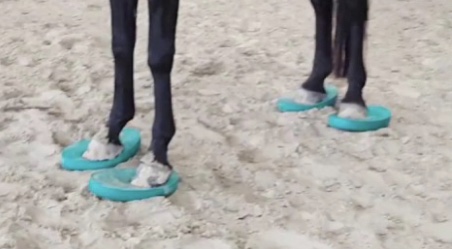
I have been ‘playing with’ using similar balance exercises to the balance cushion exercises I use with dogs and have seen some interesting and promising results in both performance and elderly horses alike. I have been experimenting with placing a slightly unstable surface under horse’s feet and offering them slight movements such as reaching a little to one side or another for a piece of carrot or gently massaging one shoulder/hip or the other and creating a small wave of movement within the body.
As a riding instructor/clinician and trained equine bodyworker with a reasonable understanding of biomechanics, anatomy and physiology, I have been looking for specific equine research to explain why this seems to help and my conclusions are drawn from human and dog studies as there seems to be relatively little in the equine area. There appears to be activation of the proprioceptors in the feet of the horse, which likely send new information into the cerebellum, the part of the brain that regulates balance, posture and motor learning. This happens when any horse goes over any new surface. There is a change in the autonomic nervous system, the part of the nervous system responsible for bodily functions not consciously directed such as breathing and heartbeat. More importantly, sensory integration theory from the human field suggests that the horse learns for himself how to alter his balance, movement, then his emotion and thinking states.
The horse experiences a switching back and forth in his nervous system from the sympathetic (flight and flight reflex) to the parasympathetic (grazing reflex).
I often see horses shift from apparent anxiety or agitation to calmness during a balance session and reports from owners suggest that this ‘thinking state’ can remain with the horse for several days or weeks after a session. Generally techniques that alter a horse’s behavior and movement are a result of external training and rote learning and not necessarily of the horse’s choosing. This calmness is similar to what can be achieved with children with sensory integration problems who are often much calmer and better able to think in school after occupational therapy has offered sensory integration training (a considerable amount of balance and pressure exercises are often involved) or within my own work with street dogs and anxious dogs in which sensory integration training through proprioceptive walkways and balance exercises seems to offer the dogs a bravery and self confidence they lacked before training.
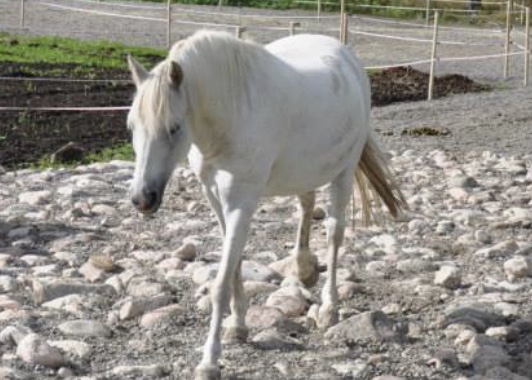
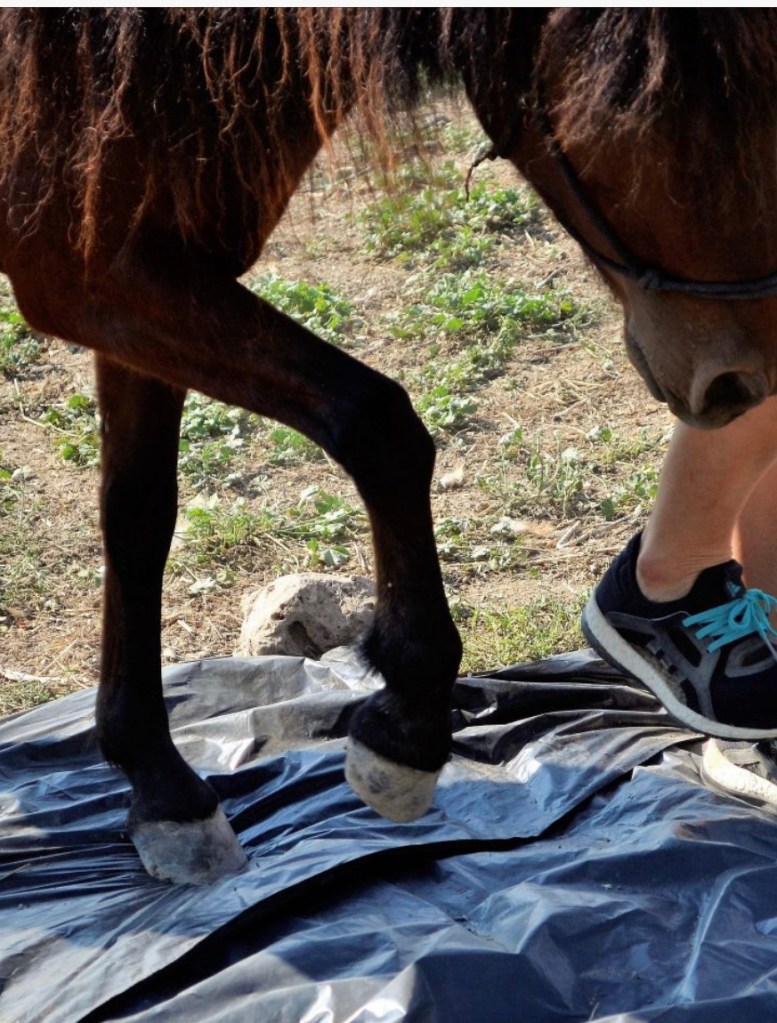
Proprioceptive training can include other exercise such as walking over challenging surfaces slowly (slowly is key so the horse has time to process the nerve information he receives). I have worked with tarpaulins, small riverstones, water, sand and even deeper snow by going slowly and changing the angles the horse works at, the mechanical structures of the horse (muscles, fascia, ligaments and tendons) can be activated safely.
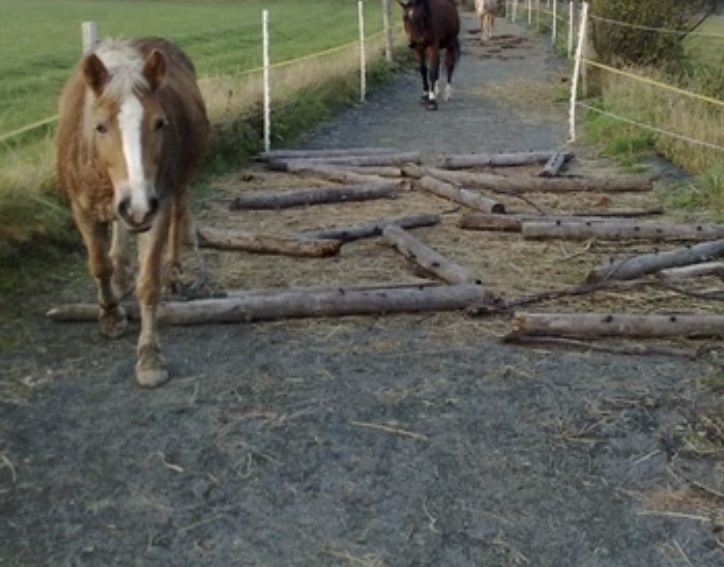
Horses will tend to want to rush over perceived unsafe surfaces or even jump them. It is essential to have a trusting and non-forcing relationship as well as enough time to allow the horse to think about and decide whether or not to undertake a task. ‘No’ has to be an ok answer in therapy. I can say no to my physiotherapist or trainer, as a human, because the challenge is mentally or physically too great. The trainer/physio then has to re-present the challenge either changed so I can cope, graded so I can cope or completely altered so it doesn’t have the same effect on the mind. It shouldn’t be any different for the horse. As a human trainer I can explain and suggest or even persuade my riding clients things they can try. My approach needs to be the same with horses. In my opinion force has no place in my work but clear explanation and adaptability on my part has.
In my rider training I also work with balance and proprioceptive activities. And with riding lessons it is interesting to play with not managing the horse’s movement directly and especially after a time on balance cushions. If the horse stands on the cushions both without and then with the rider for a time before being offered the cue to move away at their own pace and without needing to be in a ‘frame’ or with very much contact, they often appear to seek and find their own balance. This is fascinating to me. Under normal training, some horses seem to look constantly to their rider for micromanagement while, after balancing, being encouraged to move at different paces in a safe environment with good footing and fences such as a round corral or school (these latter are for the rider’s safety by having fences which allow me to control the pace if needed), and without over management from the rider or me, they are offered time to explore how the new neural information gained from those balance exercises can help them move comfortably at the gait requested. Essentially this is more ‘horses with choices’ ideas as we offer the horse information and then give them the chance to explore it, rather than determining their frame or how they should use their muscles.
I find it particularly interesting with older horses who already have well set (though not always healthy) patterns of movement. The approach is extremely gentle and fits with my strong sense of ‘do no harm’ in older horses.
I tend to be very careful about stretching work with older horses. This subject is for a future blog however, I know for myself with my odd pattern of movement from disability and injury as a child that simply removing my muscle knots and stretching overly tight muscles to within a ‘normal’ range is painful and unhelpful while adjustments I have made semi-unconsciously myself through yoga, balance work and proprioceptive awareness stays with me longer and pain is experienced only as the ‘normal’ discomfort from training and reshaping muscle fibres!
Working with carefully graded balance-challenges seems to improve range of movement in some of my older clients and I am interested to extend this and look at the results. I’d love to think that the improvements we see in human and dog movement through working with balance and gentle stretching can be mirrored for our horses.
Over to you….
Have you worked with your horses proprioception or balance? What kind of things have you tried?
Would you like to know more or to work with me to improve movement in your horse, yourself or even your dog? Please feel free to contact me as I can and do work remotely as well as in person (the recent health restrictions internationally have taught us all just how much can be achieved online and I have seen some fantastic results even without being ‘there,’ with my clients and their animals!)
 Happy Healthy Horses