It is tempting if you have fat horses and ponies to give them small amounts of fodder so that in fact they spend long periods of time with no hay or haylage.
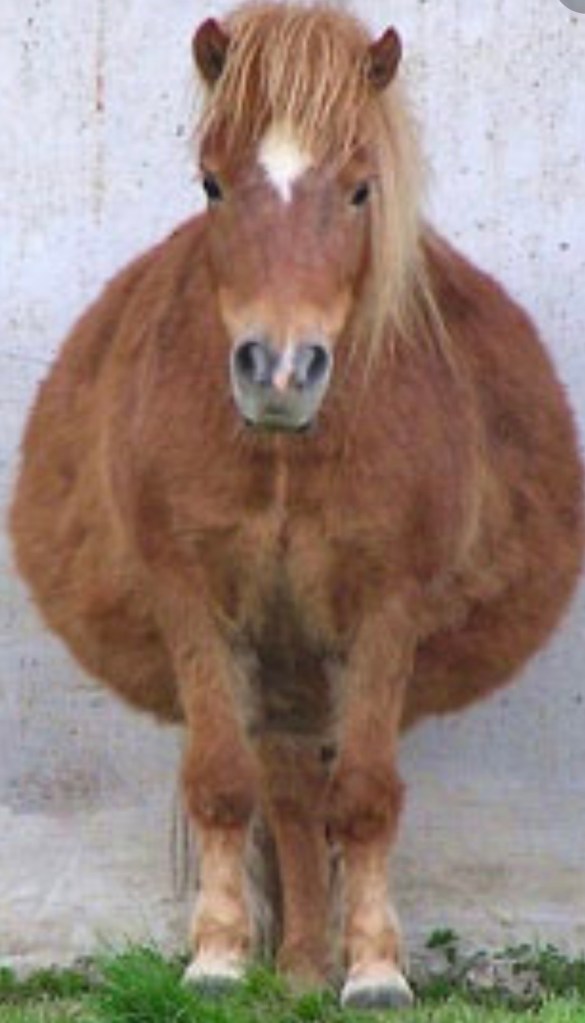
A “weight control diet” is not one in which we swing from starvation to gorging – this is in fact a habit or behaviour in humans which we recognise as unhealthy. But it can be important for a pony to lose weight and whereas most horses worked on farms and even in cities pre the lat world war, now they are often weekend warriors doing daily little all week then going out to compete, undertake lessons or just go for long country rides at the weekend.
We need to feed regularly and horses need access to hay or grass or similar pretty much around the clock but we also need to be careful to know why our horses are eating and how this compares with how much they need to work to get at that food.
First a salient question might be;
‘how long can a horse be without food before damage is done and secondly, ‘if they don’t eat for longer than that time, what damage is done?’
– 4 hours, maximum is the answer to the former.
Why?
Horses are grazers. They are designed to eat constantly. They have no way of storing their acids and digestive enzymes, they’ve never needed to. They have no gall bladder to store bile and their stomachs release acid constantly, whether or not there is food in the stomach and intestines.
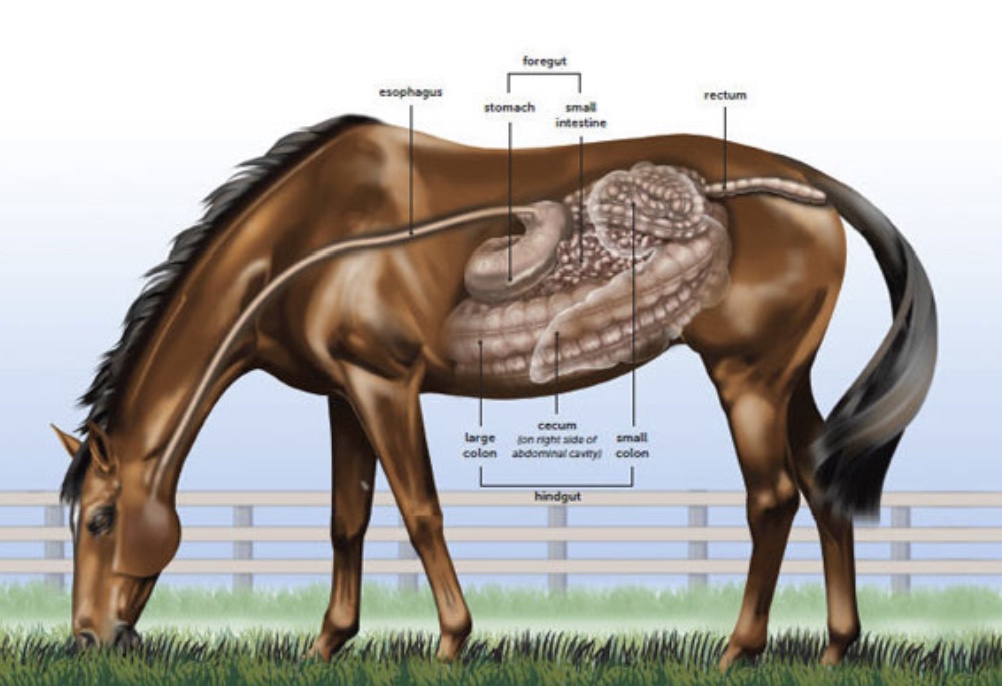
A horses stomach only holds approximately 8-15 litres. Depending on the substance eaten, it takes on average 4-6 hours for the stomach to completely empty. After this, the acids and enzymes start to digest the inside of the horses stomach and then the intestines. This causes both gastric and intestinal ulceration. It has been estimated that 25-50% of foals and 60-90% of adult horses suffer from ulceration. I won’t go into detail here about this, there is a lot of information about ulcers available on the internet, but I am noticingmore and more horses with ‘uncomfortable undercarriages’ in my bodywork. No manner of massaging and stretching the outside is going to remove sores and holes on the inside, so I am often referring the owners onwards to get help for sore tummies so I can get on with helping the muscles, fascia, joints, tendons and ligaments do their job to the best they can!
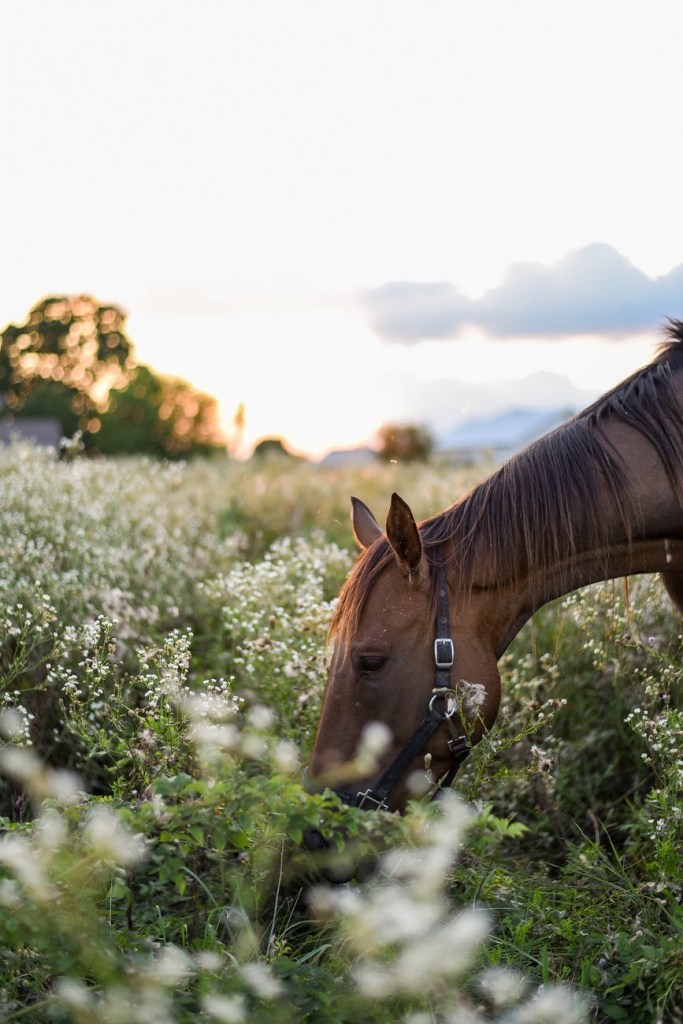
But ulcers are not the only concern for a horse left for a time longer than four hours without food.
Having an empty stomach is a stress situation for a horse. The longer they are starved, the more they release stress hormones, cortisol predominantly. Cortisol blocks insulin and causes a constantly high blood glucose level. This stimulates the body to release even more insulin, and in turn this causes fat tissue to be deposited and leptin resistance. Over time this causes insulin resistance (Equine Metabolic Syndrome is an example of this). All of these mechanisms are well known risk factors for laminitis (fång) and are caused by short term starvation (starting roughly 3-4 hours after the stomach empties). Starving a laminitic is literally the worst thing you can do. Over longer periods, this also starts to affect muscle and can cause weakness, and a lack of stamina so performance horses also need a constant supply of hay/haylage to function optimally.
Let’s not forget horses are living, breathing and feeling animals. We talk about this stress reaction like it’s just internal but the horse is well aware of this stress. Door kicking, box walking, barging and many other stable vices and poor behaviour can be explained by a very stressed horse due to food deprivation. Try not to be irritated by a horse that dives for their net, remember their body is genuinely telling them they are going to starve to death. They know no different.
But surely they spend the night asleep so they wouldn’t eat anyway?
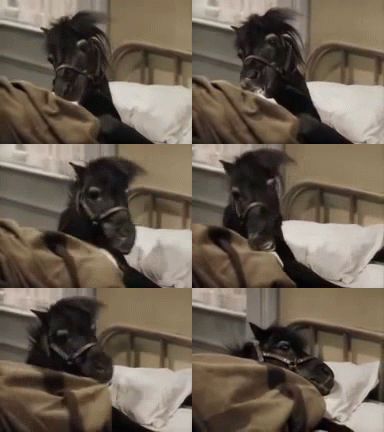
Not true. Horses as prey animals, only need 20mins REM sleep every 24 hours so they can keep a watch for predators and be ready to run. They may spend a further hour or so dozing but up to 22-23 hours a day are spent eating. So if you leave your horse a net at 5pm and it’s gone by 8pm, then by 12am their stomach is empty. By 4am they are entering starvation mode. By their next feed at 8am, they are extremely stressed, physically and mentally.
Now I know some fat horse and pony owners are reading this mortified. I can almost hear you shouting at your screen “if I feed my horse ad lib hay he won’t fit out the stable door in a week!!”
Studies suggest in fact that a horse with a constant supply of hay/haylage will eat far less than the same horse that is intermittently starved. (They likely don’t eat in a frenzy, reducing the chance of colic from both ulcers and over eating. Chubby ponies included.)
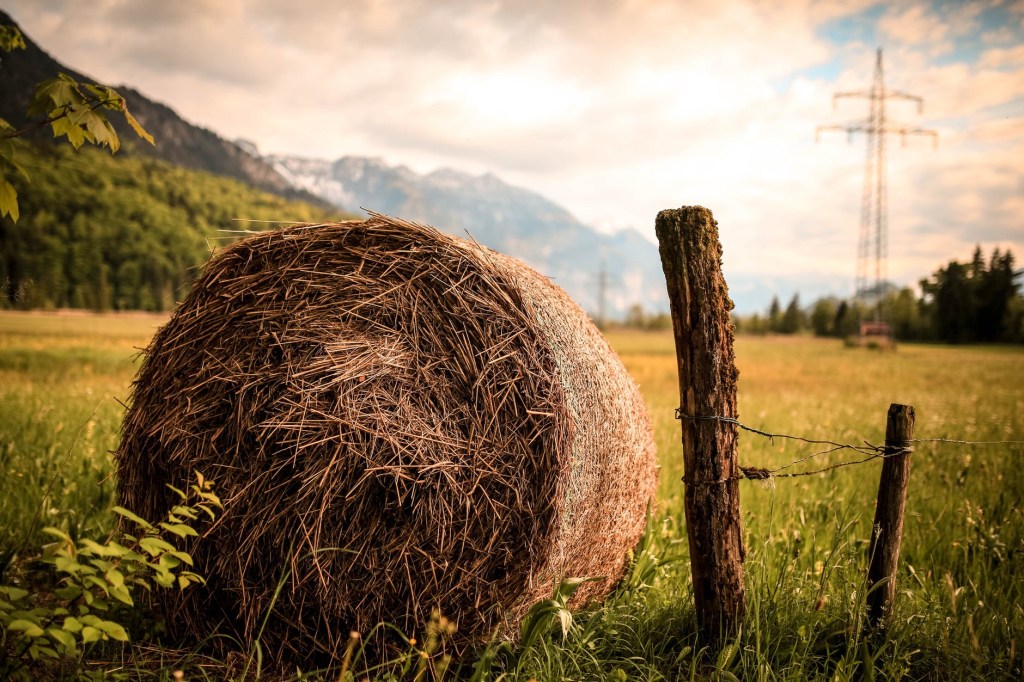
However I’m not suggesting you sit your chubby cob in front of a bale of haylage and say have at it! Firstly, feeding a constant supply does not mean ad lib feeding. It means use some ingenuity and spread the recommended amount of daily forage so the horse is never stood with out food for more than 4 hours. I am not promoting obesity, quite the opposite, feeding like this reduces obesity while also reducing the pain and discomfort of sore stomachs. This can be done whilst feeding your horse twice a day as most horse owners do. Just think outside the box for your own situation. There is a difference between ad lib and a constant supply. There is much we can do to reduce calorie intake and control weight whilst feeding a constant supply.
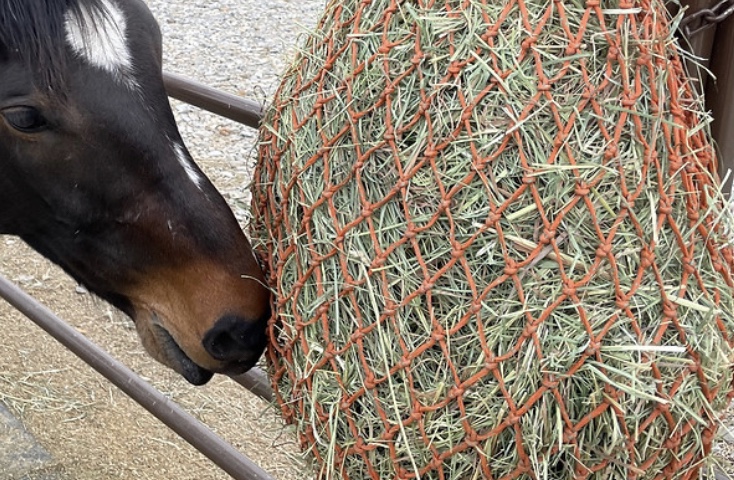
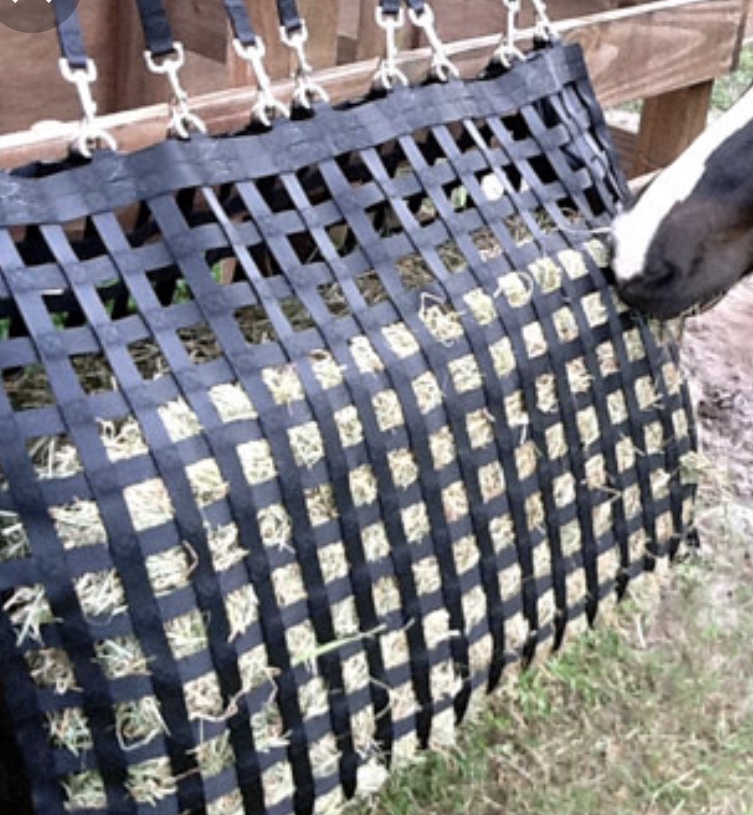
The easiest is small holes nets. There are many. Trickle nets, greedy feeders, nibbleze, trawler nets etc. Remember, you can give a normal net and one of these for them to nibble at after.
A few other tricks,
Hang one of the nets from the ceiling/rafters, it’s harder to eat out of a net that swings – check with your physio or bodyworker that there are no contraindications from neck or thoracic issues.
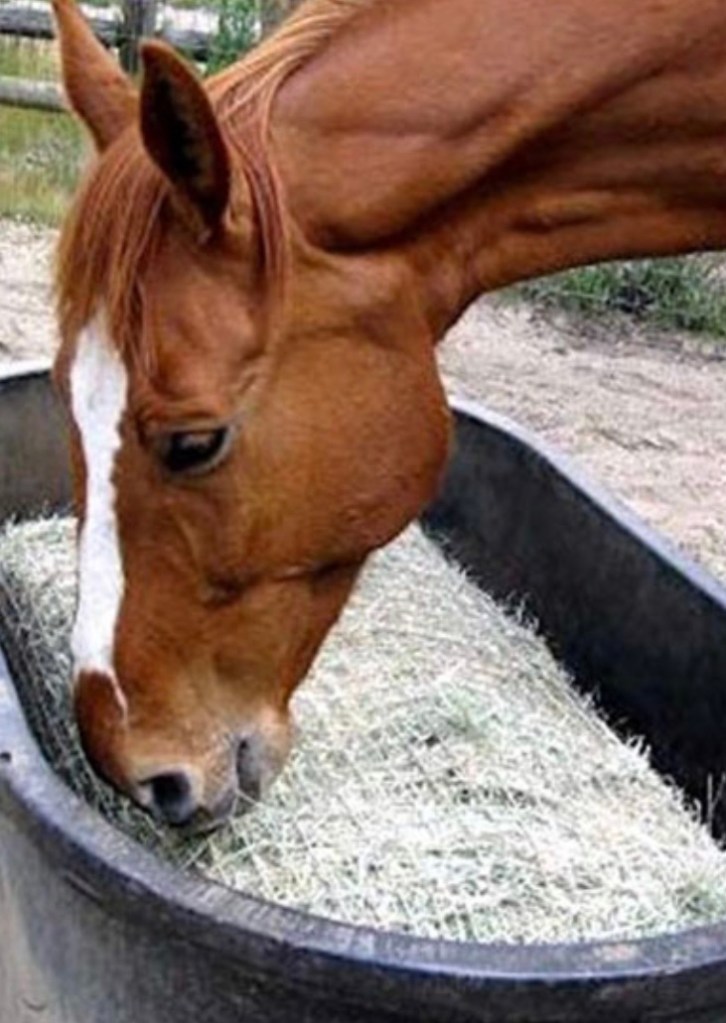
In cooler climates you can soak the hay (a minimum of 4 hours to be effective in reducing the calories).
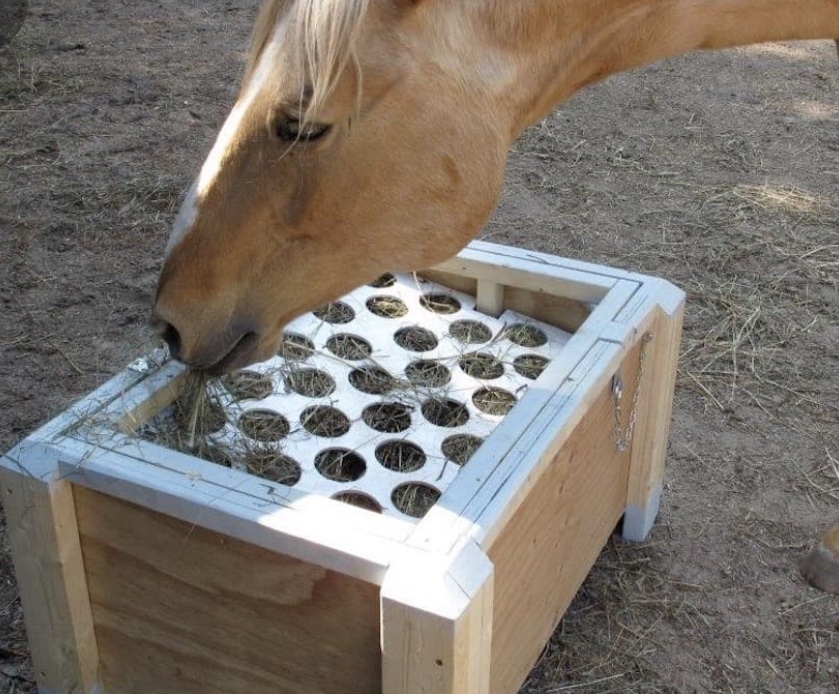
Mix with straw but be sure to introduce the straw slowly and make sure it’s top quality and a palatable type eg Barley or Oat, otherwise they won’t eat it. Don’t use rye straw and in water countries check your straw is low calorie (peanut may be a higher calorie than your local hay for example).
Don’t forget exercise.
Try to create a track system where the horse needs to move between different places for food and drink. You can add in ‘natural’ obstacles that mean he effectively goes over cavaletti sized bits of wood as he travels between places to get food or water or has to put his front hooves up on something to get to a net, creating a stretch opportunity (those of us that have tried Pilates or yoga know how well the body responds to toning the muscles – lean muscle burns calories quicker).
The best way to get weight off a horse is exercise. Enough exercise and they can eat what they want! But since most of us do t have the luxury of riding our horses or even putting them on exercise machines for much of the day, every day, we need to create environments which help the horse to work and use their body while we are away working to pay for the hay!
Try to lay off the bucket feed and treats! Horses on a diet require a vitamin supplement in the form of a balancer but that’s it. The odd slice of carrot, apple or swede won’t do any harm but the average horse does not need licks, treats, treacle, molasses, cereal based foods. Even food bags that offer low sugar or the very misleading “No added sugar” tend to have more calories than a horse in light work requires. Obviously if your horse is trotter racing and training every day or regularly competing in eventing he is going to need extra calories compared with a cherubic Welsh pony with a penchant for breaking into the neighbours orchard an very little other demands on his calories (yes i have a pony in mind – you can meet him on my Instagram)! Your horse is better off with a constant supply of hay, salt lick and a good balancer.
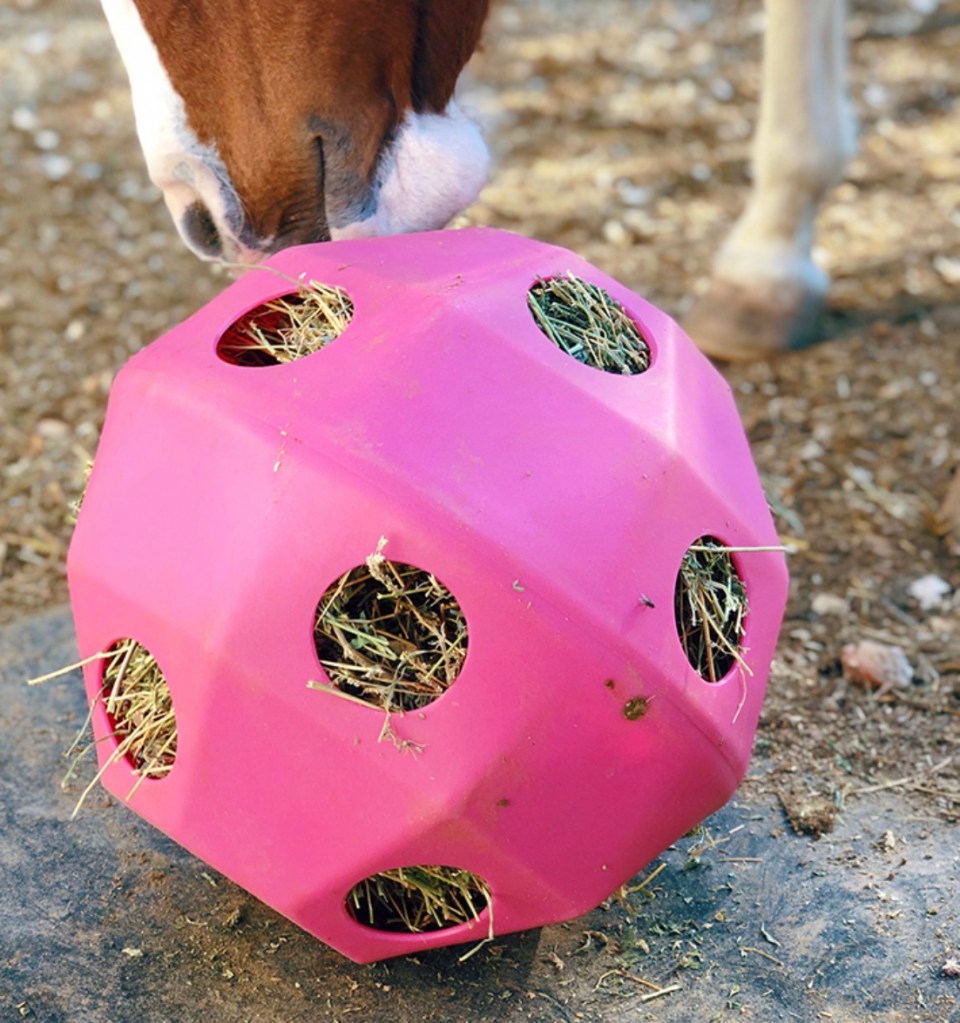
The use of hay nets in the UK and europe is relatively common. I’d estimate 95% of horses I used to see were fed this way and maybe 50% here in Sweden. Very few horses eating from hay nets re reported in research as having incisor wear or neck/back issues as a result though if your horse already has problems you might want to look at slow feed balls or other options to avoid exacerbating existing issues.
Feeding from the ground or boxes just off the ground in frozen situations is ideal, but a constant supply seems to trump this in terms of horse health.
Finally, straw can be fed to horses safely, introduced very slowly, with fresh water always available, plus a palatable and digestible type of straw which will depend on your area.
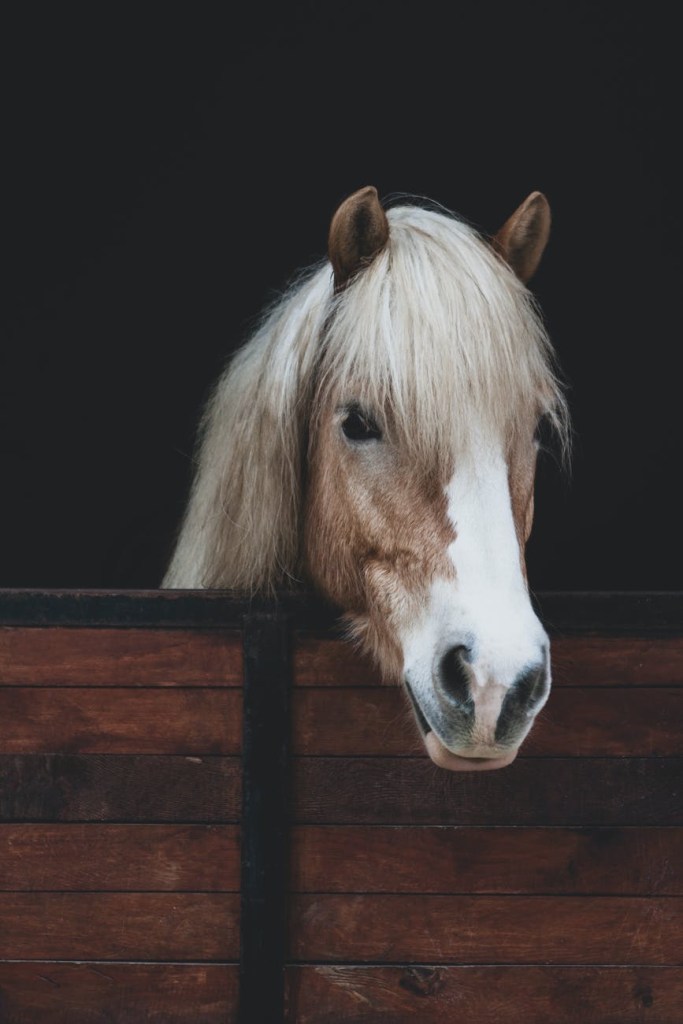
Just a little note on transporting horses; please remember to feed your horses during transport! I am astonished when I see horses without this calming and regulating option. Even if it’s a short journey remember your horse doesn’t know that so stress at not having available food can set in quite quickly!
Chewing helps most animals calm down as it has a regulating affect on the central nervous system. (We chew our nails when nervous and gum to stay awake and calm. When I have dogs in the swimming pool who are nervous, chewing a treat can often reduce the pulse and allow a better breathing pattern when swimming). Hay chewing is just the same so we can give our horses a hay net to help them while waiting for the farrier or vet (providing of course it isn’t contraindicated by the situation) and keep them calm while away from the herd.
So just in summary I am making a plea for regular feeding with no breaks of greater than 4 hours for the sake of our horses’ insides!
 Happy Healthy Horses