Cross-training sounds like something reserved for serious athletes and feels like a bit of an old-school term that’s been around since moms started lacing up their sneaks for step aerobics. But it’s still super-important, no matter if you’re a casual riding club rider, just enjoy a ride in the countryside or a long distance endurance athlete. Cross-training can help build your horse’s and your muscles so that you are both ready for most things.
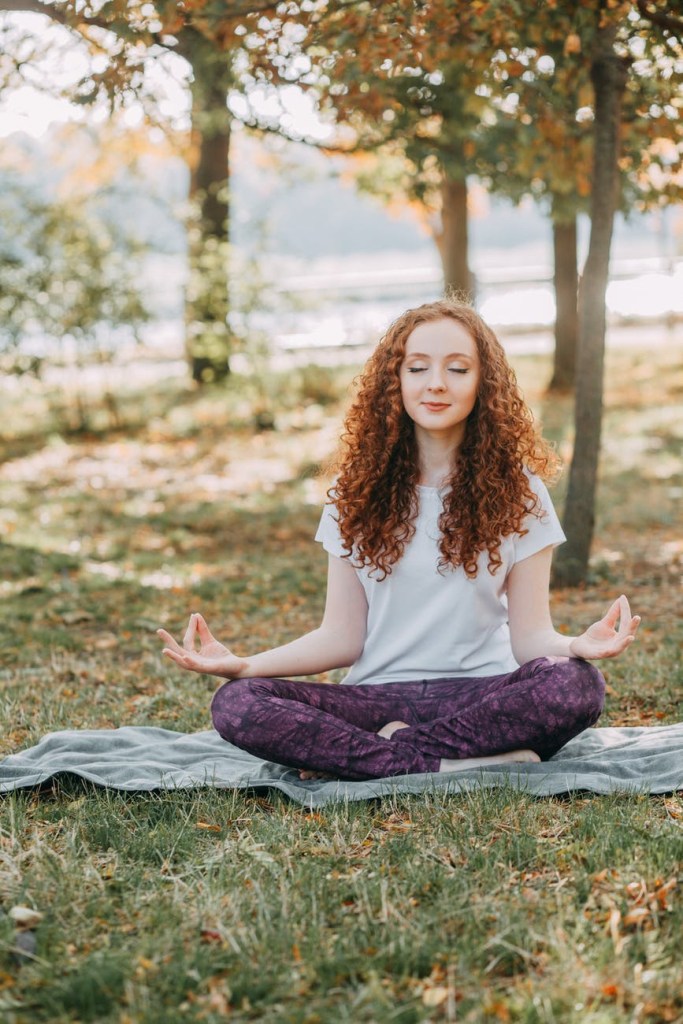
Yoga for horse riders or Pilates is well recognised as a good way of preparing for our time in the saddle but can we get even more out of a range of other exercises and what about our horse- can we use training from a range of disciplines to better our horse’s performance regardless of our levels?
Obviously I believe we can otherwise this might be a rather short blog post!
So let us begin by looking at the theory of cross training and why athletes that are busy building a career out of one sport might look to train in other sports.
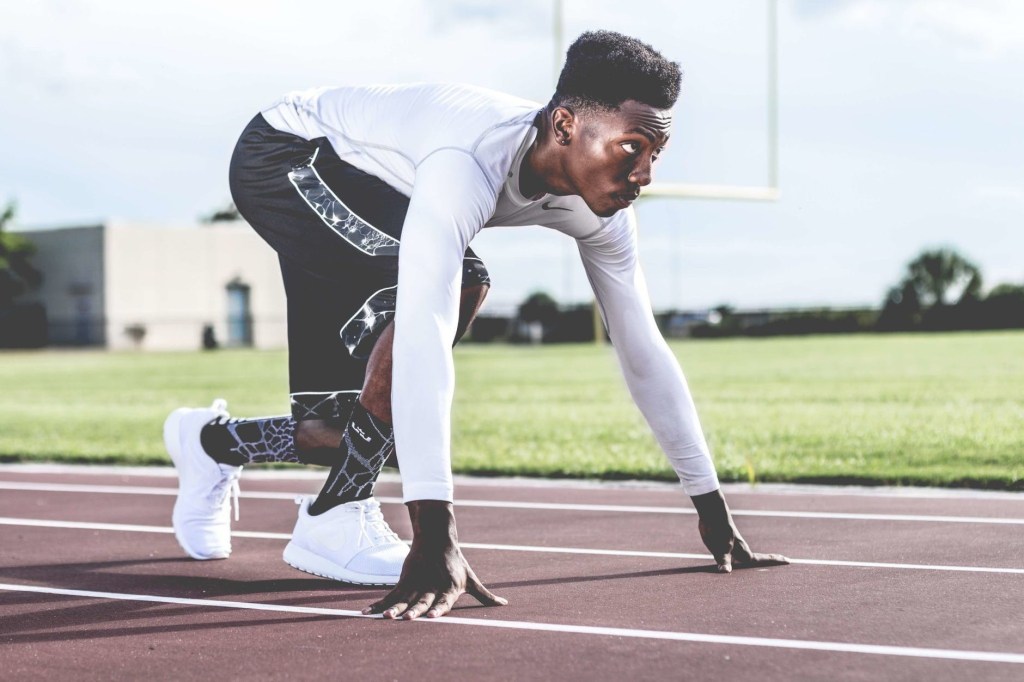
Traditionally speaking, cross-training is what you likely imagine it to be: if you are a runner, for instance, you can throw in some cycling or swimming one or two days per week between your running workouts. Or if you are a cyclist, toss in a strength day and some yoga twice per week to break up the cycling
Proponents (and there are a lot) say that the benefits of cross-training go far beyond what you expect; not only do you balance out some of your imbalances (think cyclists with huge legs and tiny arms or swimmers who are the opposite) but there are a number of health benefits;
1. Fun (at least it should be fun)
2. Keeps you from getting bored with your workout regimen.
3. Allows you to seamlessly adjust your training plan if the weather (or life) gets in the way.
4. Strengthens and conditions your entire body, on many axis/planes of movement.
5. Reduces the risk of overuse or repetitive strain injuries.
6. Allows you to continue exercising parts of your body while the other parts rest.
7. Improves your overall mobility, balance, flexibility, and agility.
8. Builds new proprioceptive and protective pathways in the body
9. Builds bone, muscle and fascial flexibility
10. Protects joints when done gradually and learned correctly
Brock Armstrong a well known personal training guru writes in his article on cross training in 2018;
The benefits of cross-training go far beyond what you expect, and as I will explain, it can actually affect you on a genetic level.
This is interesting and a huge claim for the training form. If we think of a country walk for us or our horse for a moment we can look at how we change the body by choosing different places to walk, different altitudes, different shoes, different company. I have written before that stress cortisol is known adversely to affect tissue and training always to a program with a goal in mind can build cortisol in both you and your horse so let us go back to the country walk-
We walk in company we like or at least are comfortable with – lower cortisol.
We walk in interesting places and take time to fill our souls with views and our stomachs with blueberries or brambles. Our horses sniff and nibble a little new and interesting vegetation and breathe in different air. Every geometry (shape) our bodies assume creates a different load and so a different form of strength, balance or flexibility. Adding hills (both up and down) as well as slopes that challenge our ankles (think of the ankle’s experience walking the sloped shore of a beach) uses our body—and creates loads which in turn changes both our suspending and motion structures but also builds new neural patterns (builds our nervous system). This last is extremely interesting to me as an equine bodyworker.

We can change the pace of our country walk and walk with some friends with children – suddenly it becomes harder work to our bodies as the movement becomes one of short bursts and then slow. Slow movement is harder and takes enormous strength, which is why I often advise horses rehabilitating should walk slowly up steep slopes and over fallen branches to build strength.
There is some science behind all the apparent common sense of moving in lots of different ways and with joy rather than just competitive determination to build a healthy body and improve performance.
Research from 2014 ‘An integrative analysis reveals coordinated reprogramming of the epigenome and the transcriptome in human skeletal muscle after training’ by Maléne E Lindholm et al. Epigenetics suggested that exercise actually changes the shape and function of our genes.
The human genome is complex and dynamic. Depending on what biochemical signals they receive, our genes are constantly turning on or off. When our genes are turned on, they express proteins that trigger physiological responses all over the body, both good and bad.
This is where epigenetics enter the equation. Regular endurance exercise training induces beneficial functional and health effects in skeletal muscle. This study looked at methylation. What scientists call epigenetic changes occur on the outside of the gene, through something called methylation. During methylation, methyl groups (clusters of atoms), attach themselves to the outside of the gene and make the gene more or less able to receive and respond to those biochemical signals.
Scientists know that methylation patterns change when we make lifestyle changes, like eating certain foods (and not eating others), but a lot less was known about how exercise affects methylation. Scientists at the Karolinska Institute in Stockholm gathered 23 young, healthy men and women, and performed muscle biopsies on them. They then asked the 23 participants to exercise just half of their lower bodies for three months. They did this by having the volunteers ride a bicycle using only one leg, leaving the other leg dangling there, unexercised. Ingeniously, this turned one of their legs into a “control group,” of sorts. Both legs would experience methylation patterns that were brought on by their normal everyday lifestyle but only the leg that did the pedaling would show the changes related to exercise.

After the one-legged pedalling at a moderate pace for 45 minutes, four times per week for three months, the scientists did more muscle biopsies and calculated the results.
The researchers found that more than 5,000 sites on the genome of the muscle cells from the exercised leg had new methylation patterns. And the genes that were affected are genes that are known to play a role in metabolism, insulin response, and inflammation within muscles. In a nutshell, the genes that were methylated are the ones that affect how healthy and fit we are. Significantly –
The gene changes were not found in the unexercised leg.
This is exactly why cross-training, not only in your chosen sport but in your general lifestyle, and that of your horse is so important. It is also why I am much more interested in tracking ‘planes of movement’ and how fascial chains are engaged that is quality of movement, than I am in how fat or thin or bulked or how much topline I see. These last are important but they do not build a true picture of enduring fitness.
For ourselves and our horses it is good to think of cross training as a method of moving as many limbs, in as many directions, on as many planes as you can. By doing this we build an improved proprioception (knowing where our body is in space) which is vital to adapt to the demands of every form of external bodily challenge.
By targeting new and different exercise we can reduce the anticipatory movements in our horses and build strength rather than confirming old patterns. I will try to give some examples.
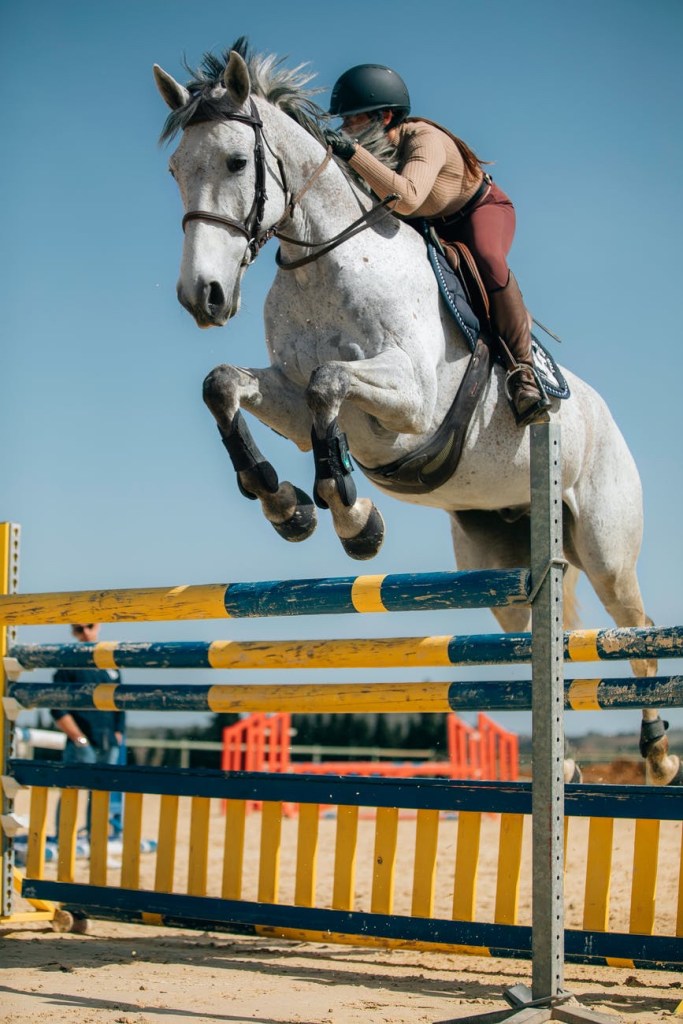
A jumping horse who is naturally athletic but never seems to get himself quite to the next level has learned to jump without fully engaging his rear end muscles – he isn’t using the full coiled spring he could. If we train in activities from other disciplines which build that pattern but in a totally new setting we will prevent him using the same pattern again and again. If we don’t we risk encouraging him to practice the same way of getting over a jump and never laying down the new neural pathways and muscle fibres to truly build him for a much bigger and better jump. So we might take him to a western class and learn a few roll backs or we might help a local farmer bring in the cows (believe me chasing bullocks builds those motor muscles), we might choose some fun rides or cross country rides that offer a full out gallop and some bigger jumps or we might work him on a track with big rocks and trees to climb over slowly up a hill. All of these activities depending on horse and rider could be used to cross train the jumping horse. So could swimming, a water treadmill or a walking treadmill. So could a ride in the countryside with other well liked horses and their owners with a few little challenges and changes of pace along the way.
The goal of a cross-training program is twofold: you want to improve your horse’s fitness—both muscle and bone strength, as well as stamina—and provide your horse with some great mental stimulation.
Bones are dynamic tissues; they remodel and change throughout your horse’s life. Even with these changes, repeated stresses can weaken and damage bones. Changing activities can shift the stresses on your horse’s bones and will help to keep bones healthy and strong.
The key to cross-training for both you and your horse is to think about your exercise goals and what compliments them.
To compete in a specific sport, your horse will have to do a fair amount of homogenous training, repeatedly pushing the same physical aspects of his body. Think of doing jump-grid training for your open jumper. That is a lot of jumps! Yes, you can keep heights lower for much of the training, but your horse is still stressing the bones and tissues in pretty much the same way each time he jumps.
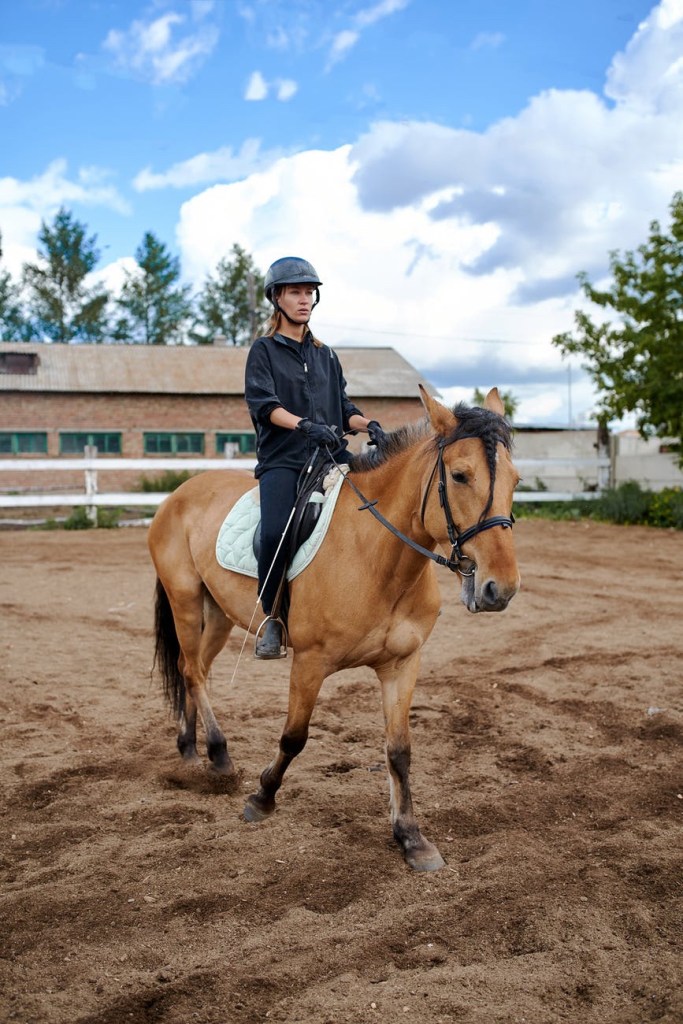
Now, throw in some dressage work. Dressage has become very popular as a cross-training sport. There is heavy emphasis on flexibility and coordination. Your horse will have to learn to both stretch and flex, working on extension and collection. Those skills and muscle memory can be very helpful for a jumper. It also shifts the endurance and stamina work over to a different set of muscles—or at least muscles being used in a slightly different way. Bones and joints will be stressed in different ways as well. If you can throw in some fun for the rider too and make them laugh, you can relax the horse while working which releases happy hormones and counteracts stress cortisol. I am serious about fun! It should be that the horse can have fun and some choices within his training schedule is as much a goal of the schedule as all the skills and muscles needed for each competition. We need a healthy partnership with our horses and this comes from having some fun together. Doing, if you will, a bit of team building activities. The trust built in these times offers so much to the psychological well-being of the pair (horse and rider) and that in turn is strongly linked to the success of the partnership and the safety and health of the bodies involved. For most equine sports your horse will also need some endurance and stamina. Even if you just show in pleasure classes, if your horse has three to five classes a day, that is a fair amount of work combined with the stress of being at the event. By the end of a weekend or week of showing, your horse will be exhausted. You could simply build up stamina by doing more and more ring practice. That gives your horse the same physical stressors but does not give him any mental relief.
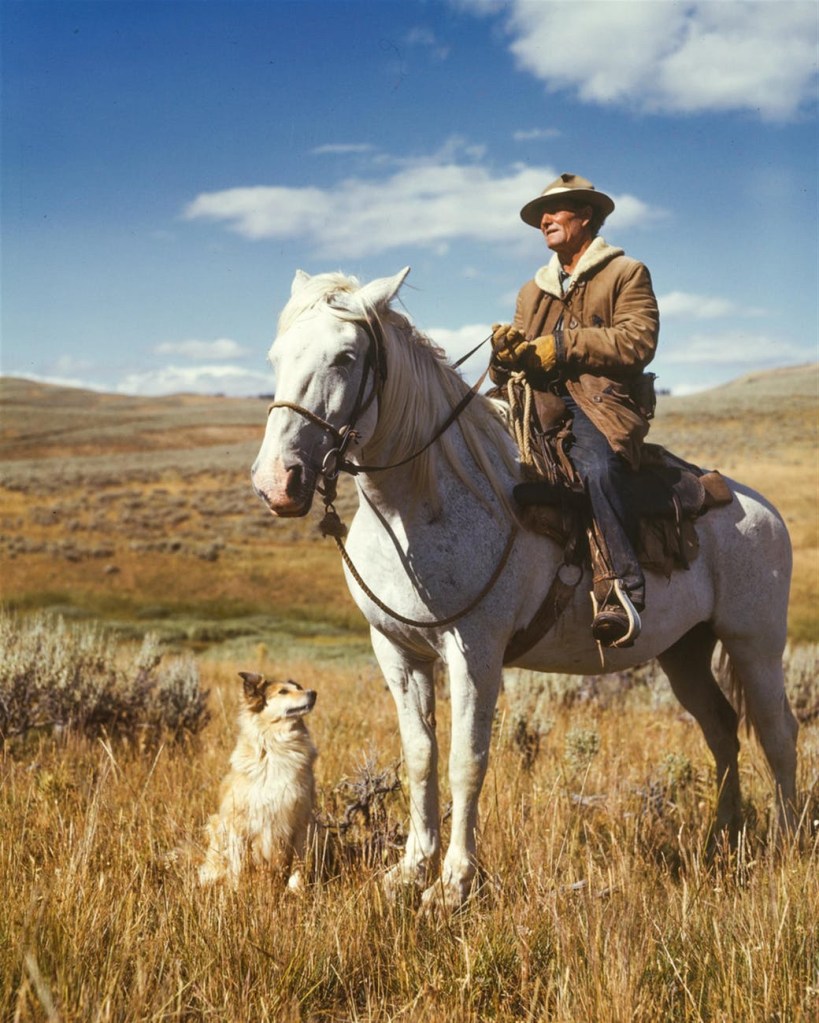
Changing the tack you are using will also influence different muscles and joints on your horse, and consider a dressage saddle versus a Western saddle—new muscles and joints in your body will be getting a workout too! Think of a horse’s natural state. The horse is outside, not in a stall or confined in a small paddock. He can run, trot or walk at will. The terrain will vary with ups and downs, creeks and rivers may cross his path, as well as fallen logs. The world around him changes every day with the changing seasons and new challenges. I have advocated track systems such as paradise paddock before and once again this kind of movement based living can really help in building your champ (or your elderly cob) a good range of protective pathways in his or her body.
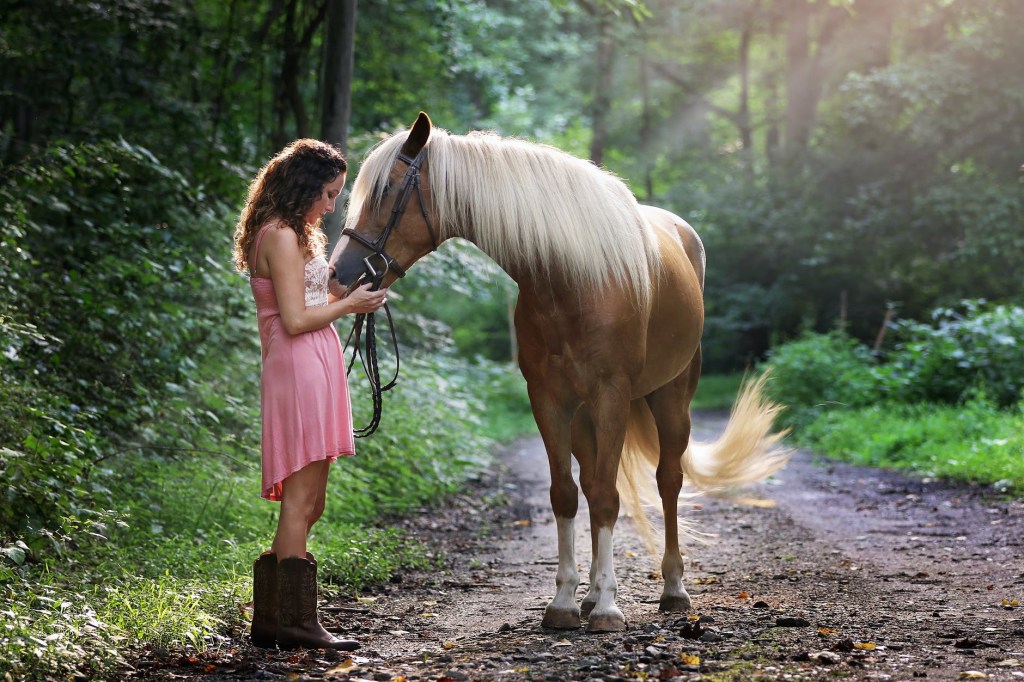
Almost all horses will benefit from doing some quiet hacks and trail rides. Quiet is the key word for me here as it should feel like down time together with your horse. A ride out in the countryside or through the forest is easier on their joints and good for them mentally – and the same for you. By including hills and some water work, you add new physical and mental stressors and build your cooperative partnership. Most horses will splash in a pond or even take a swim at the beach. Swimming is great for building up muscle without stressing joints unduly.

If you don’t have access to trails, at least consider working your superstar on some trail class obstacles. Carefully picking his way through poles on the ground helps your horse with coordination. Walking over a small raised bridge will test his mental capacity as well as his muscles. Throw in some games. Your grand prix dressage horse might find it fun to run or at least trot a barrel pattern from western tradition of rodeo. The same is true of your mellow Western-pleasure mount. Try out the new sport horse football (yes it is a thing) or for a dressage horse where sled carriage is needed and maybe a little self reliance, why not take up mounted archery.
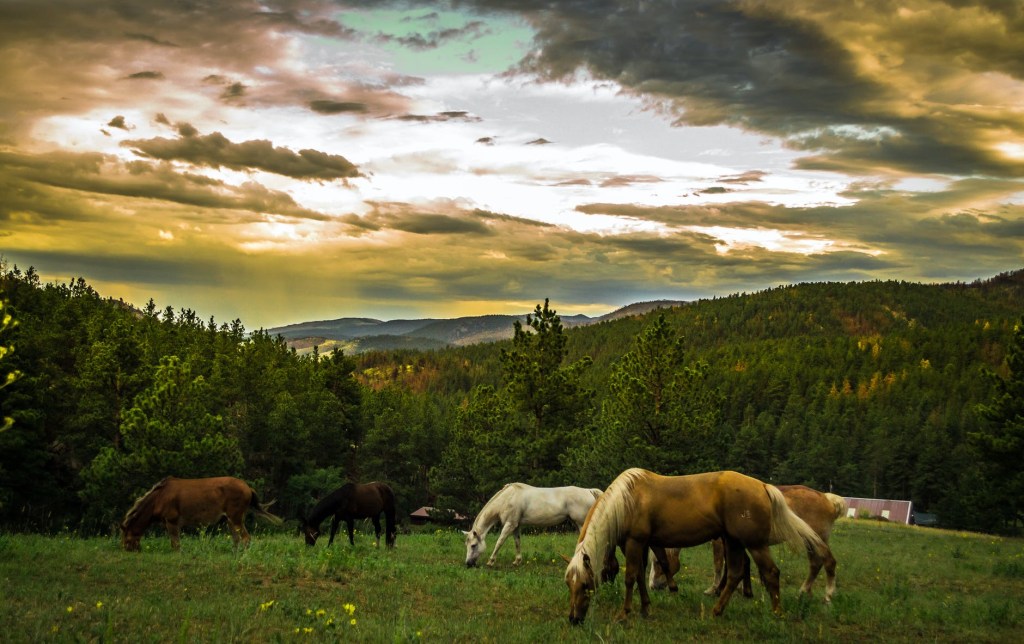
Horses are aware of and stimulated by any changes in their surroundings. Think of how your horse spooked when the tractor at the stable was moved from one field to another! Since mental strength and stability are important for your competition horse, vary your routine on occasion. Change where you work your horse. Even switching back and forth from an indoor arena to an outside ring will give your horse some variation in sights, sounds and footing. Add interesting items to your usual training areas: a balloon tied to the fence or a couple of large rubber balls in the ring can stimulate your horse.
While not specifically sport cross-training, consider trying some clicker work with your horse. Many horses pick up tricks quickly and seem to thrive on the mental stimulation. Training some simple behaviors and tricks can be especially helpful if your horse is on a rehab program and has limited physical activity. Mental workouts can help with boredom and destructive behaviors, too.
From your horse’s perspective, the more you can round out his training, by providing varied physical and mental stimulation, the sounder he will be. I have recently read in a Facebook thread or two a couple of terms ‘ring sour’ or ‘loss of work ethic’ describing horses that no longer enjoy competing, and honestly I have seen a similar attitude in the occasional human too. With some effort on our parts, we should be able to keep our equine partners and us happier and healthier with a true cross-training program and some imagination.
Build your partnership
Strengthen the mind
Strengthen the body
Please contact me for help and ideas about cross training or join my happy healthy horses community for more tips and tricks!
 Happy Healthy Horses