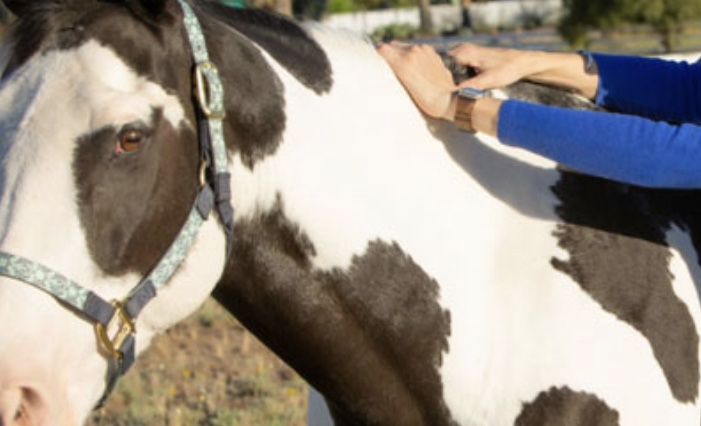
(Muscle Fascia Release) is used for the release of fascia (connective tissue) which has become stuck, hardened and dehydrated. Fascia is a three dimensional web that surrounds every bone, muscle, nerve, organ and vessel down to the cellular level from head to toe. Restrictions can develop in fascia from trauma, poor posture and repetitive training. These restrictions can create pain, swelling, misalignments, poor muscular biomechanics, decreased range of motion, decreased strength and lameness.
Restrictions in the fascial system can put up to 2000lbs of pressure per square inch onto bones, ligaments, muscles and organs causing the structures to misalign or become constricted resulting in ineffective muscle usage, poor circulation, build up of toxins, strain and eventually trauma/injury.
Myofascial release (MFR) can be used as a main modality during a session as it is effective at facilitating the body’s innate healing to realign bony structures and release deep seated tension and trauma or it may be part of a number of techniques a therapist uses.
Muscular release is a hands-on technique that uses slow, sustained pressure without sliding on the skin, therefore no oil is used. It is a very different sensation to massage. As the stuck, hardened and dehydrated fascia is released the individual horse, dog or human may sense slight pain, prickling, heat and stretch sensations. This is nothing to worry about and is essential to the healing process. Sometimes horses will tend to nip or scratch themselves where the discomfort is.
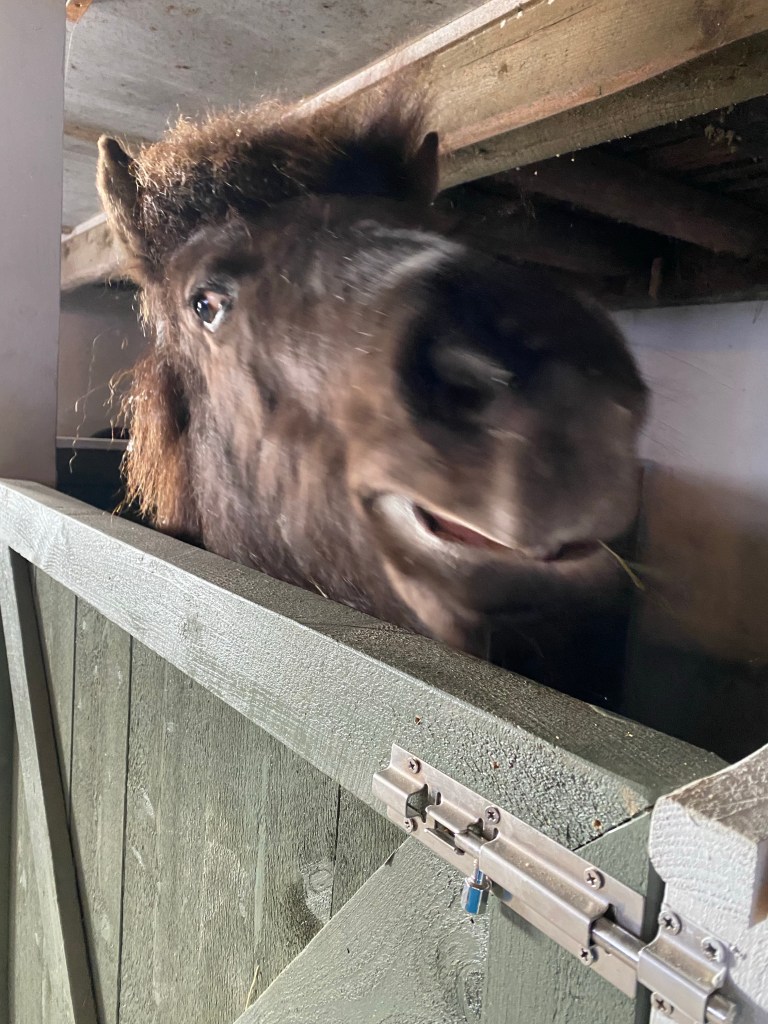
As the fascia is connected throughout the entire body, the animal may react and change other parts of the body from where pressure is placed. Sometimes the therapist will appear to be working in a completely different place from where you thought the problem was with your horse. This is not just due to compensatory movement patterns but because fascia links in chains throughout the body and other areas may need release for the identified restriction to ‘leave.’
Are you interested in learning more about manual techniques for helping horses or even training in equine bodywork techniques? Contact me for more information on courses for both horse owners and professionals online and in person!
 Happy Healthy Horses