In part one I looked at what kind of measurements you need before you start your fitness training and their are a few other considerations you might want to think about!
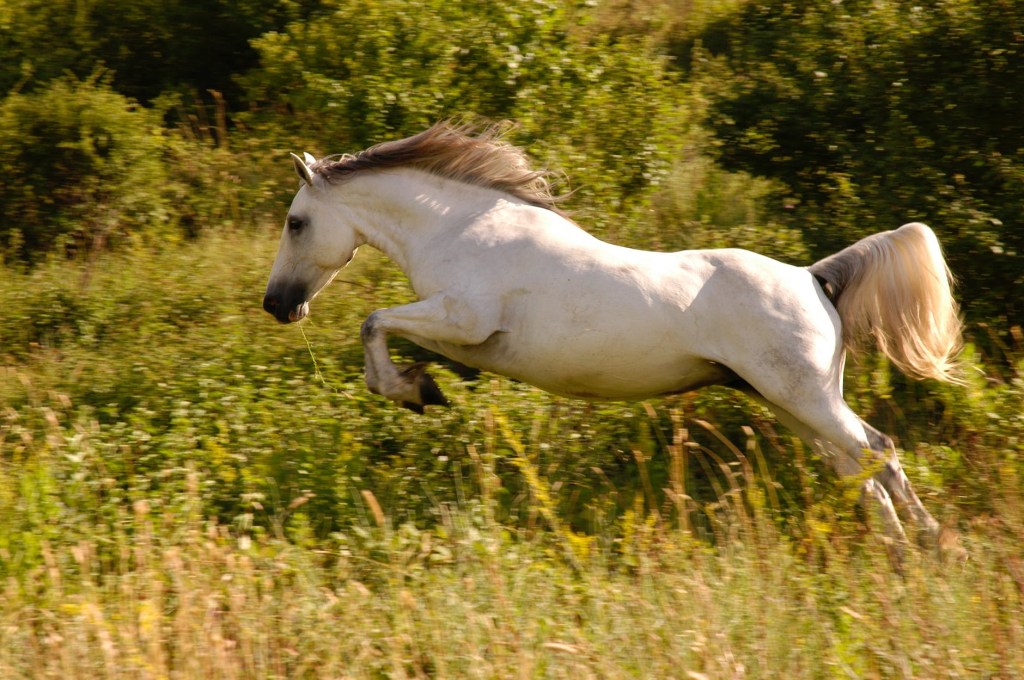
Age & Experience: If working with a younger horse consider how established they are in their work and their level of development with regards to the exercises you introduce through your fitness programme. Putting young joints, bones and muscles under excessive stress and strain too soon can lead to debilitating problems later on in life. Consider that the growth plates (the spongy cartilaginous ends to the bones from which the bones grow) need to be fused before taking stress and the last ones to fuse are the back where we want to place weight! Please don’t put stress on infuses growth-plates if you want your horse’s skeleton to last him into old age!
Facilities: What is your goal for getting your horse fit, for example are you hoping to complete a prelim dressage test or a 10-mile fun ride? Consider the facilities you will need to achieve this for example, an arena, or safe tracks and walkways for ‘road work’ which can be so important for muscles, joints and hooves . Think i’m about what is available in your area and consider if your trailer or lorry needs servicing and checking and whether you need to teach your horse to load happily first!
Time of year: Be prepared for setbacks in your programme due to the weather as this may affect facility access. If your horse suffers with allergies or is a head shaker, the time of year will be a really important consideration when devising a fitness programme.
Length of time out of work: The longer your horse has been rested the longer it will take to bring them back to the desired level of fitness.
Set your goals; A goal is simply something you are trying to accomplish; it is the object or aim of an action. Although goals can function at an unconscious level, the process of goal setting represents the deliberate establishment and refinement of goals and the evaluation of goal progress. The concept of goals and the practice of goal setting are well known and established within settings where performance enhancement is the objective. It is important to understand goals because they have such a broad function in terms of affecting the thoughts and behaviors of those to whom participation, productivity, and performance are important.
There are three broad goal types: outcome goals, performance goals, and process goals.
An outcome goal might be achieving a certain height in jumping, score in dressage or time relative to distance in endurance. An outcome also might be that you and your horse take a 6km walk around the block or even that your horse enters the trailer or lorry and stands quietly. Knowing what outcome you will achieve can help in setting up your plan of how to get there. Outcomes are better set that are clearly described and not too vague like ‘we will do some rides out in the countryside!’
A performance goal is more about steps in the way to an outcome goal. In order to ride a 10 mile fun race (outcome goal), I must first establish fitness to ride 2 miles at a 50/50 mix of walk and trot with a reasonable recovery rate of 2-5 minutes after – this is a performance goal as it relates specifically to your horse and you and how you are both performing just now.
A process goal is more broken down than performance so if I want to ride my extremely fat pony 2 miles with at least half of that being at a trot I must first get him fit at a walk so a process goal might be to ensure he walks at least for half of his day and the method for achieving that might be a list of;
– slowly change feeding so he must move from place to place to gain his daily ration, placing hay in small nets at a distance from each other up a hill and with fencing that keeps him moving from area to area,
– walk in hand( March might be a fairer description ) every day for 10 minutes on the first day increasing by five minutes a day until he walks in hand for at least half an hour daily and three times a week walks for an hour
– Ride pony three times a week in walk instead of in hand work after first in hand walking week
And so on…..
Process goals are helpful because they list what you will do to get to the performance goal you are seeking and to eventually achieve to outcome you started with.
Psychological research in sports psychology and coaching has shown that using a combination of goals is more likely to get you to your chosen outcome than simply writing an outcome then ploughing in not really knowing if you are or are not on the right track . This is because the nature of these different type of goals offers very different levels of influence from ‘outside.’ The benefit of performance goals (compared to outcome goals at least) lies in the fact that they are more controllable and flexible than outcome goals; they do not rely on the performance of others to be achieved. However, the achievement of performance goals may still be influenced by external factors, such as environmental conditions, luck, officiating, or even natural fluctuations in personal performance levels. Process goals, conversely, are almost entirely under the control of the individual (in this case you and to some extent your horse) and so there is no reason why external factors should disrupt their achievement. Process goals can be altered day to day, but it is useful at least to know what they are and possibly (if you are the kind of person where it helps) to write them down. Keeping notes of your process goals in a journal after you have written your overarching outcome and your performance goals or markers towards that outcome, allows you not only to get a feel for your progress and what is/is not working, but to reuse good ideas in the future and recall which ones were less successful for future training.
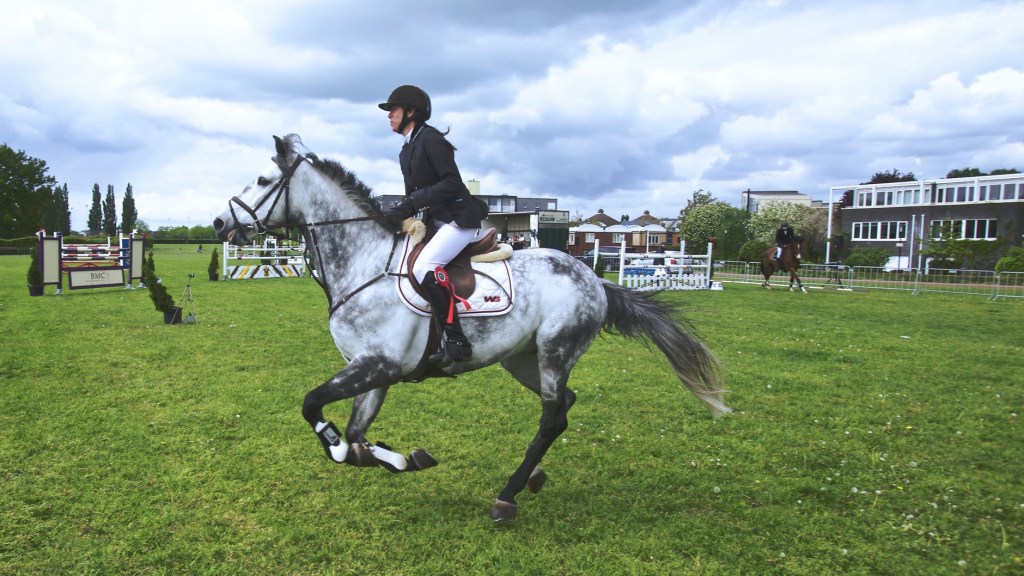
Outcome goals are usually longer term – 6 weeks away for example is a jumping competition that you and your horse will (goal 1) enter and (goal 2) win. in order for this to occur there are a number of performance goals you may set along the way relating to height and speed. These goals are by their nature time limited and shorter term as they are steps on the way to the larger outcomes.
You may notice that you are faster over certain jumps or turning one way or another during your training so your goal in one training session might be to add in a number of turns tho your weaker side or to work in the combinations that are less easy and these would be process goals that might be set with your coach in a particular lesson so very short term in time.
So here is a space for thinking; what might a goal be for you and your horse to achieve in the next six weeks…….
What is the first performance goal you need to put in place for the coming week towards that outcome? ………
What process goals need to happen today to allow this…….?
So here is an example for an older and unfit horse.
In six weeks I and my horse will ride up to the picnic place and I will eat a picnic while my horse eats some hay.
Performance goals
For me- clear diary space for my horse and me on a regular basis appropriate to his training needs and mine
For my horse- catch the horse and groom him, checking for any issues, tack up and take for a twenty minute walk in hand under tack (ie wearing a saddle maybe with saddle bags since I will need those to carry my picnic
Process goals
I find my horse has lost a shoe -I must book the farrier
And so on….
Please note Before you embark on any fitness program, make sure that each of your horses is sound and ready to ride. Is he healthy? Is he shod or trimmed appropriately? Get clearance from your veterinarian if your horse is recovering from an injury.
In terms of fitness performance and process goals, any equine fitness program will start slowly with walking and maybe some trotting, then gradually increase either distance or speed, but never both at the same time.
Keep track of what you are doing by timekeeping (a fitness watch can help) during each ride and keeping a journal of the work so you can be methodical in how you change it. In other words, make each ride count. Even the slow work can build muscle for your horse. Look for hills and go up slowly (try it for yourself, walking uphill at different speeds – slowly can build a considerable amount of strength)!
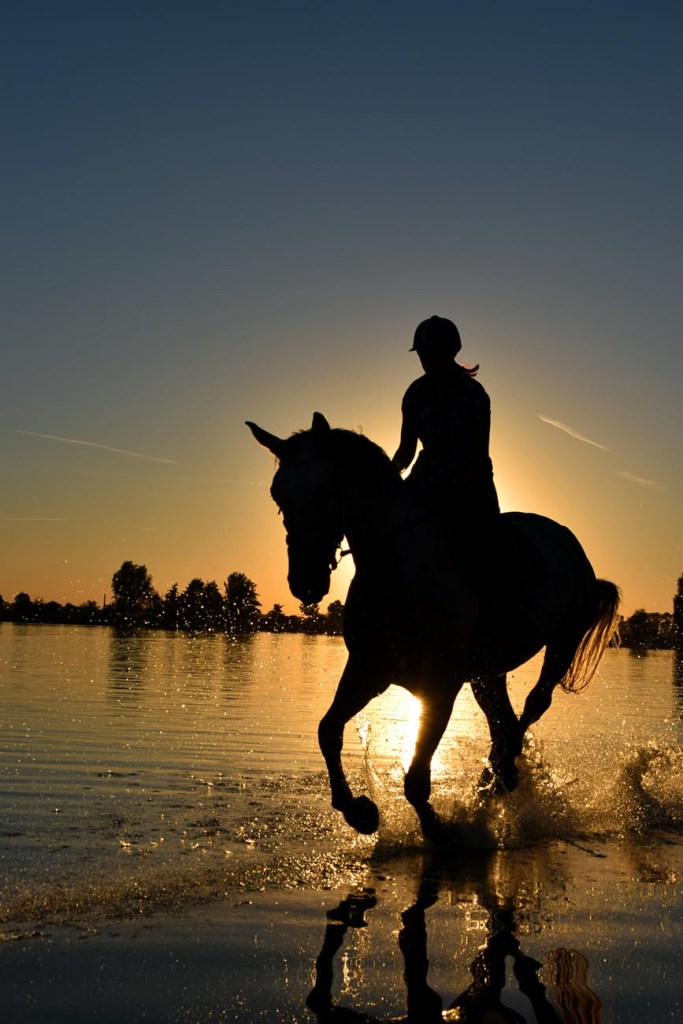
Each week, either make your rides a little longer or increase the time at the faster gaits. Think of yourself as a fitness coach, just like any personal trainer. You probably will have to encourage your out-of-shape horse to push and stretch just a little harder, but never so much that he may injure himself. Unless you are very fit from some other sport or are used to doing a lot of riding, a good program should make you work hard, too.
The specific times that you spend at each gait and the rate that you increase it will need to be customized to each horse
Remember to stretch while you are both warm! Both rider and horse need to stretch correctly to help recovery of muscles after exercise. Learning the correct way for you and your horse to stretch is essential to avoid over straining and to build the flexibility that the athletic jobs orfriding a horse and being ridden by a human respectively require!
In part three I will look at some examples of training programs you might want to use.
 Happy Healthy Horses