A majorly overlooked physiological and behavioural occurrence in the equine field- WHY is it not being discussed!
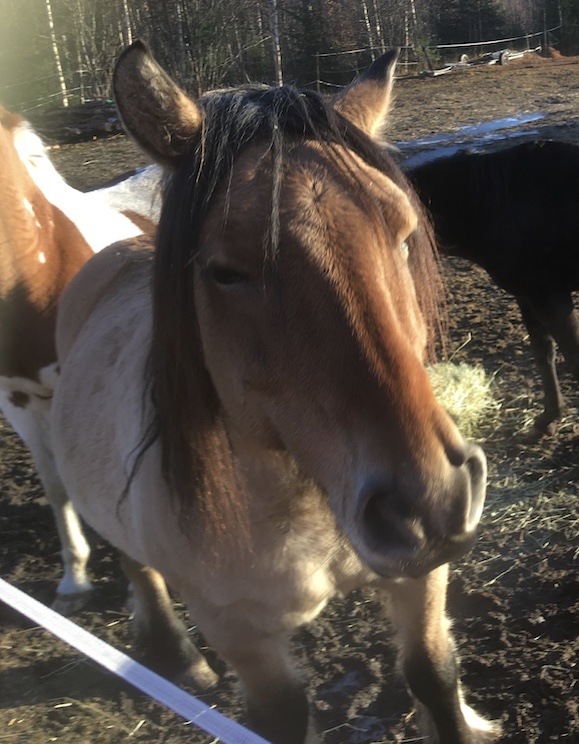
All too often I hear “he’s had his back checked, all OK so it’s not that”- especially now spring is on the horizon. People are riding more and pushing their horses ready for competing all summer.
But, remember horses cannot and do not fake pain; their brains, nervous systems and psychological make up as a prey species simply do not offer that facility to them
First, let me give you a scenario:
Day 1- horse is generally happy and does his best and you are very pleased.
Day 2- Horse has totally ‘got it’ and is moving well and you are a very happy owner/rider/trainer.
Day 3- Horse wasn’t too keen on being ridden today so he got a stern telling and told to get along because he was a bit lazy in his movements.
Day 4- Horse WILL NOT do as he is told and you end up getting off annoyed and a bit confused.
Day 5- Horse is given a few days off work
Day 7 – Horse is ridden and back to being OK again
This happens repeatedly until you end up concerned or worse, you accept the horse is a bit lazy by temperament.

So what could it be? Firstly, we need to know how muscles are made.
The muscular system is composed of specialised cells called muscle fibres. They encompass every muscle in the body, from the tiny ones responsible for ear movement, to the biggest muscle in the body (gluteus maximus), they ALL are made up the same way. Their predominant function (for skeletal muscles) is contractility. Muscles, attached to bones or internal organs and blood vessels, are responsible for movement. Nearly all movement in the body is the result of muscle contraction; other than a few focused exceptions of course.
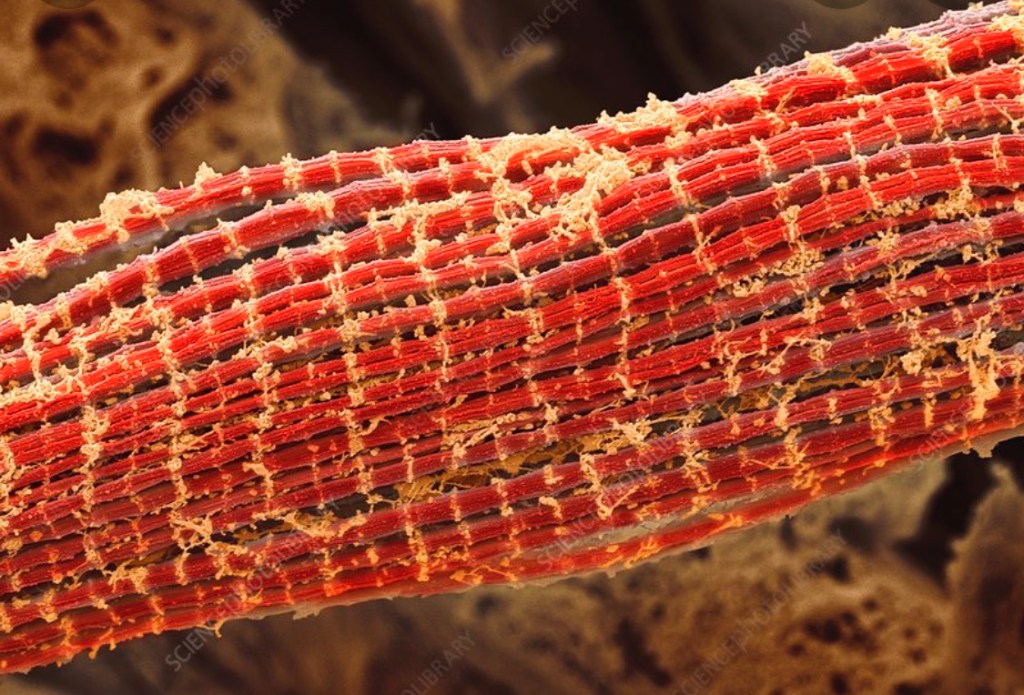
The integrated action of joints, bones, and skeletal muscles produce obvious movements such as walking and running. They are live and have nerve endings, they can and do break, and they are extremely sensitive to exercise- ESPECIALLY in a new athletic regime.
For this reason, delayed onset muscle soreness (D.O.M.S) is so immensely overlooked in the working horse. It is commonly regarded in sports medicine and we know that after hard training an athlete (horse, dog or human) needs recovery time.
D.O.M.S is that feeling that most of us have experienced usually 24-48 hours after a hard workout and usually lasts for up to 2-4 days. It’s that feeling of acute aching pain, tenderness, and stiffness. The severity of the soreness that we experience is a direct result of a number of factors, including familiarity with the exercises used during a workout, the intensity of exercise, loading of the muscles, how much a muscle has been stretched under resistance, preparation/ warming up and the angle of muscle contraction. It is caused by a number of small myofibril tears (what muscle fibres are made of!).
The micro trauma results in an inflammatory response with intramuscular fluid and electrolyte shifts (also known as lactic acid build up, a by-product of muscular contractions). When not acknowledged and treated accordingly, the DOMS can continue to grow and more tears occur creating more pain and stiffness and the muscle becomes susceptible to genuine injury.
Excessive muscle stretching in this early phase should also be avoided due to ease of furthering muscle ruptures.
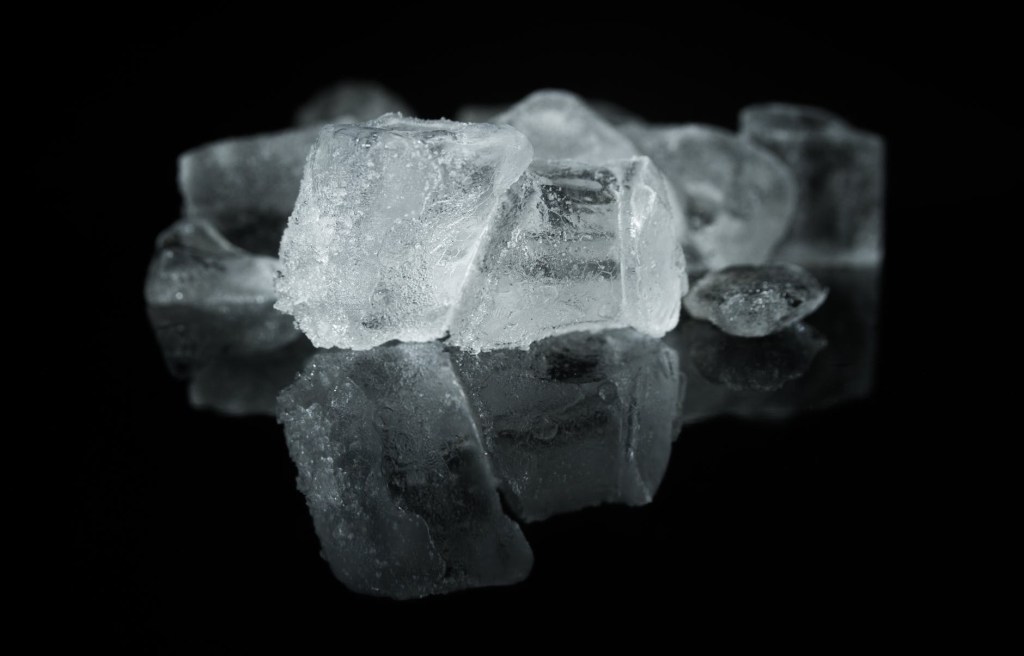
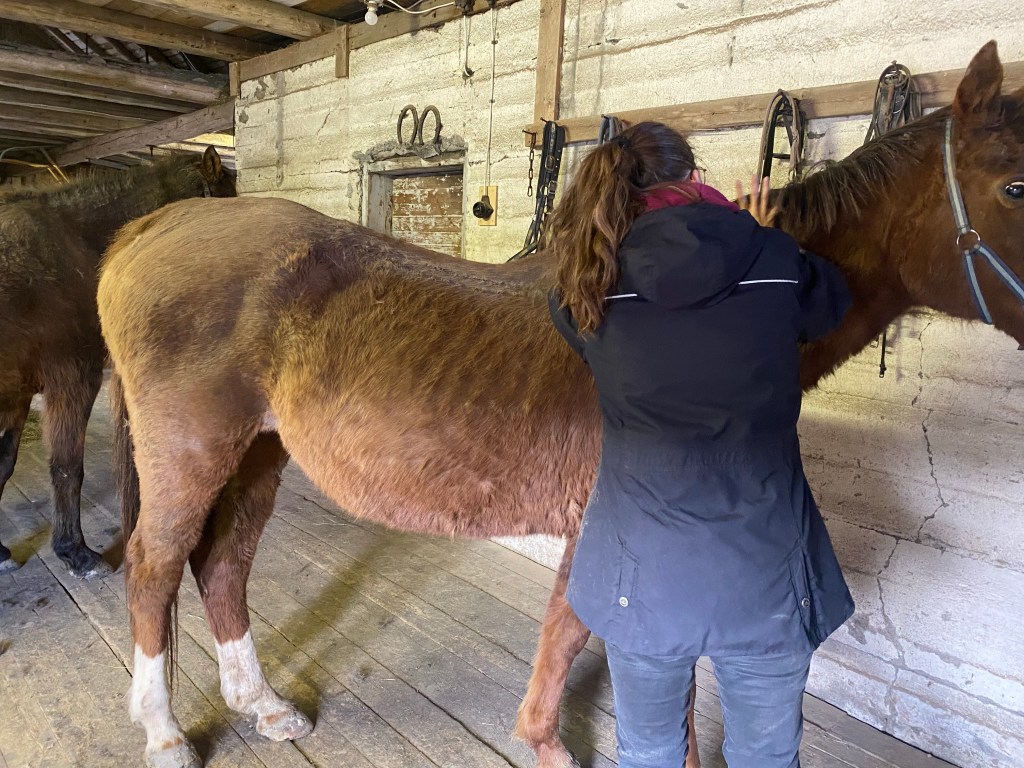
DOMS should be treated initially with active rest (light work) and anti-inflammatory measures such as ice, gentle massage (this is where we as bodyworkers come in!) and pressure garments/bandages have been shown in research studies to provide a reduction in the duration and severity of DOMS. However, deep tissue massage should be avoided during the first 24 hours (so for those living their hammer massagers after a work out – be warned that you may be doing more harm then good).
This is the key to this problem –
Avoid aggressive exercise during the recovery phase. This is due to muscles reduced capacity to cope with shock absorption, coordination, altered muscle recruitment patterns, reduced strength balance and contraction intensity. (Zainuddin et al 2005)
In less words, when suffering the DOMS, your horse will struggle to perform basic tasks he was doing the day before because he could well potentially be aching from his nose to his toes! Therefore, he is not naughty, he is not confused, he is aching and cannot perform what is being asked.
Here is how to avoid this common training problem;
1. Take it slow and gradually build up the amount of exercise you do in your program – remember that Rome wasn’t built in a day.
2. Be aware of the amount of high intensity exercises you are including in your rides without breaks between to allow the muscles to relax. Don’t trot up hills every day or jump intensive courses- vary your program and intersperse with rest days
3. Ensure you do a thorough cool down following your workout – many of us would have seen sportspeople doing gentle running and cool down drills after their games – this is one of the reasons why.
(Black et al 2008, Cleak et al 1992, Bleakley et al 2012, MacIntyre et al 2001, Cheung et al 2003, Valle et al 2014, Hill et al 2013, Nelson N. 2014, Dutto and Braun 2004, Paschalis 2007).
 Happy Healthy Horses