Hay nets have been around for a long time and were originally designed to keep hay up off the ground to reduce waste. Traditionally, hay nets had very large openings that did not restrict the horse’s rate of intake. More recently, slow-feed hay nets with openings as small as 1.25” have become popular. These serve to reduce waste but also slow down the horse’s rate of hay intake.
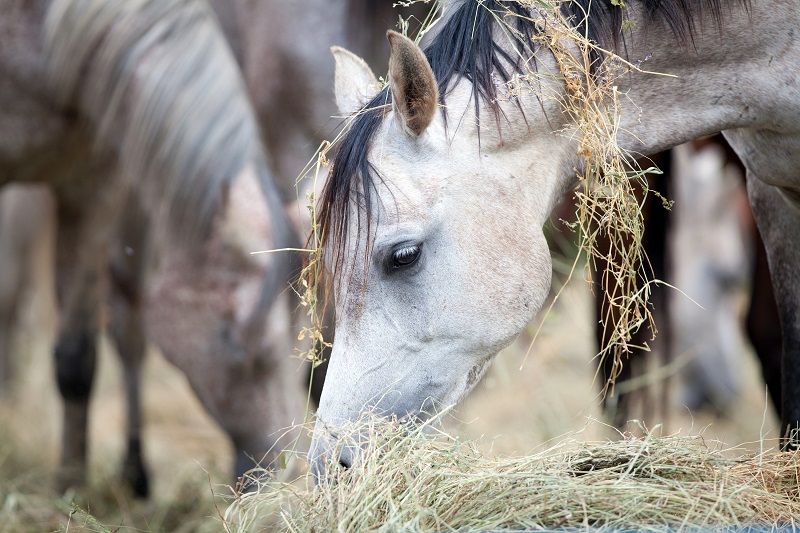
Slowing down how quickly a horse consumes its hay could be regarded as an advantage when there is a necessity to limit hay. The horse’s digestive system was designed for continuous grazing and as a result, the horse’s stomach secretes acid continuously. Slowing down hay intake more closely mimics natural grazing behavior and prevents the horse from having an empty stomach for long periods of time. Spending long periods of time without forage increases ulcer risk. Stretching out the time it takes for a horse to eat its hay also keeps it busy for longer periods of time and horses that are busy eating are less likely to find other troublesome ways to occupy themselves.
Hay nets are not just the obvious choice for fat ponies who have to be kept in overnight in certain livery stables or hire barns. Studies have suggested some picky eaters, who are used to eating from hay nets and feeders will eat more hay out of a net than they will off the ground. For these horses, we would choose a net with a moderate-sized hole – not the super tiny holes that we use for the fast eaters.
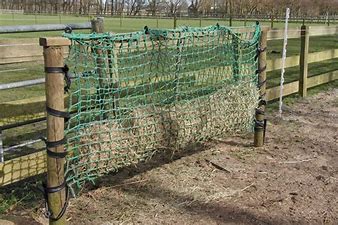
It is possible to make large slow feeders for pasture use out of varying materials. Wire metal grates and the like may slow down how quickly a horse ate but there have been reports of excessive wear on the front teeth due to these types of materials. Large hay nets designed for whole square bales or to put over a round bale are available. These avoid excess wear on teeth but care should be taken that shod horses don’t have an opportunity to catch a shoe on the netting.
Hay nets, slow or regular, need to be hung at a height where a horse will not catch a shoe or leg when rolling. It is important to think about how far the hay net hangs down when both full and empty.
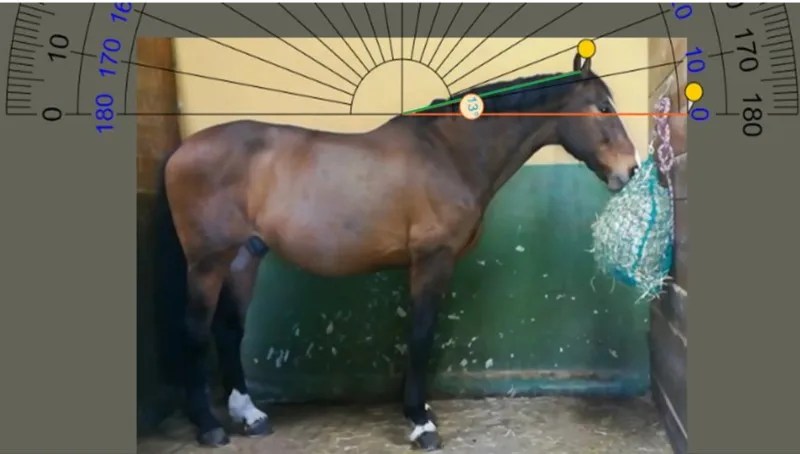
Many of the negative opinions of hay nets are related to the fact that the horse is not eating in a natural grazing position. And this is where my profession as veterinary rehabilitation therapist, equine bodyworker or physiotherapist tends to get involved. The difficulties lie in the fact that most horses eat in the same position (especially those kept in stables or small paddocks) every day/night. Now regardless how good the net may or may not be itself, having your body still and in one position, and especially one for which your body is not created is a way to begin to change your body’s natural muscle patterns and even begin to create repetitive strains to joints and muscles that are over used. There is plenty of research to support the dangers to the head, neck and back of hay net feeding and commonly the risk factors point to hanging nets too high, and consistently in the same place. The net’s use can contribute to a negative effect, but this can be alleviated with careful management. Here are my tips if you are using a hay net for whatever reason:
Attempt to hang the net at chest height for a shod horse as this keeps it away from trapping shoes in the netting, while allowing a slightly more natural eating posture. Check rug buckles if your horse wears a rug – the best way is to have a piece of fabric velcroid across the front of buckles so there is no risk of trapping a buckle in a net and causing panic. Some studies actually favour this type of feeding as horses tend to stand squarely with better weight distribution across the front feet as opposed to the ‘one foot forward’ stance most stabled horses take when feeding from the ground.
If your horse is unshod, you can tie the net into a hay pillow, being careful to put the ends of any rope inside the net so it doesn’t wrap around the horse’s feet once the net is empty of hay.
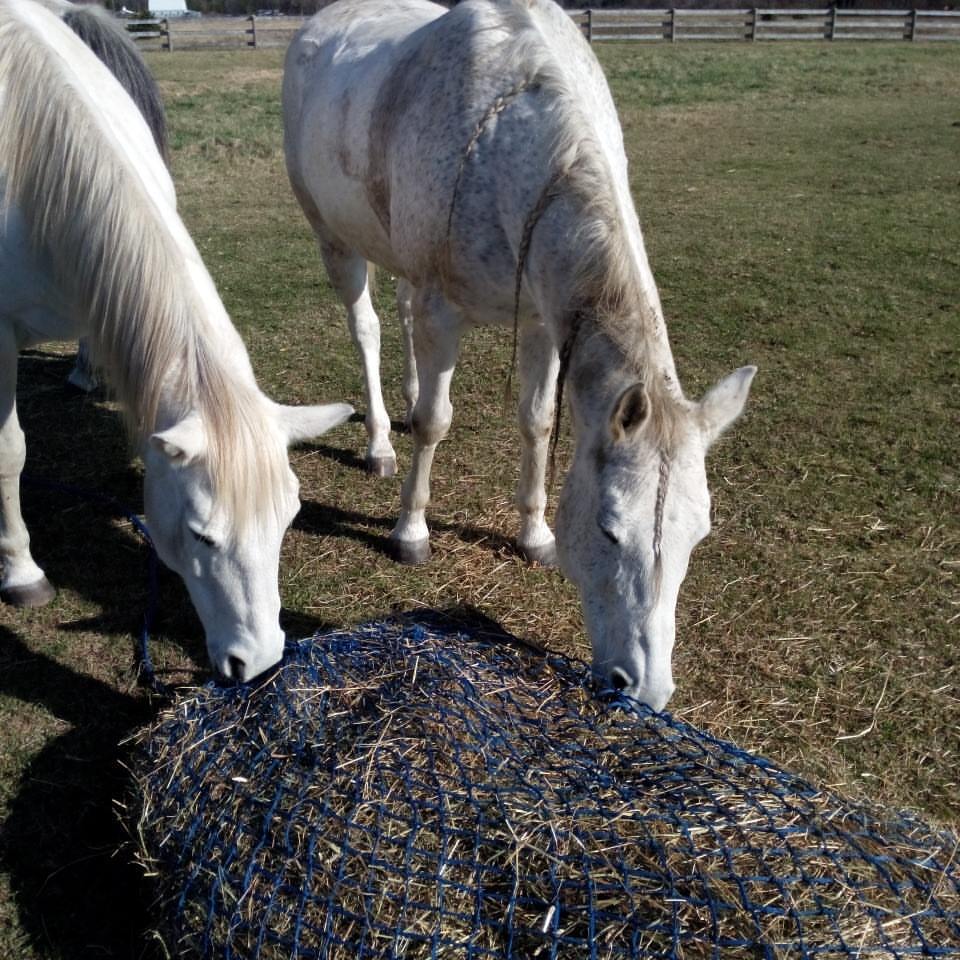
Horses are naturally browsing animals and not just grazing, so a way to mimic natural feeding is to have your nets and feeds at different heights. Use three small nets instead on one large and set them at different heights around a stable or paddock.
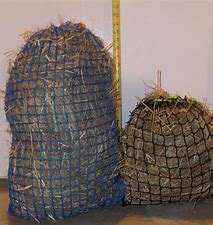
Square nets can be tied out as flat as possible and onto a wall. The main thing to avoid is a horse catching a foot in the net. One way is create a barrier in front so that the horse has to stretch forward to reach over. This allows for a much lower feeding position and could be one of your different heights.
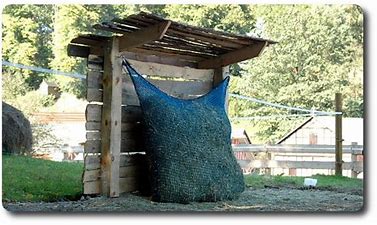
A study by Maria Yabsley (Writtle University College) looked at different slow feeding options and placed a trickle feeding net above a hay ball, normal hay net and even ground feeding for the stabled horse.
 Happy Healthy Horses