I know I bang on about this but a lot but I am once again reminded of the vital effects of developing these muscles and the disasters of not doing so after seeing several horses these past two weeks who were asked to work in different ridden disciplines with underdeveloped thoracic muscles
While today’s blog is very much about dressage, I am aware of the urgent need for the development of these muscles and maintenance of the same in riding school horses and ponies as well as our happy hackers and family horses!
The front (thoracic sling) needs to be strong enough to receive and hold the impulsion from behind so don’t expect your young or relatively untrained horse to be ‘up and on.’
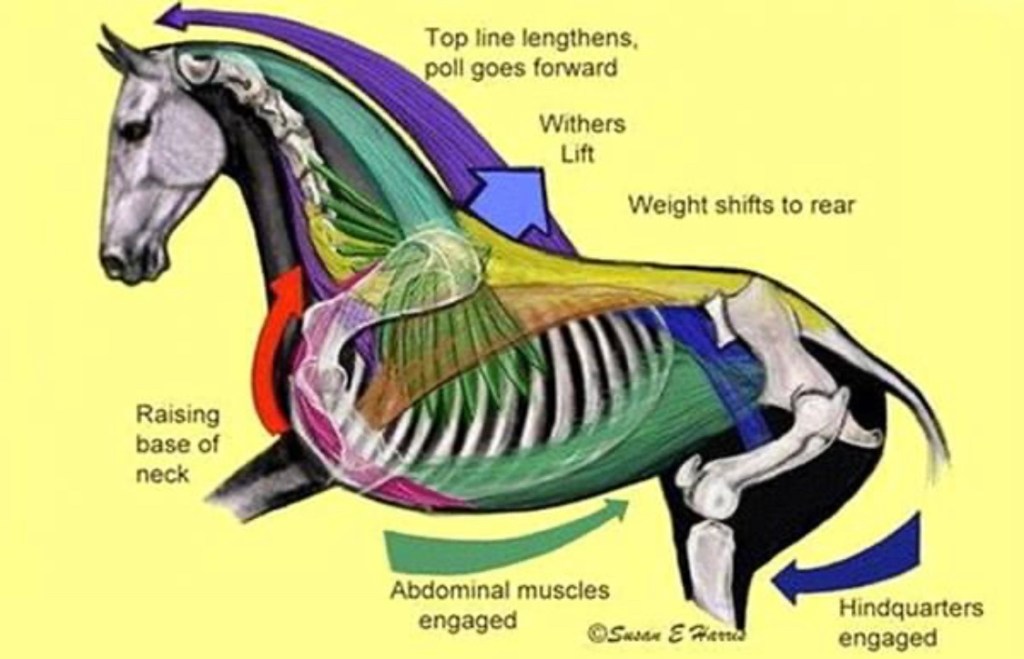
This is why a prep/prelim horse should not be asked to hold its neck in a frame.
Most of us bodyworkers and physios pray that more judges at lower levels of competition start to realize this when judging dressage.
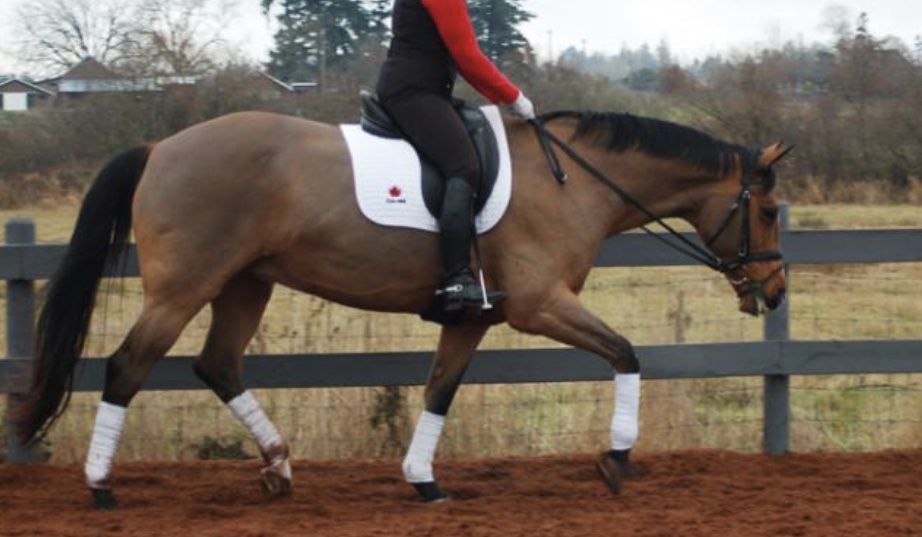
Strength is the answer to good dressage and this takes time. It takes balance, proprioception, cross training (Ie. doing something other than dressage) and body education. This is why we have lower level dressage tests so we can develop the correct muscles and check we are along the correct path.
We often read or hear about lower level tests that the horse is described as not working over the back because they think the horse at this low level should be up and on, like a fully educated high level horse.
I do not believe this to be true. Any horse earlier in his training, or recovering from injury, or with a less trained or busy-with-life rider, should be low in the neck (around wither height) and nose poked out so it can work from behind.
I know I have read many comments on dressage tests (at Prep) that the horse is not working over the back because it is slightly in front of the vertical.
A preparatory test is just that – designed for horses in the early stages of their body’s education and the horse at this level is just learning how to carry weight and have consistent rhythm.
To get consistent rhythm the horse will use his neck to balance as this is what we call their “5th leg”.
This means that they will move their neck around as they are learning how to balance.
It also means they may lose their rhythm at times, as they are learning about balance.
It is essential however that they should not be tight in the neck as this restricts the back and hind end.
The horse needs to develop self carriage in order to be able to relax his or her muscles.
So when the horse loses a little contact this is ok as long as they are relaxed, this is called “self carriage”.
Holding horses in a form for which they are not ready, creates tensions all the way through the body. These are reflected in gait issues, tendon issues, joint issues like the SI and movement issues that over time create arthritic changes in the horse’s body.
I have heard the argument that holding or helping with the bit is the only way to teach the horse this kind of carriage but bitless dressage classes (which are becoming increasingly popular) give the lie to this, with some horses entering who have never had a bit in their mouth. These muscles are built through careful exercise not through manhandling a horse’s head into position, in my opinion.
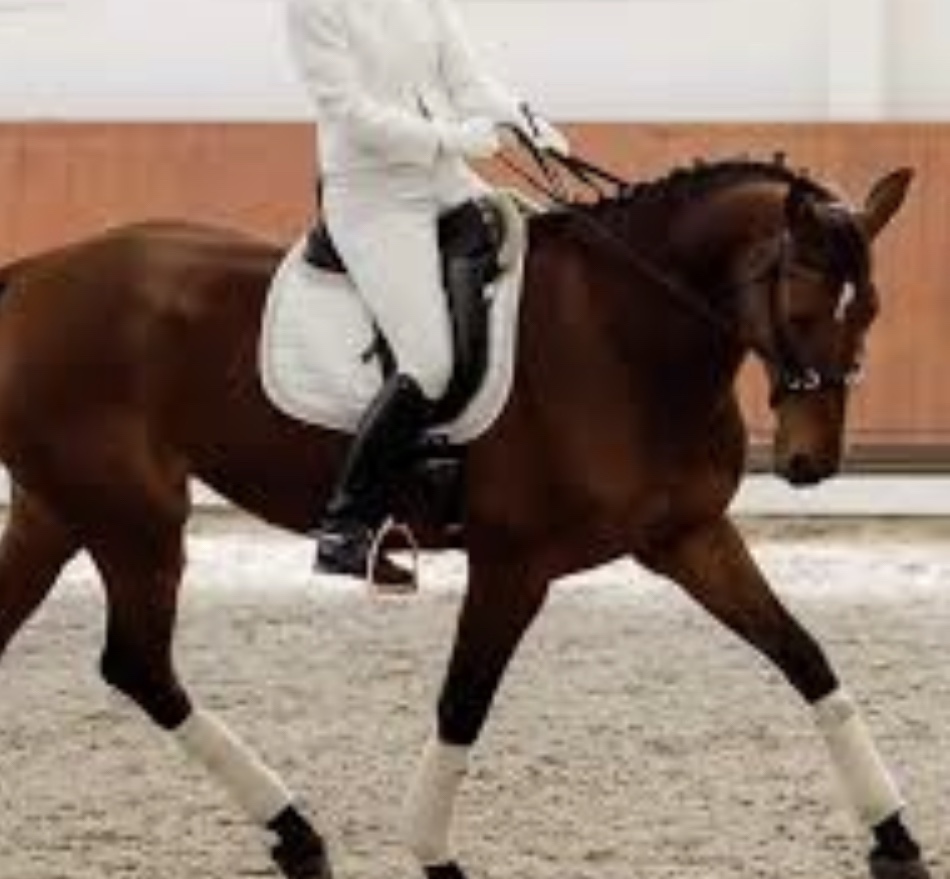
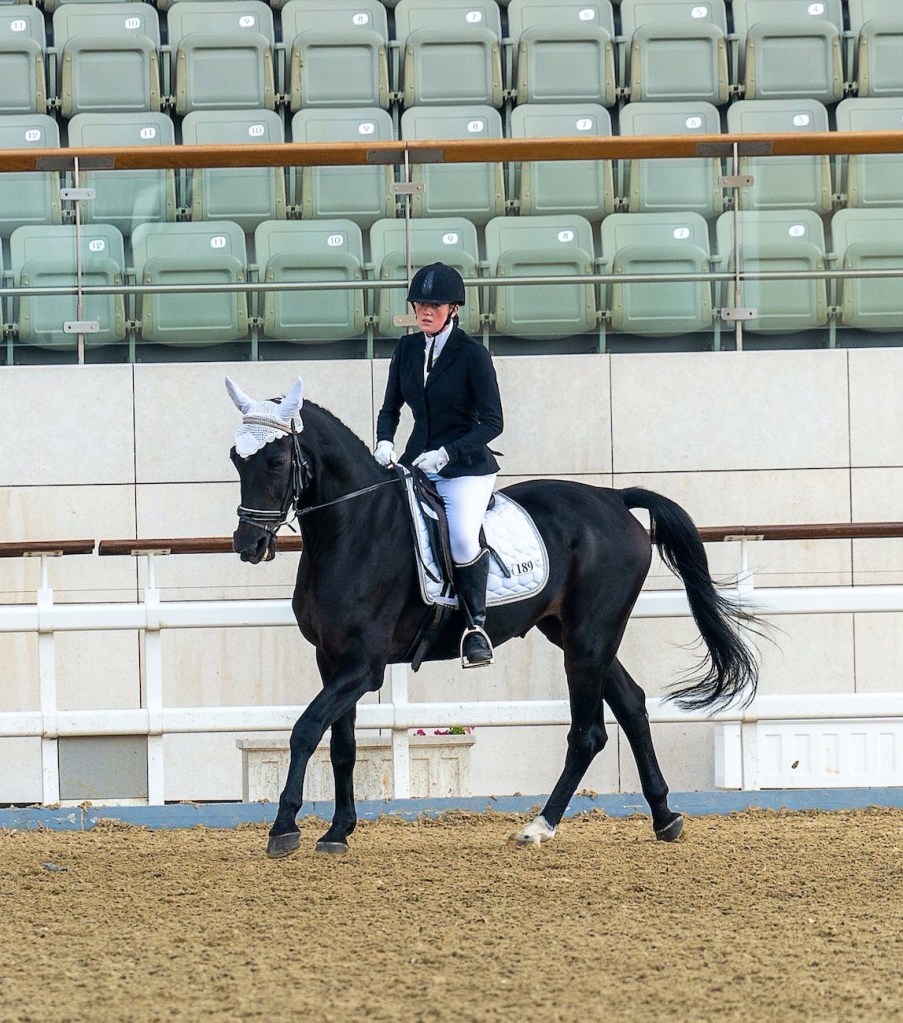

I have seen horses ridden who gain reasonable scores but with such tension that their back muscles change and flatten, a bump and dip effect appears around their lower back and pelvis and their movement pattern changes from flexibility to stiffness. In its extreme they can walk like teenage girls in high heeled shoes, tottering with the back held stiffly, even when the front end appears round, up and on!
So here is my plea- take time to train your horse and yourself for self carriage (both of you!) and do not succumb to the comments of those who are too busy looking for a finished ‘Valegro’ in a young or inexperienced horse’s appearance!
 Happy Healthy Horses