As weather changes and environmental concerns become a common discussion and area of concern for us all, what is happening to hay and food for our horses and how will winter fodder storage develop in the future?
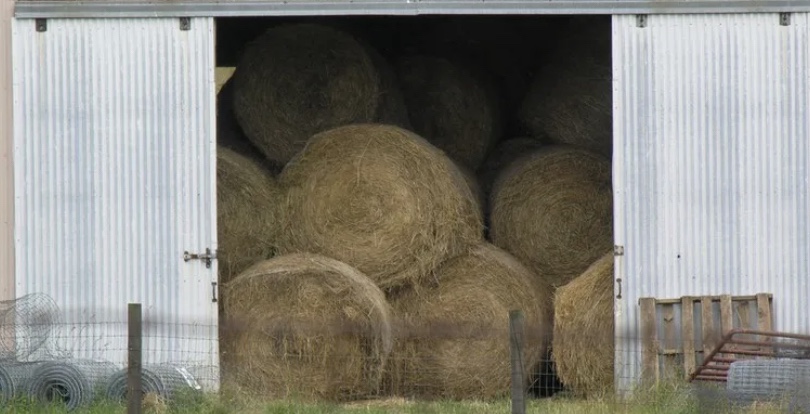
Haylage and grass hay are popular forage options for horses and ponies, but differences between the two products make them suitable for different groups of horses. Haylage contains at least 50% dry matter and is stored in airtight conditions, while grass hay is preserved for long periods by drying to a much higher dry matter content of at least 85%.
Hay is made in a different way to haylage and it’s nutritional content is consequently quite different.
The grass used to make hay is cut at a much more mature stage so that it already starts off a little drier than haylage. It then gets left on the ground to dry further and is turned over a couple of times to make sure that it dries the whole way through. This helps get its moisture content right down.
Hay isn’t usually wrapped in plastic so farmers have to make sure that it is as dry as possible, as this is usually the only way it is preserved. Although, some farmers do sell wrapped hay, and it kind of falls in between haylage and hay because it’s more moist than hay but less moist than haylage.
There are actually three different types of hay, namely grass hay, legume hay, and mixed hay. You may hear some people calling grass hay “meadow hay” as it’s usually made from meadow grass. Legume hay, on the other hand, is usually made from red or crimson clover.
Mixed hay is a little different, though, and what it’s made from will usually depend on who is selling it. Some farmers sell mixed hay that’s made from a mixture of different grasses or legumes, and others sell mixed hay that’s a mixture of both grasses and legumes.
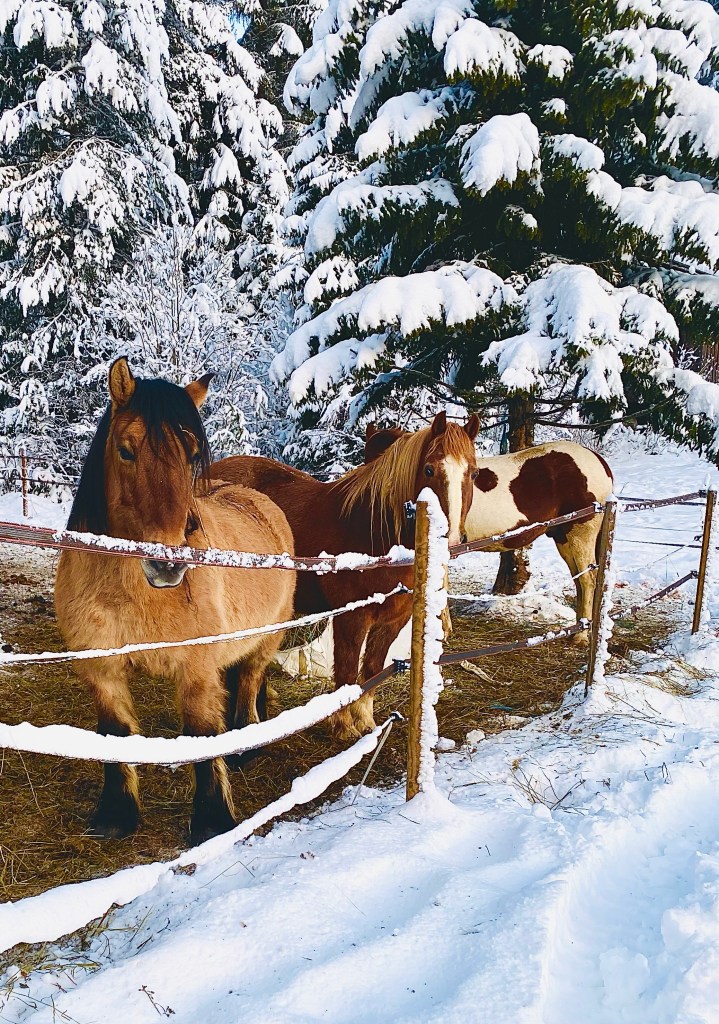
In countries where rain is an issue and on farms where places for storing hay are at a premium, hay can be wrapped after it is taken from the field. The way this hay makes over the following months is a little different and it can have a much higher water content. This kind of wrapped hay can offer an excellent alternative to ponies with lower calorie needs due to it being taken from fully developed grass (with a higher indigestible lignin content) and for horses and ponies with pulmonary disease who need a less dusty option.
Haylage can be a good option for horses that need a restricted diet because it increases their time spent eating, which might help reduce their risk of ulcers and stress based behaviours. It is often used for horses in colder climates who need a wetter food to reduce dust and improve breathing.
Haylage requires a shorter period of dry weather to make and is wrapped so can be easier to store if a barn or other covering isn’t available to you.
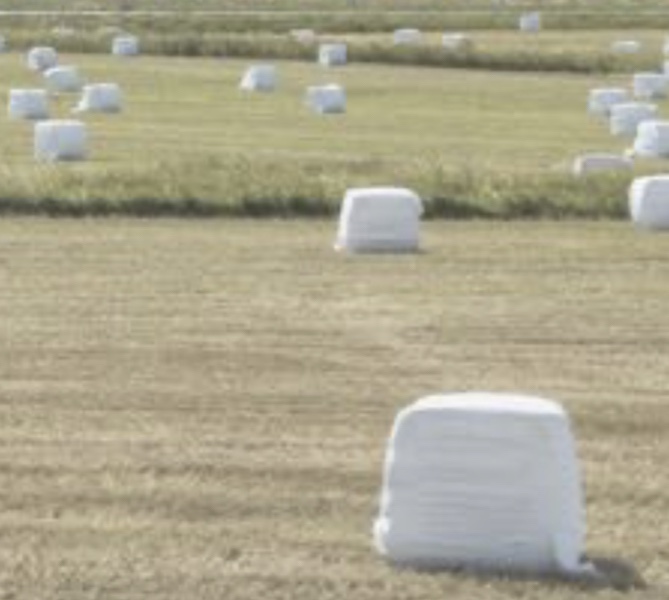
After that, it is only allowed to wilt slightly, and not completely dry out. Then, around 24-48 hours after it gets cut, it gets baled and then wrapped in polythene to be preserved.
The haylage fermentation process seals in good bacteria that use water-soluble carbohydrates to produce lactic acid. This drops the pH levels in the sealed bale so that mould spores are less likely to form.
Haylage is usually made from different types of moist grasses. It is different to wrapped hay, which hay made in the usual way by waiting for it to dry, then wrapping it in plastic to prevent rain from spoiling it. Often slightly moister than hay, wrapped hay can be wrapped a little earlier than unwrapped and can be used where the weather has changes and getting in the crop before it spoils becomes a priority.
There is a difference between haylage grass varieties when made commercially and that which you or your neighbours may make. Haylage has a slower making process than silage which is much faster and wetter but carries more digestive risks than haylage to horses. Silage is often used for cows and sometimes for sheep where the ruminant nature of their digestion makes it a more appropriate and safer choice than for horses.
Haylage can also have higher protein and lower water-soluble carbohydrate (WSC) content than grass hay of the same species, maturity, and harvesting conditions. In many countries the grass used to make haylage is cut earlier than that required for hay.
The plastic wrap ensures seals in haylage’s moisture content and creates an anaerobic environment, which means that no oxygen gets inside. This allows the haylage to ferment, helping to preserve it.
A recent piece of research into the digestive properties of hay and haylage was presented at The Equine Science Society’s conference in the United States, in June this year (2023). The researchers hypothesized that while the digestibility of haylage and grass hay might be similar, horses fed grass hay will have a greater glycemic response than in those fed haylage.
In this study to determine the effects of feeding haylage versus timothy hay in four Thoroughbred geldings over two 28-day periods. The horses were fed timothy-ryegrass haylage during one period and timothy hay during the other. They were fed a forage-only diet at 1.5% of their body weight on a dry matter basis, with the exception of one horse fed at 1% to minimize uneaten hay.
To perform a glycemic response test, the researchers fed the horses 25% of their daily dry matter allotment and took blood every 30 minutes for eight hours. Over the last seven days of each study period, they used fecal collection harnesses to collect feces and calculate the digestibility of each forage.
As expected, the researchers found that the horses took longer to finish their meals when fed haylage. “The horses’ peak blood glucose concentrations were higher when they were fed grass hay, likely due to the greater nonstructural carbohydrate (NSC) concentration in the hay,” reported the study. Grass hay also had greater dry matter digestibility and digestible energy.
The fiber digestibility of haylage was lower than we expected, and the horses developed free fecal water syndrome (a sign of low digestibility) when fed haylage. Fecal water holding capacity and fecal sodium concentration were greater in horses fed haylage, which may have contributed to the development of free fecal water.
The tentative suggestions and conclusions from this study seems to be that haylage is a better option for horses who cannot consume a large quantity of hay or require low NSC forage; however, it is important to examine each horse’s individual needs before making changes to their feeding program. However this is not a straightforward set of conclusions…
The difficulty I see with this study is the lack of comparing like for like (timothy grass against rye) and the fact that many people feed meadow grass which has a much greater variety of herbs and grasses within it and can be made as both hay and haylage!
One of the best ways to evaluate your horse’s diet is to know what is in your hay. If you purchase at least two or more months’ worth of hay at a time, or if you make your own winter fodder it can be worth having it analysed each year. The huge changes in weather patterns year to year result in very different growth rates and changing herbs as well as a difference in sugars and protein uptake by the plants. This means even if you are using the same meadows you always have to make your hay, the effects on your horse or pony’s digestion and health can be hugely different year to year.
Common terms in hay and grass analysis and what they mean for your horse
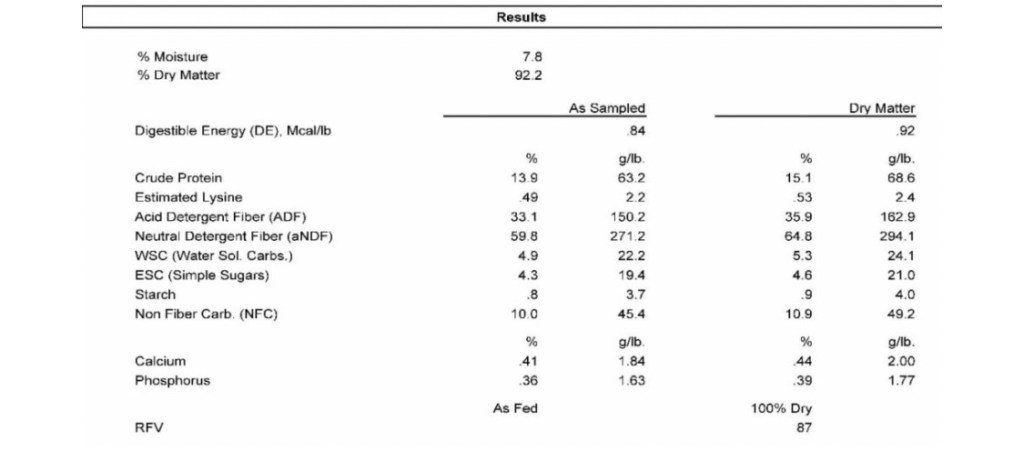
Crude protein (CP) — an estimation of total protein based on the amount of nitrogen in the hay. It does not tell you anything about the amino acid composition or the protein quality. To create a high quality protein, one that will help your horse maintain and repair tissue, combine a grass hay with a lesser amount of a legume. Most grass hay contains 8 to 10% CP whereas legumes (e.g., alfalfa, clover, pea) can range from 17-20%. Grain hays (oat, rye, timothy ) generally have a lower CP than grass hay.
Acid detergent fiber (ADF) and Neutral Detergent fiber (NDF) — both measure fibers (there are 5 types). Since fibers are digested by the microbes living in the hindgut (cecum and large colon), a healthy microbial population is important for your horse to derive calories from fiber. However, there is one type of fiber that is indigestible – lignin. Lignin is increased as the plant matures. The higher these two values, the more lignin the hay contains. This means that your horse is not able to thrive on this hay since much of it ends up in the manure. The ideal ADF is less than 31%; ideal NDF is less than 50%. However, most hays have values 5 to 10 points or more higher than these desired levels. To compensate, more hay needs to be consumed. This can be easily solved by allowing your horse to have free access to hay 24 hours a day. While an active competition or older horse may require a hay with less lignin and greater digestibility, a fat pony or horse on restricted diet due to hormone deficiency or disease may thrive on the late cut summer hay with its higher lignin and lower calorie content.
Non-Structural Carbohydrates (NSC) — the total amount of sugar, starch, and fructan. To obtain %NSC, add together %WSC (water soluble carbohydrates) + %Starch. If your horse needs to have a low sugar/low starch diet, the %NSC should be <13% on a dry matter basis.
Water-soluble carbohydrates (WSC) — measures simple sugars and fructan levels. Simple sugars are digested in the foregut and raise insulin levels. Too much can lead to laminitis because of elevated blood insulin. Fructan, on the other hand, is digested in the hind gut. Too much can result in laminitis caused by endotoxins in the bloodstream.
Ethanol-soluble carbohydrates (ESC) — a subset of WSC and gives you a better idea of the simple sugar level. WSC minus ESC provides a fair measurement of fructan levels.
Starch — normally digested in the foregut down to individual glucose (blood sugar) molecules; therefore, it has a strong elevating effect on blood insulin levels.
ESC + Starch should be less than 11% on a dry matter basis for a horse with equine metabolic syndrome or PPID (Cushing’s).
Minerals
- Calcium to phosphorus ratio — There needs to be more calcium than phosphorus in hay. Most hay (except orchardgrass) will have this balance. The ideal ratio is 2:1, but the level of calcium can be even higher and still be considered safe. Phosphorus concentration must never be higher than calcium levels.
- Calcium to magnesium ratio — Ideally, calcium content should not be more than twice that of magnesium. Most hays have a magnesium level that is lower than what horses ideally require and that magnesium is not well absorbed.
- Iron, Zinc, Copper, and Manganese — Ideal ratios are Iron:Zinc — no more than 5 times more iron than zinc; Copper:Zinc:Manganese — 1:3:3. However, keep in mind that minerals interact with one another, interfering with absorption. Therefore, be conservative when supplementing minerals if your hay is close to these ideal ratios.
- Selenium — this is worth analyzing, since selenium has a narrow range of safety. Too little can be just as damaging as too much, so know your hay’s selenium level before you supplement.
Another issue to consider is if you have other animals who share the hay (your family cow or sheep for example), their mineral and calorie needs may be very different. Sheep and horses, for example can share salt but rarely mineral blocks as they have entirely different mineral requirements and some minerals levels, good for one species may be toxic to their grazing companions.
Your fodder doesn’t need to have all the rations in it, but it is helpful to know what to supplement when looking at your analysis.
 Happy Healthy Horses