Reciprocal / Reflex Inhibition.
This is a frequent treatment used on the Equine patient. This technique is used for restoration of normal muscle tone. Muscle spasm identified during palpation can be effectively reduced by applying this technique.
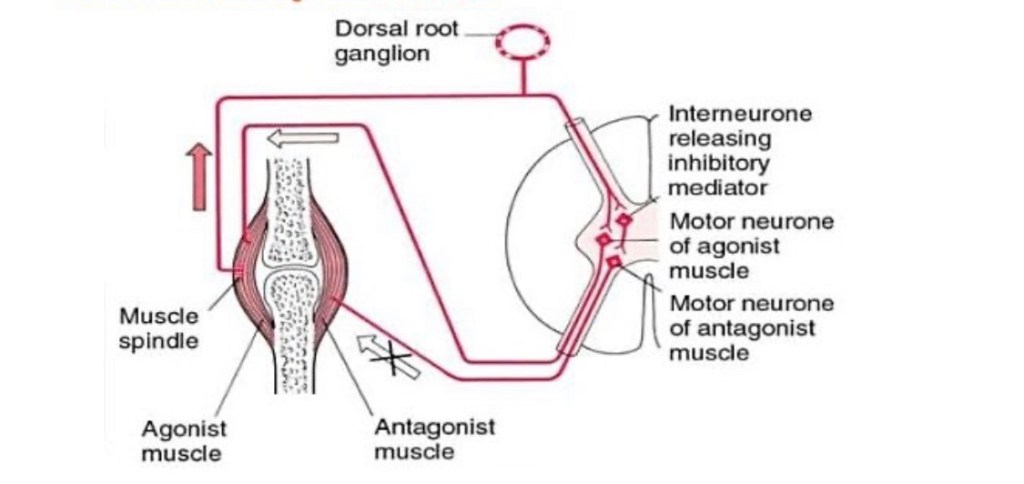
It works by stimulation of the golgi tendon organ of the agonist muscle via a specific movement performed by the physiotherapist. This produces in an involuntary contraction of the muscle, initiating an involuntary relaxation of the opposing antagonist muscle and therefore reducing muscle tone back to resting length.
Using manual stimulation a therapist can use a muscle’s own energy in the form of gentle isometric contractions to relax and lengthen the muscle via autogenic or reciprocal inhibition responses natural in the body. In place of static stretching in which the therapist moves the body of the horse, in muscular energetics, the horse (dog, cat or human) is an active partner.
Using the concepts of autogenic inhibition and reciprocal inhibition, skeletal muscles can be encouraged to change within their natural range and tensions within muscle fibres can be released where possible.
Autogenic inhibition is also known in the literature as inverse myotatic reflex and refers to the reduction in excitability of a contracted or stretched muscle. Formerly entirely attributed to the increased inhibitory input arising from the golgi tendon organs.
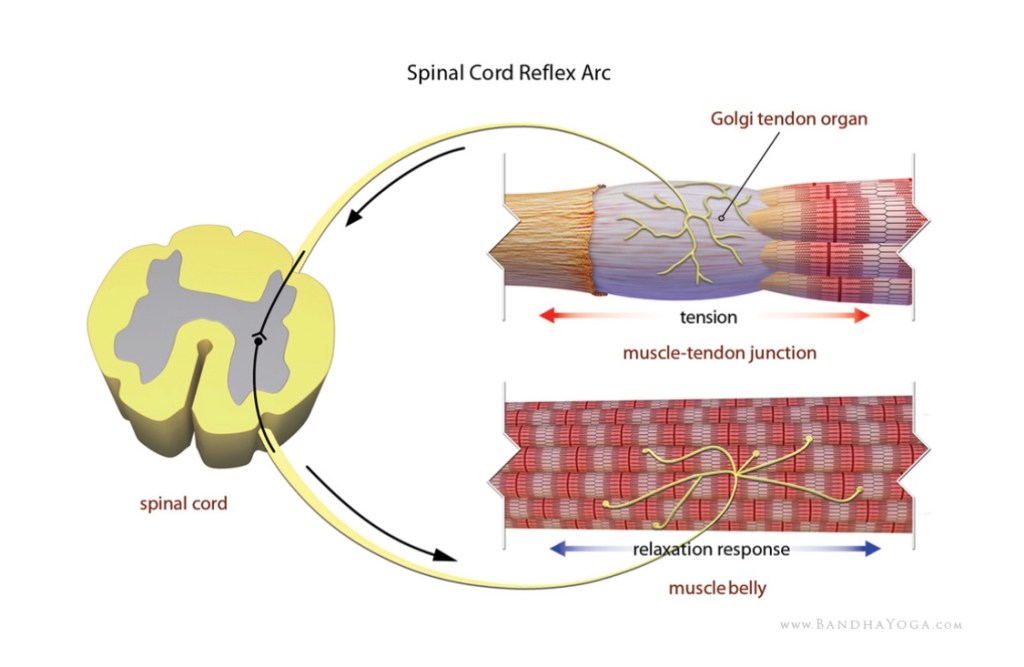
Autogenic and reciprocal inhibition both occur when certain muscles are inhibited from contracting due to the action of the golgi tendon organ (GTO) and the muscle spindles. Two musculotendonous receptors located in and around tendon attachments to bones, respond to change in muscle tension and length resulting in regulation and aiming to prevent over contraction and damage to the tendon or muscle itself.
The GTO is located between the muscle belly and tendon and recognises and responds to the tension changes when the muscle contracts or stretches. When the muscle contracts, the GTO responds by inhibition of the contraction to prevent damage. This inhibition response is known as reflex inhibition. The GTO also controls the opposing muscle group known in literature as antagonist. In order to smoothly alter the contraction of one muscle, it’s antagonist is stimulated to begin contracting, taking the strain from the original contracting muscle and resulting in it relaxing. This process is autogenic inhibition. The GTO in each musculotendinous connection regulates this through sensory and motor neurons to and from the central nervous system.
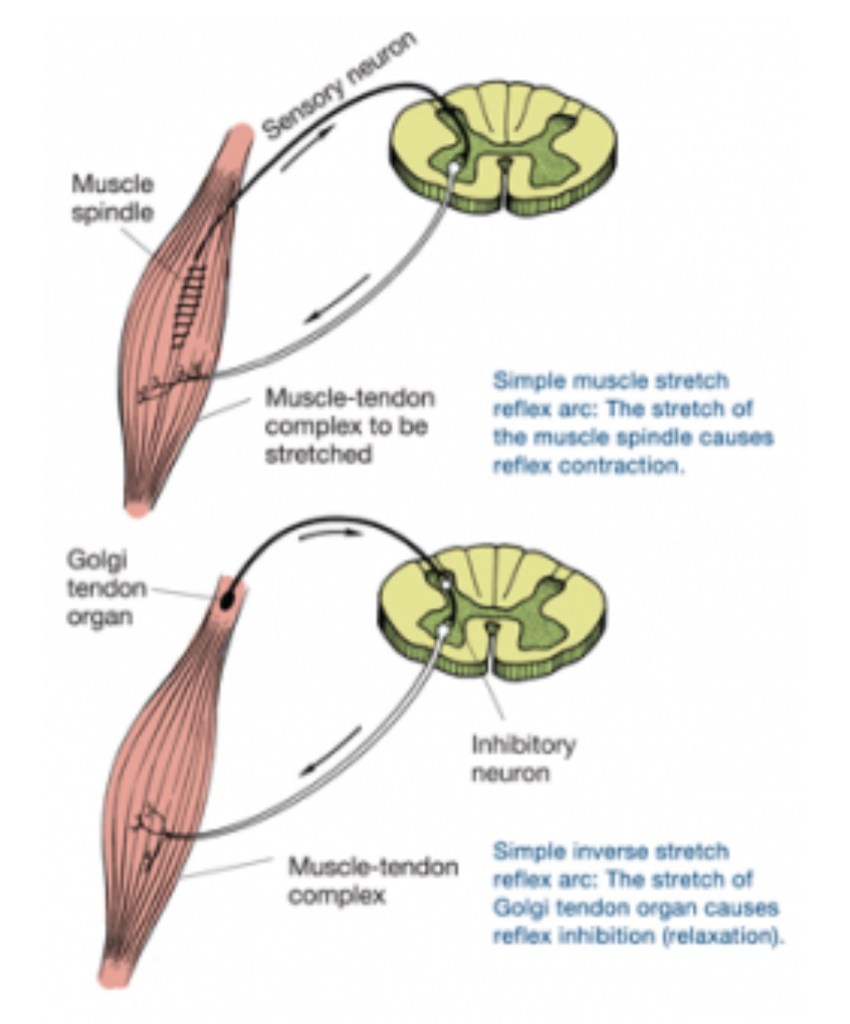
The GTO response plays an essential role in flexibility. When the GTO inhibits the agonist muscles contraction and allows the antagonist muscle to contract more readily, the muscle can be stretched further and longer. Autogenic inhibition is often seen during long, slow, gentle static stretching. The keys to initiating this response are low-force and long-duration. With an animal, this can mean repeated placement but always just at the extent of stretch the animal offers so that it remains low-force. The use of balance pads or ground raising can offer low force alternatives to some muscles. It requires only 7-10 seconds for the GTO to activate causing the muscle spindle in the stretch to be inhibited temporarily making it possible to stretch the muscle a little further or to sustain the stretch if at the extent of an injured muscle.
The muscle spindle is part of the muscle stretch and contraction apparatus and, located in the muscle belly, it stretches with the muscle. When this occurs the spindle is activated and causes a reflex contraction in the agonist muscle and corresponding reflexive relaxation in the antagonist muscle. This process is called reciprocal inhibition and is a useful tool in creating relaxation in triggered muscles that have become habitually contracted.
Post isometric relaxation (PIR) is a technique developed by Karel Lewitt. PIR is created using the effect in the decrease in tone of a muscle or group of skeletal muscles after a brief period of maximal isometric contraction of the same group. PIR relies on autogenic inhibition.
Hypertonic muscle is taken to the first point where resistance is noted.
A submaximal (10-20%) contraction is performed with the therapist creating resistance and maintained for 5-10 seconds. Human patients are asked to inhale during this which can be a tough instruction for horses! So breathe in yourself, holding your breath and rely on mirror neurons to do their work! Breathe out and release, creating a stretch in the contracted muscle. The stretch should go a little further than before.
Repeat with the new stretch in mind afterwards.
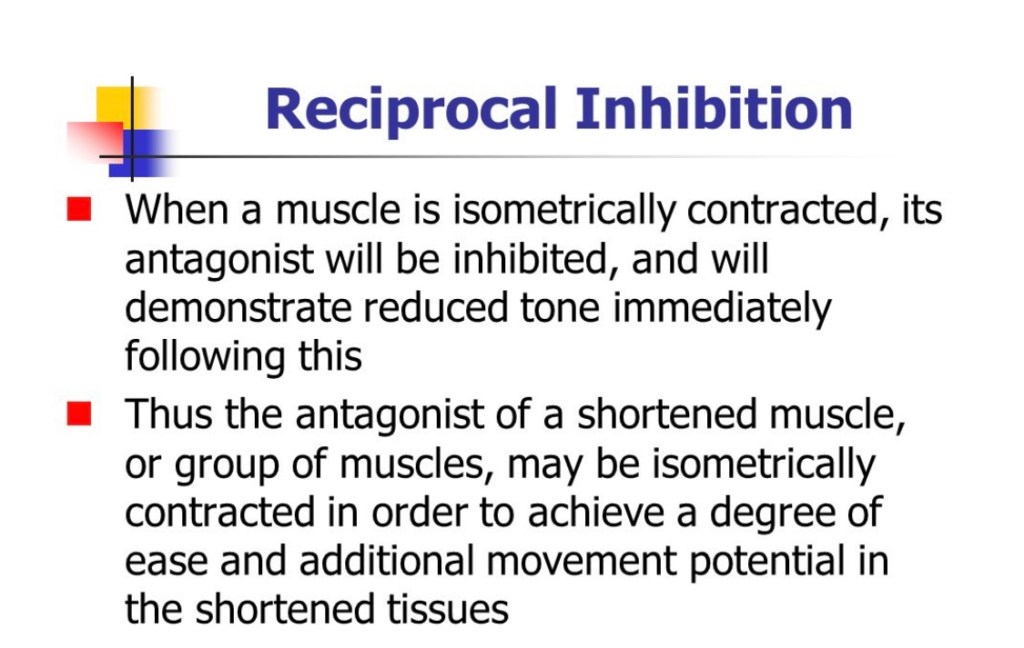
Consider which exercises and stretches you do which either use or could use reciprocal inhibition. In 500-1000 words describe what your understanding is of the processes mentioned in the article are and how you can adapt exercises and stretches with a horse to activate and relax 4 different muscle groups.
 Happy Healthy Horses