“Ailsa, why are you still faffing about and not getting on that horse you bought three weeks ago?”
“New Home Syndrome” Dr Shelly Appleton from Calm Willing Confident Horses uses this term to bring understanding to what happens to horses when they move homes/barns/stalls. I like it as a term as it describes well what we see in the majority of horses when we move them. You can find and follow her here if you would like; https://www.facebook.com/calmwillingconfidenthorses or buy her ebooks on https://www.calmwillingconfidenthorses.com.au/shop-2/p/style-01-6zryh
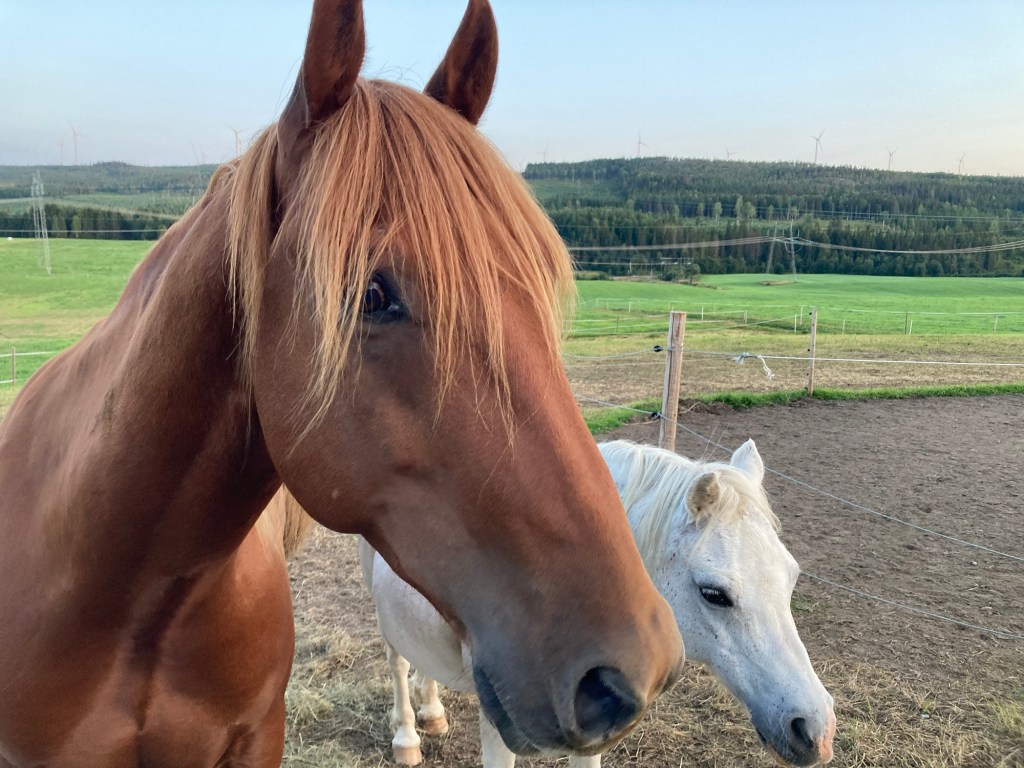
When we do this, we remove them from an environment and set of routines they have become familiar with, and put them somewhere completely different with new people, new horses and different ways of doing things.
When we think of how horses learn and process information and when we study the neuroscience, we realise this causes enormous stresses to the horse.
Why does she call it a syndrome?
A syndrome is a term used to describe a set of symptoms that consistently occur together and can be tied to certain factors such as infections, genetic predispositions, conditions, or environmental influences. It is also used when the exact cause of the symptoms is not fully understood or when it is not connected with a well-defined disease. In this case, “New Home Syndrome” is connected to a horse being placed in a new home where its entire world changes, leading to psychological and physiological impacts. While it might be transient, the resulting effects in the horse can be significant for both that horse and anyone handling or riding it.
Dr Shelly explains this way;
‘Think about how good it feels to get home after a busy day. How comfortable your favourite clothes are, how well you sleep in your own bed compared to a strange bed, and how you can really relax at home. This is because home is safe and familiar. At home, the part of you that keeps an eye out for potential danger turns down to a low setting. It does this because home is your safe place (and if it is not, this blog will also explain why a lack of a safe place is detrimental).’
Therefore, the first symptom of horses experiencing “New Home Syndrome” is being unsettled, prone to anxiety, or difficult behaviour.
If you have owned them before you moved them, you can struggle to recognise your horse, feeling as if your horse has been replaced by a frustrating version. If the horse is new to you, you might wonder if you were conned, if the horse was drugged when you rode it, or if you were lied to about the horse’s true nature.
Horses have amazing abilities to adapt and cope. They have a neuroplasticity which means that they can learn new things but we have to be careful that we do not over stimulate them with a hundred new things at a time. Moving a young horse to a new farm and then taking your first riding lesson on them a couple of days later is like taking a toddler to a new day care and asking them to do a complicated math sum a couple of days later.
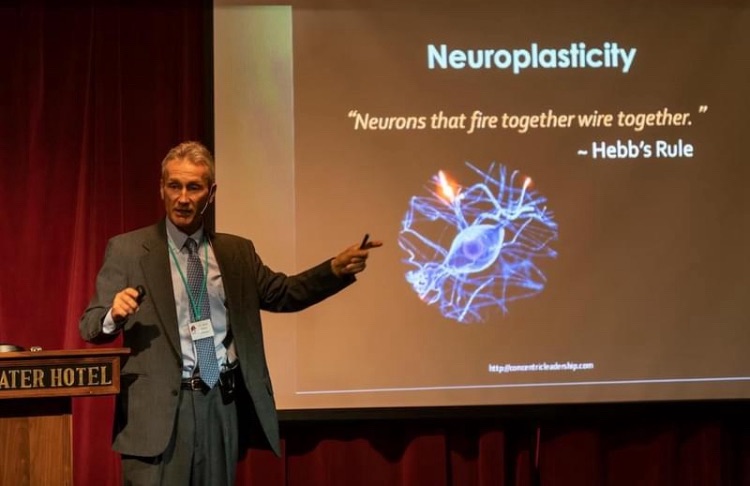
One of the best things that Dr. Steve Peters does in his webinars and workshops is taking the time to explain the types of information we are exposed to… Anecdotes, expert opinion, research papers (the actual scientific paper submitted not articles about them written by journalists), case studies, peer reviewed, etc. and he also explains the science of personal biases (we all have them) and cognitive dissonance.
Being aware of all of these things helps us all be better learners and ultimately better partners for our horses!
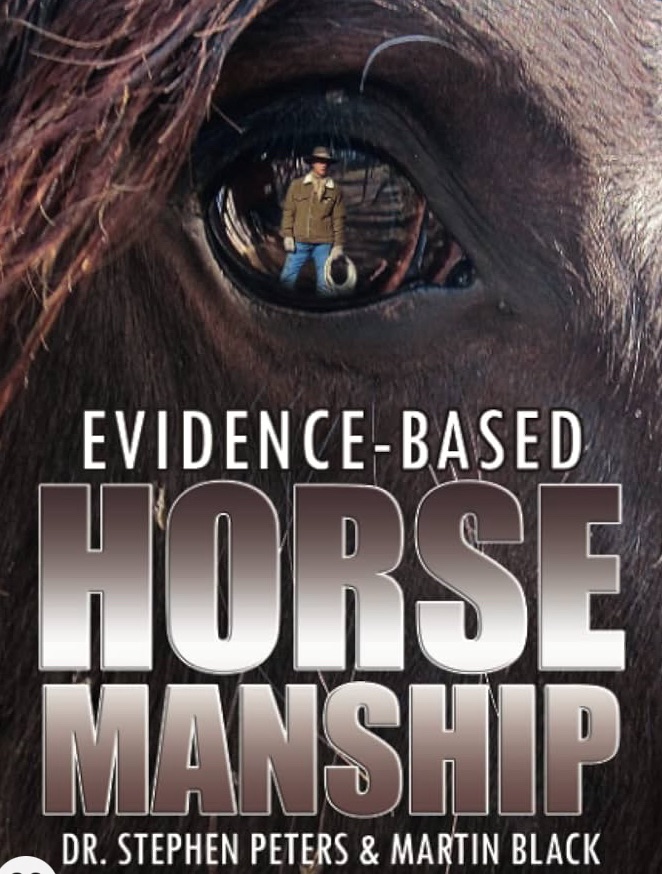
You can join an online webinar and learn from Dr Peter’s here if you would like! https://facebook.com/events/s/horse-brain-science-with-dr-st/926410955917983/
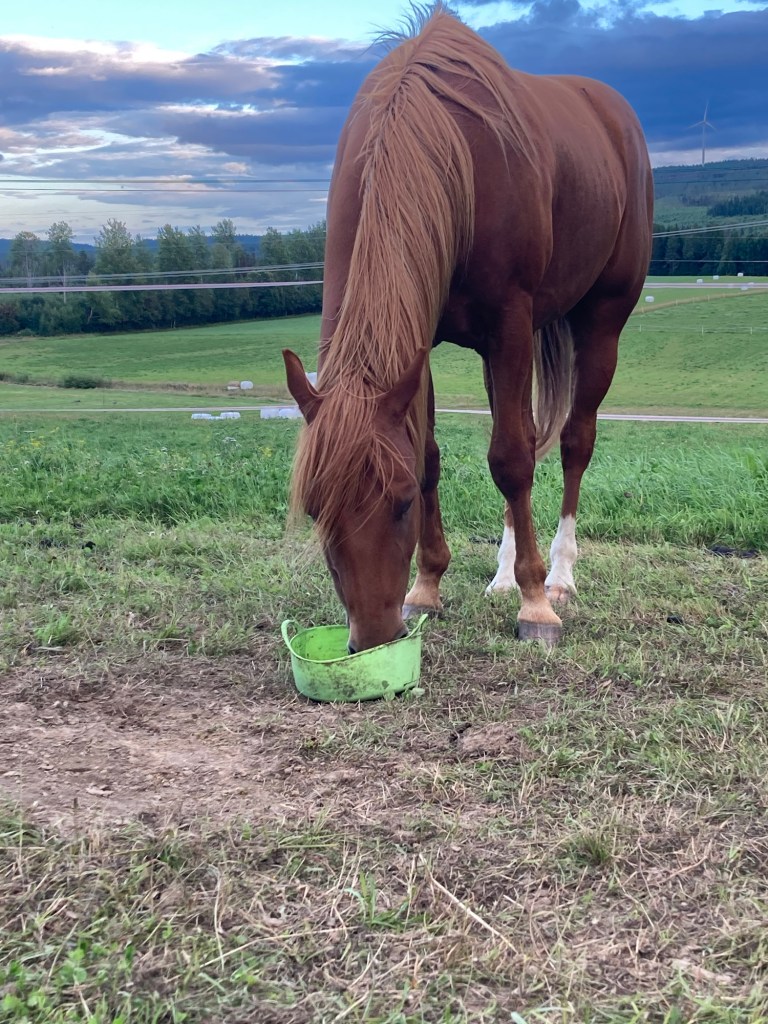
A horse with “New Home Syndrome” will be a stressed version of itself, on high alert, with a drastically reduced ability to cope.
Horses don’t handle change like humans do. If you appreciate the comfort of your own home and how you can relax there, you should be able to understand what the horse is experiencing. But it is even more for the horse because they have sensory systems set up to alert and warn them of any new visual or movement patterns. Even your super calm cold blood will feel this uncomfortable over-alertness though they may not show it as much. Research shows their heart rates and cortisol levels can be as high or even higher than that dancing english fullblood in the next stall!
Respecting that horses interpret and process their environments differently from us helps in understanding why your horse is not behaving like you are used to him behaving or recognising that there is a good chance you were not lied to or that the horse was not drugged.
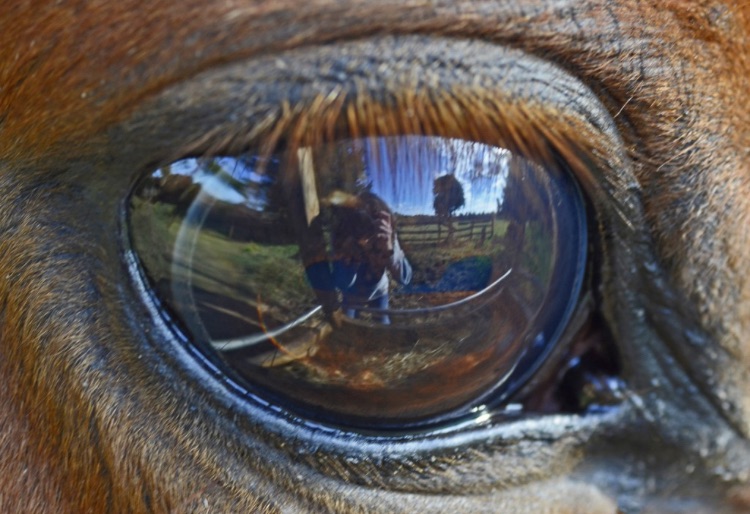
Horses have survived through evolution by being highly aware of their environments. Change is a significant challenge for them because they notice the slightest differences, not just visually but also through sound, smell, feel, and other senses.
In her book, ‘Horse brain, Human brain,’ Dr Janet Jones explains how our thinking patterns and those of the horses differ; Humans generalise and categorise, making it easy for us to navigate familiar environments like shopping centres. She gives the example of a hose hung in the back door of the stables. we categorise it as ‘hose’ but if that hose is hung a little differently or the light catches it in a different way, the horse sees all the different shapes and shadows and takes in the details we ignore.
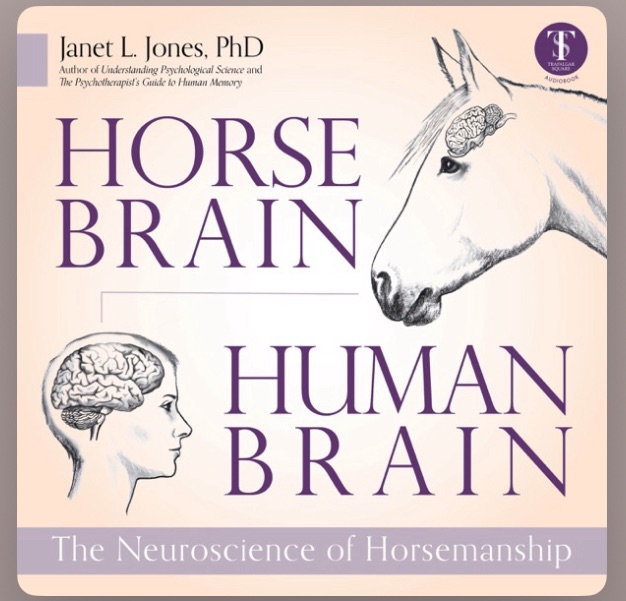
Horses do not generalise in the same way; everything new is different to them, and they need proof of safety before they can get used to an environment and feel secure. This has been essential to 55+million years on our planet, making equus caballus (our pretty ponies) actually an extremely successful species!
When their entire world changes, it is deeply stressful for a horse.
They struggle to sleep until they feel safe, leading to sleep deprivation and increased difficulty.
But there is more…
Even we humans tend towards similar routines and patterns of behaviour (it is the reason taking up a new health routine or breaking a habit like snus can be really tough)!
So, back to our horses. Not only are they confronted with the challenge of figuring out whether they are safe in all aspects of their new home while being sleep deprived, but every single routine and encounter is different.
Then, their human or new human owner starts getting critical and concerned because the horse suddenly seems untrained or difficult. The horse they thought they owned or bought is not meeting their expectations, leading to conflict, resistance, explosiveness, hypersensitivity, and frustration.
The horse acts as if it has forgotten all its training because it is stressed and because the routines and habits it has learned have disappeared.
If you are a new human for the horse, you feel, move, and communicate differently from what it is used to. The way you hold the reins, your body movements in the saddle, the position of your leg – every single routine of communication between horse and person is now different.
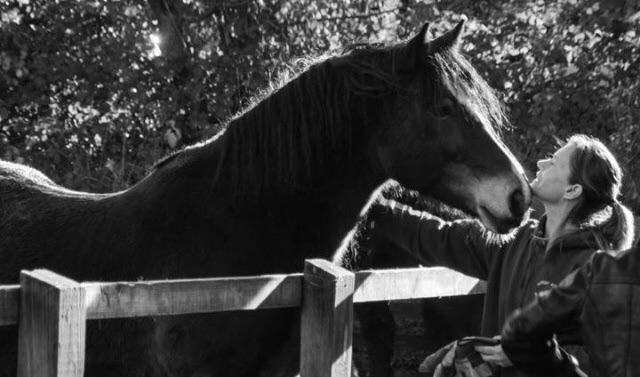
When you get a new horse, you have to introduce and teach your way of communicating to the horse. You have to introduce yourself and take the time to spell out your cues so that they get to know you. Actually we want at least as close a relationship with our horses as we do with human friends and family members. This half ton of scared rabbit is after all in part responsible for your safety while flying fences and galloping in the forest!
Add into the mix a new herd.
Some people find it easy to move, making friends and social contacts easily, while others have to work at joining a group. it is the same with our horses. Well maybe more so….
Search on youtube for wild horse videos and you soon find films of young males attempting to join groups and failing or succeeding but at a cost.
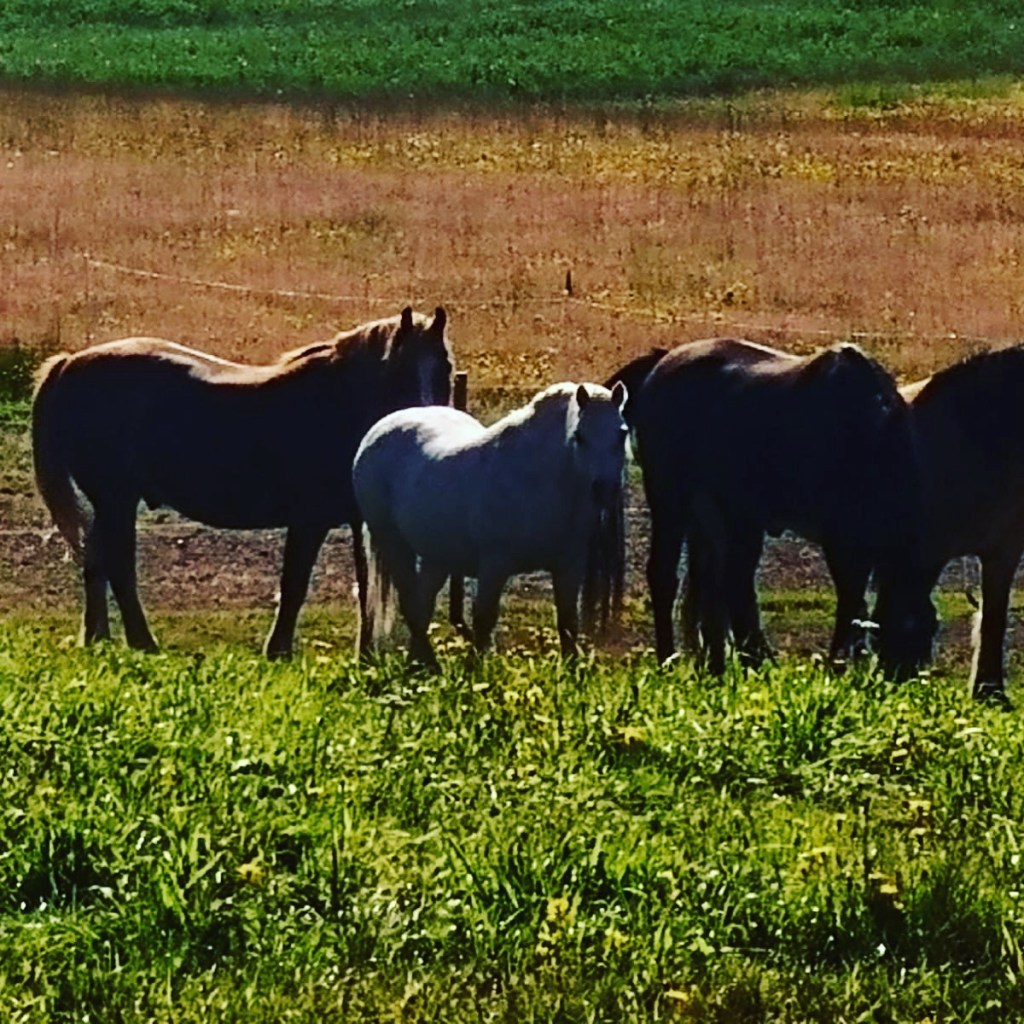
Even though we may have removed the ability of gelding horses to procreate, we haven’t removed the herd instincts and geldings can seek to mate with mares and dominate each other in similar patterns to stallions. Mares can chase away ‘threats’ to their ability to create more healthy herd members and do all the behaviours of their wild sisters.
So a process of forming a new herd (even if they only join one or two others) is an essential part of the social life of your horse. And depending on the stable you move your horse to, this can be well managed or not. Ultimately it is a further stressor for your horse.
Therefore, when you move a horse to a new home or get a new horse, your horse will go through a phase “New Home Syndrome,” and it will be significant for them.
Understanding this helps them get through it because they are incredible and can succeed.
The more you think about these factors and help the horse learn it is safe in its new environment and navigate the new routines and habits you introduce, the faster “New Home Syndrome” will pass.
The alertness and fearful behaviours will be prevalent in a horse’s life until they have learned to trust the safety of the environment (and all that entails) and the humans and other animals (I include dogs barn cats, sheep, cows and chicken in this) they meet and interact with.
With strategic and understanding approaches, this may take weeks, and their nervous systems will start downgrading their high alert status. However, for some horses, it can take a couple of years to fully feel at ease in their new home, especially where changes have been numerous or traumatic in the past. When we took in rehab horses in the past, we gave them two years before we ever began to feel we truly knew them. That doesn’t mean two years of doing nothing, but rather two years of being careful to keep things as regular and routine as possible…. familiar routines for food, friends and humans so that working and learning was easier as the stressors were reduced.
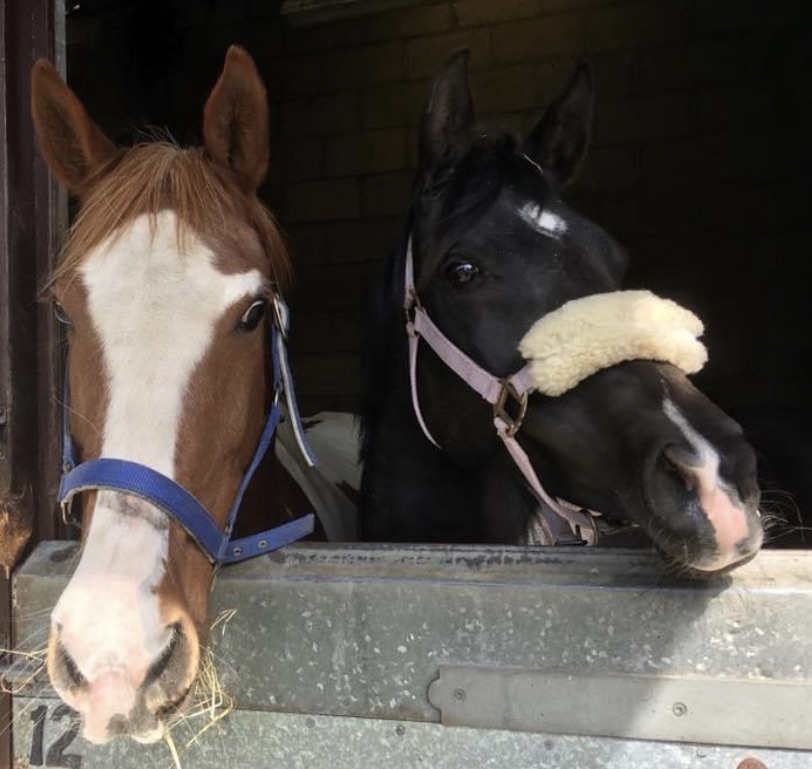
So, next time you move your horse or acquire a new horse and it starts behaving erratically or being difficult, it is not being “stupid”, you might not have been lied to or the horse “drugged” – your horse is just experiencing an episode of understandable “New Home Syndrome.”
I love this phrase and name for what I have seen so often and heard from customers over the years.
With thanks to the neuroscience and research work of Dr Steve Peters, Dr Janet Jones and Dr Shelly Appleton as well my old boy Luke, a red coloured horse who patiently started my journey into the science and art of cooperating with horses.
 Happy Healthy Horses