I have the good fortune to know an excellent horse teeth specialist after a lifetime in the UK of fantastic tooth care from my local equine dentist.
I am consistently surprised to meet clients here in the place where I live who are unsure when their horse last had his or her teeth done! I’m not wishing to cut my work in half but, to be honest, if you have a horse with an uncomfortable mouth a body worker or rehabilitation therapist is going to have a hard time creating any lasting improvement to their movement.
So why is the state of our horses mouths so important and how does a wonky eating pattern create wonky movement?
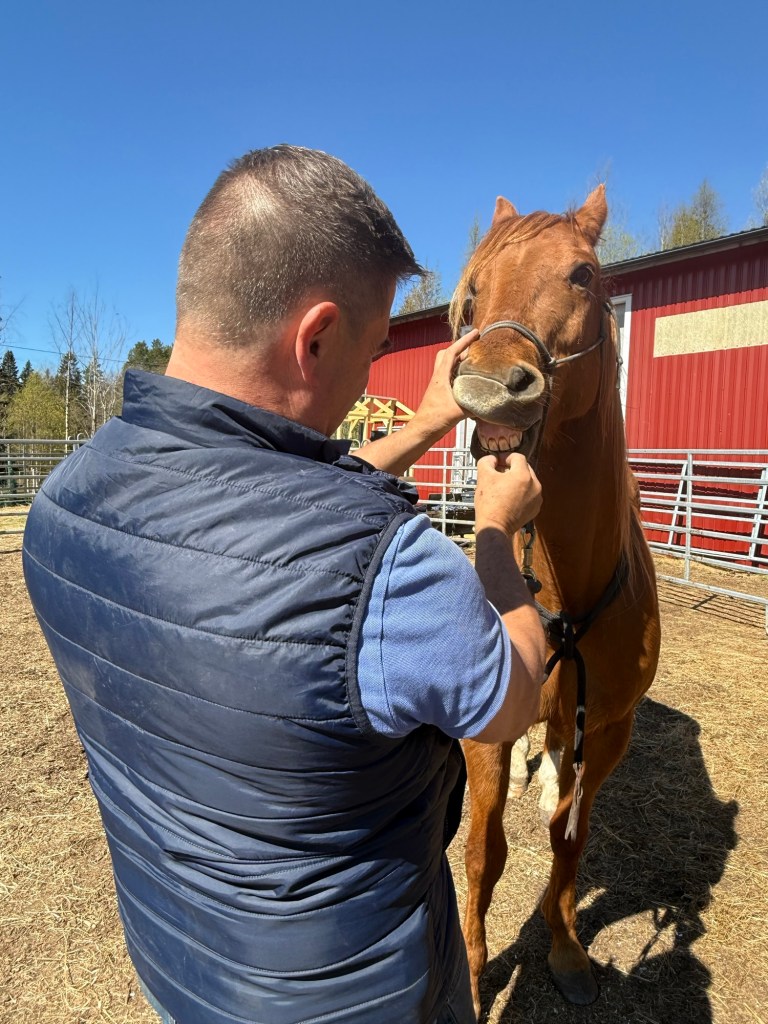
Regular dental check-ups are a vital yet often overlooked component of a horse’s overall health and performance. While it might not be immediately obvious, your horse’s teeth can have a significant impact on their biomechanics—particularly the movement of their hind legs.
When a horse has dental issues such as sharp points, uneven wear, or misalignments, it can cause discomfort in the mouth and jaw. This discomfort often leads to tension throughout the head and neck, which directly affects how the horse carries itself. Since the spine and muscles of the neck and back are intricately connected, tension in the front of the body can restrict flexibility and movement in the hindquarters.
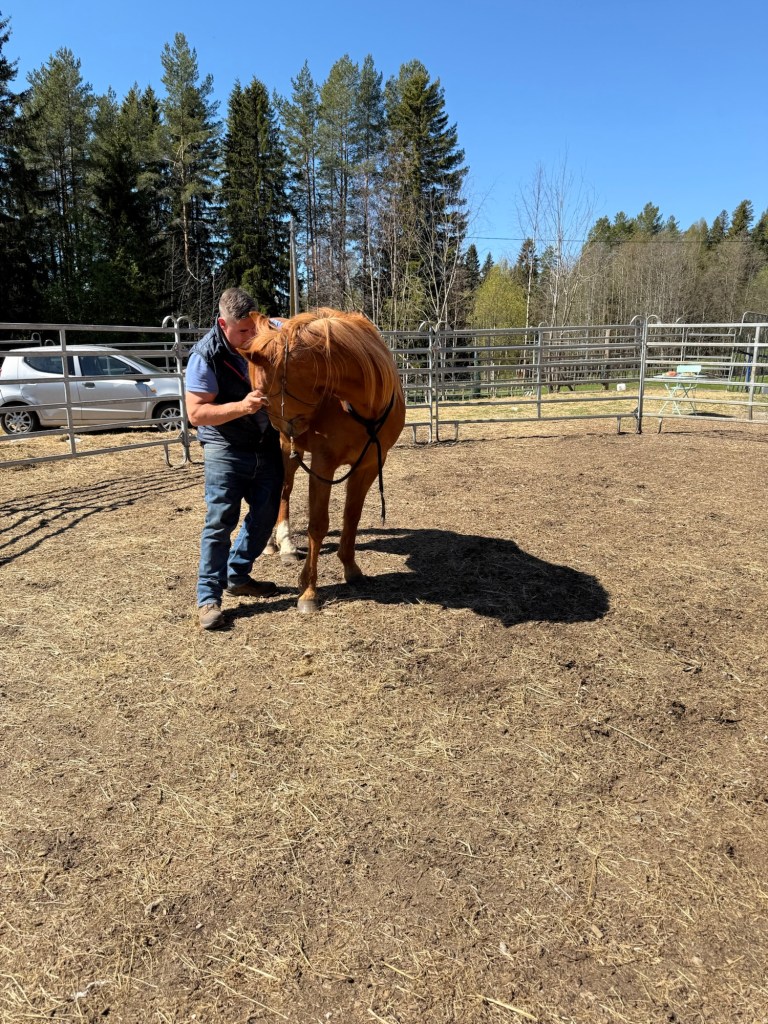
A horse in dental discomfort may resist softening at the poll, struggle with collection, or show stiffness when asked to engage their hind legs. You might notice shorter strides, reluctance to transition, or even behavioral issues under saddle. When dental problems are addressed, these restrictions often ease, allowing for better range of motion, improved balance, and more effective hind leg engagement.
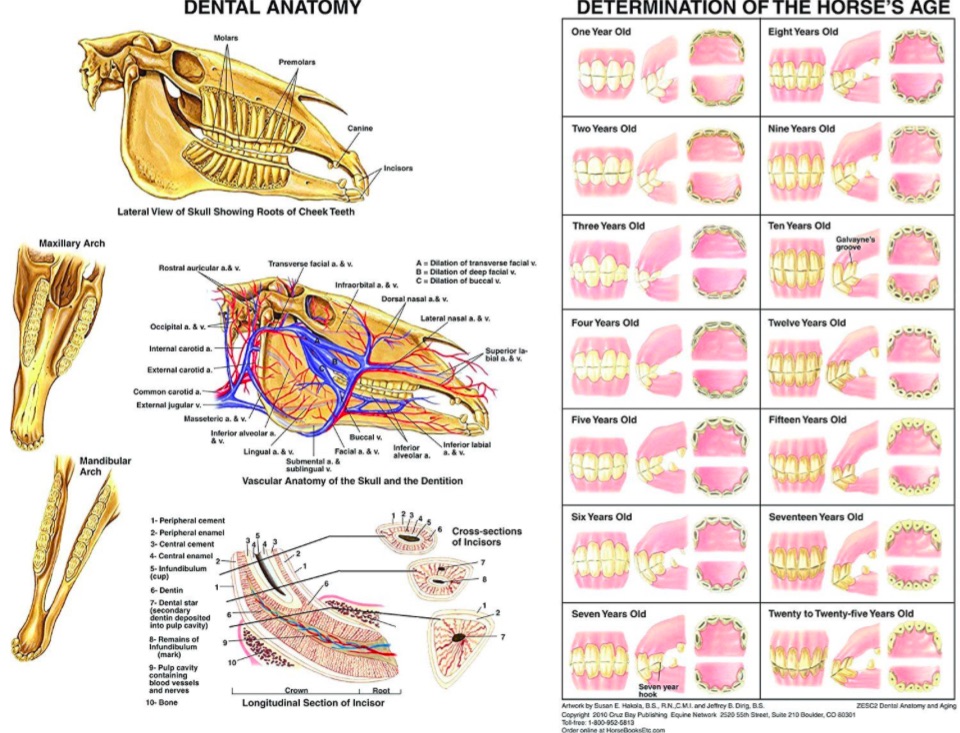
Chewing on only one side of the mouth and discomfort or stiffness can lead to a lack of ability to turn a circle, a heavier feeling in one rein as compared to the other. A horse with a lack of movement in the jaw will often be unable to cross his back legs.
An equine dentist (or equine dental technician) examines and treats a horse’s mouth to ensure proper dental health. Here’s what they typically look at during an exam:
- Teeth alignment and wear: They check for uneven wear, sharp points, or hooks that can cause discomfort or interfere with chewing and bit use.
- Signs of pain or discomfort: They assess if the horse shows any signs of oral pain, such as dropping feed, head tossing, or resistance to the bit.
- Tooth growth and development: Especially in young horses, they monitor how teeth are erupting and whether any baby teeth (caps) need to be removed.
- Tooth decay or damage: They look for cracked, loose, or infected teeth.
- Gum health: Checking for inflammation, abscesses, or gum disease.
- Jaw alignment: They assess the movement and symmetry of the jaw, checking for TMJ issues or asymmetry.
- Wolf teeth and retained caps: They may identify and remove wolf teeth if they create a problem to your horse (small, often problematic teeth in front of the molars) or retained baby teeth.
Equine dentists often use tools like speculums (to hold the mouth open), mirrors, lights, and floats (tools for filing teeth). In some areas, equine dentistry is performed by veterinarians; in others, trained technicians specialise just in the equine head and neck so that the service they provide is comprehensive.
The temporomandibular joint (TMJ) in horses—located between the mandible (lower jaw) and the temporal bone of the skull—is a crucial but often overlooked component in overall equine biomechanics.
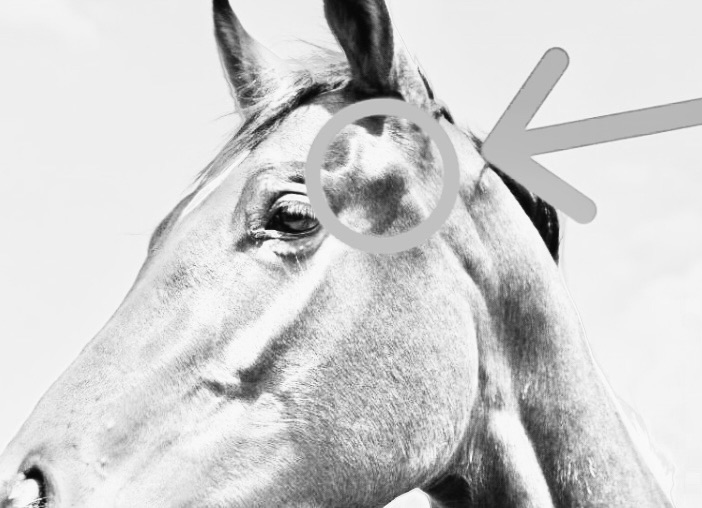
TOP TIP; Gently stroking your horse in this region can be extremely soothing
When there’s dysfunction or pain in the TMJ, it can affect the entire body and movement of the horse. Here’s how:
- Impact on Head and Neck Posture
TMJ discomfort can cause a horse to carry its head awkwardly or resist rein contact.
This altered head and neck carriage affects the balance and alignment of the spine, influencing how the horse uses its back and hindquarters. - Influence on Bit Acceptance and Performance
The TMJ is closely connected to the tongue, hyoid apparatus, and muscles of the throat.
If the TMJ is sore, a horse might resist the bit, show tension in the poll, and struggle with lateral flexion or collection. - Muscular Compensation and Asymmetry
Pain or restriction in the TMJ can cause muscle tension patterns throughout the neck, shoulders, and back as the horse compensates.
Over time, this can lead to uneven gaits, stiffness, and reduced range of motion. - Connection to the Spine and Pelvis
The horse’s body works as a kinetic chain. If one link (like the TMJ) is off, it can affect the entire chain, from the poll to the pelvis.
TMJ tension can cause the horse to brace through the topline, affecting hind limb engagement and leading to inefficient or unbalanced movement. - Nervous System Involvement
The TMJ is richly innervated, especially by the trigeminal nerve, which also connects to facial muscles and contributes to proprioception.
Dysfunction can lead to neuromuscular imbalances, behavioral changes, and even signs of pain elsewhere (referred pain).
Summary:
A dysfunctional TMJ in a horse can lead to head tossing, uneven gaits, poor bit acceptance, tension in the neck and back, and compromised performance. Proper evaluation and treatment—often involving dental care, bodywork, and sometimes chiropractic or craniosacral therapy—can greatly improve overall movement and comfort.
The facial nerves can be affected by dental misalignment and are a group of three nerves essential to your horse known as the Trigeminal Nerve.
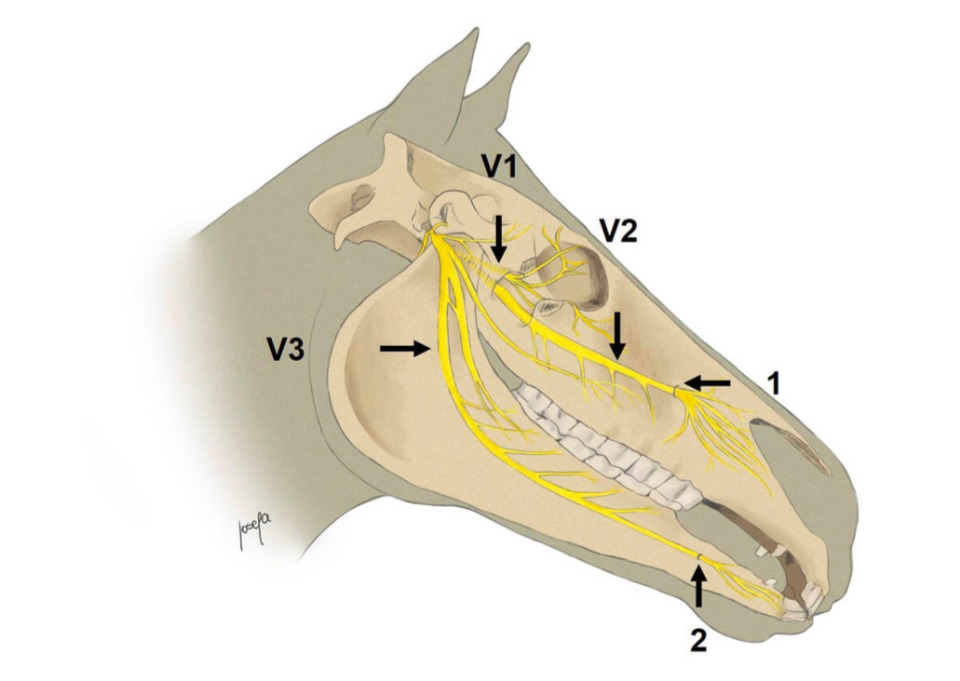
The equine trigeminal nerve is the fifth cranial nerve (CN V) in horses and is primarily responsible for sensation in the face and motor functions related to chewing. It has three major branches:
- Ophthalmic branch – provides sensory input from the forehead, eyelids, and eyes.
- Maxillary branch – carries sensation from the upper jaw, teeth, nose, and part of the face.
- Mandibular branch – provides sensory input from the lower jaw and motor innervation to the muscles of mastication (chewing).
Functions of the Trigeminal Nerve in Horses:
- Sensory: Detects touch, pain, temperature, and proprioception in the face, teeth, sinuses, and parts of the oral cavity.
- Motor: Controls the muscles involved in chewing.
Problems Caused by Damage to the Trigeminal Nerve:
- Trigeminal Neuralgia (commonly suspected in “headshaking syndrome”):
- Horses exhibit spontaneous, often violent head shaking or flicking.
- May be seasonal or triggered by light, wind, or exercise.
- Often considered a neuropathic pain condition, potentially involving hypersensitivity of the trigeminal nerve.
- Loss of Sensation:
- Numbness in areas innervated by the affected branch.
- Can lead to unnoticed injuries or ulcers, particularly around the eyes or mouth.
- Motor Deficits:
- Difficulty chewing or asymmetrical jaw movement.
- Muscle atrophy on one side of the face if the mandibular branch is affected.
- Other Clinical Signs:
- Drooping of the face or eyelids (if multiple cranial nerves are affected).
- Abnormal facial expressions or difficulty eating.
Head shaking syndrome occurs with trigeminal nerve damage.
Diagnosis and Management of Head Shaking:
- Diagnosis often involves ruling out other causes (dental, sinus, neurological) and sometimes includes nerve blocks or imaging (MRI/CT).
- Treatment can be difficult, especially for trigeminal-mediated headshaking:
- Medical management: anti-inflammatories, anti-convulsants (e.g., gabapentin), or cyproheptadine.
- Surgical options: nerve root compression or neuromodulation (e.g., PENS therapy).
- Management strategies: fly masks, nose nets, or changing exercise patterns.
In short, regular dental exams don’t just protect your horse’s mouth—they can play a key role in freeing up their entire body. By ensuring their teeth are healthy and pain-free, you support more fluid movement and a more comfortable, responsive ride.
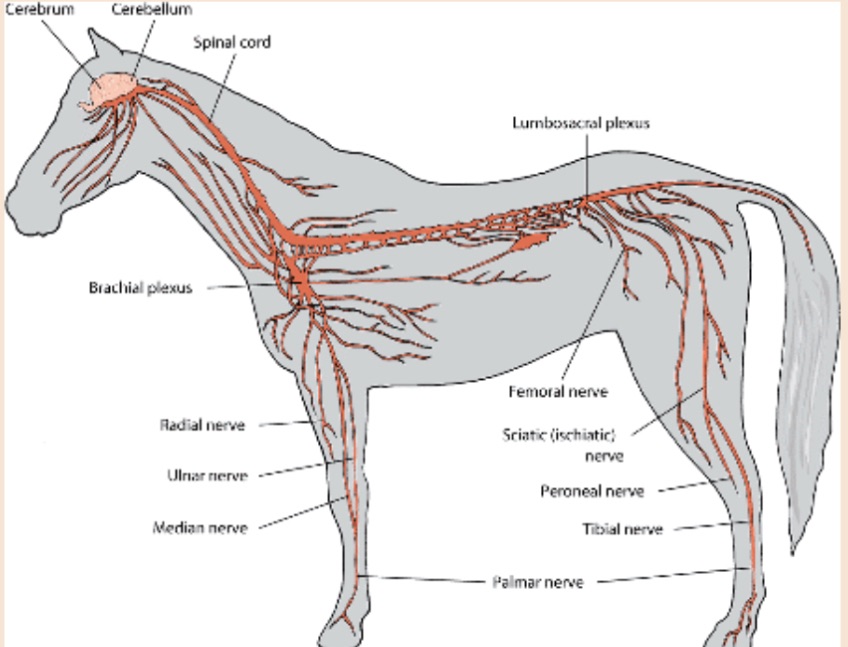
 Happy Healthy Horses