Here is a real quick one today!
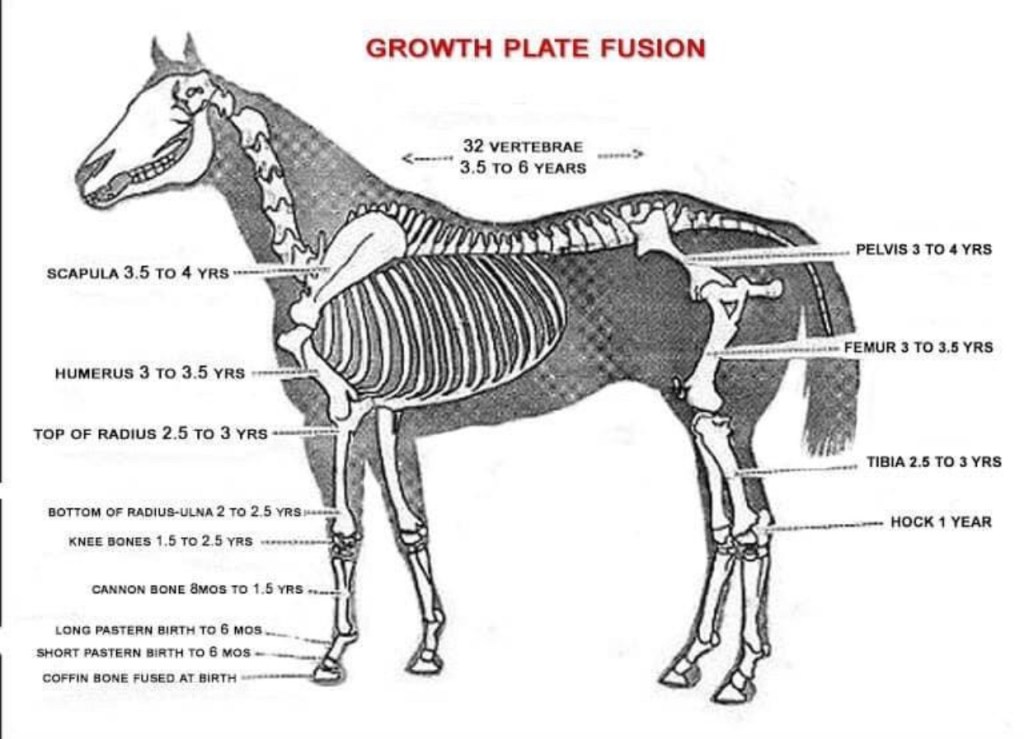
Growth plates are the soft ends of bone from which the bone grows. Until they are fused, the bone is still growing.
Now horse breeds all mature at different speeds but for the most part none of those breeds have fused growth plates on their back before the age of three and a half years.
3 and a half years!!
This means that before the age 3&1/2 the horse’s back bones are still growing and can be damaged by unnatural pressure.
What is unnatural pressure on the back of a horse?
Pretty much anything greater or more prolonged than a bit of licking from another horse or brief roughhousing.
What is more prolonged pressure on a horse’s back than the above?
Tack – driving harness; saddle; lightweight pad – all these things put pressure on the very place where the spine develops last.
The nearest comparison I can think of is asking a toddler human to carry a rucksack filled with all the camping gear for an adult and then ask that same toddler not only to walk but maybe run or jump over a puddle.
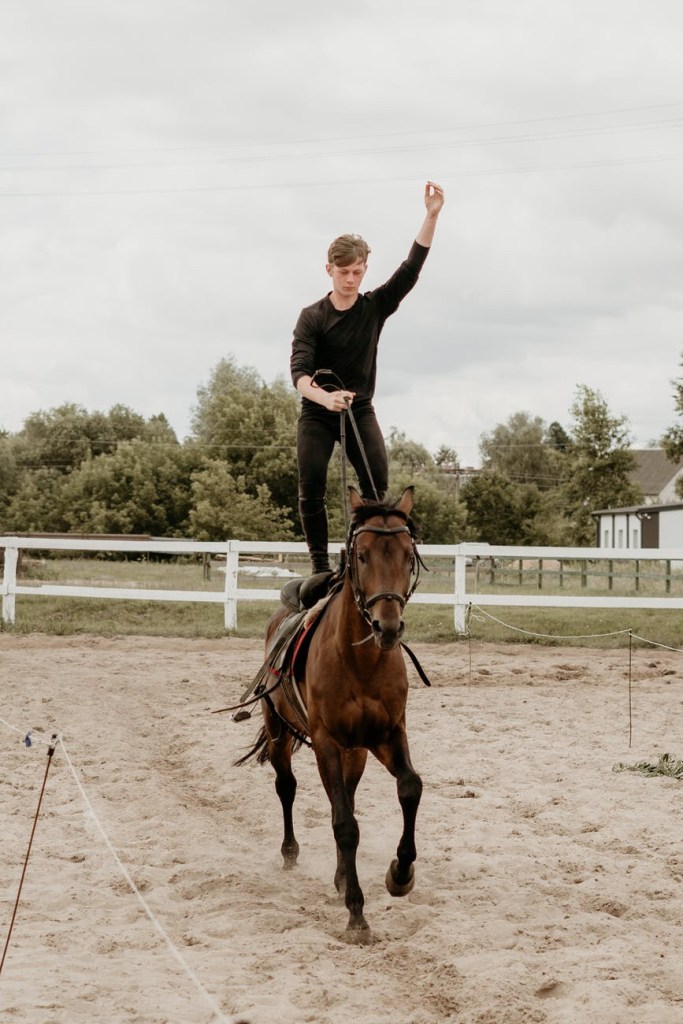
It is my belief that we very seriously need to look at some of our equestrian sports and what we do to our horses in terms of their bodies and minds. If we honestly love horses, should we be condoning the sports which saddle them before their bones have grown?
Should we who love horses condone the feeding of grain not because the horse needs it but because the sport requires it due to a grass belly requiring time for digestion which we do not have within the sport.
Should we, who love horses, condone the imprisoning of horses in small square boxes where they can learn to pace and weave to relieve the stress of not being able to express their natural herd behaviours.
Should we, who love horses, condone the use of whips and sticks to enforce speed within sports.
Should we, who love horses do this? Do we?
Kissing spines can be conformational but it is more commonly seen in breeds where they are started quite young and not allowed the opportunity to grow during the process.
The rate of ulcers within our domestic horses appears to have shot up exponentially. Possibly due to a combination of stress or miss-feeding.
The stress behaviours that have been excluded as far as possible from many zoos and are recognised as signs of an animal’s anxiety are regularly seen in large stables.
This isn’t a helpful or tip-filled post, I know. I started looking again at the horse’s back and the development and then I began to think of the number of bad backs I have seen and wondered how many started even before the horse had reached maturity
 Happy Healthy Horses